After some delay, here’s Part 2(A) of my June Alberta trip. It was quite an amazing experience! I’ve broken it into two parts since it was quite an action packed week.
The main reason for my visit to Alberta was to participate in Yamnuska’s Introductory Mountaineering course. As my outdoor aspirations (including my Canadian highpoints challenge) involve climbing some big mountains which involve technical skills like glacier travel as well as rope and crampon use, it was a logical step to take in my development. I was also looking forward to meeting some new people and having a fun time, something that I really need to do more of, since I tend to do a lot of stuff solo, and it’s a lot more fun suffering with friends/family, as I experienced in Killarney and Temagami. 🙂
Unfortunately, for whatever reason, the Garmin GPS data for almost all the hikes and activity in Alberta (save the last three days of the trip) vanished without a trace (did not sync to Garmin Connect). It was a LOT of data so I think it was overwritten for some reason, though this is the first time I’ve seen this with my watch. Maybe a sign I need to replace it soon?
Day 1
After another delicious breakfast at my AirBNB, it was back to Canmore once again. I got in a bit late for the 8:30am arrival at the Yamnuska office but luckily didn’t miss too much. Our guide for the week was Richard Howes, who is, according to the Yamnuska website, the most cosmopolitan guide on their roster. Richard is from Australia, but spends much of his time in Germany, and guides in the summer for Yamnuska (though he had not been in Canada since 2019 due to the pandemic). We were his first group since his return.
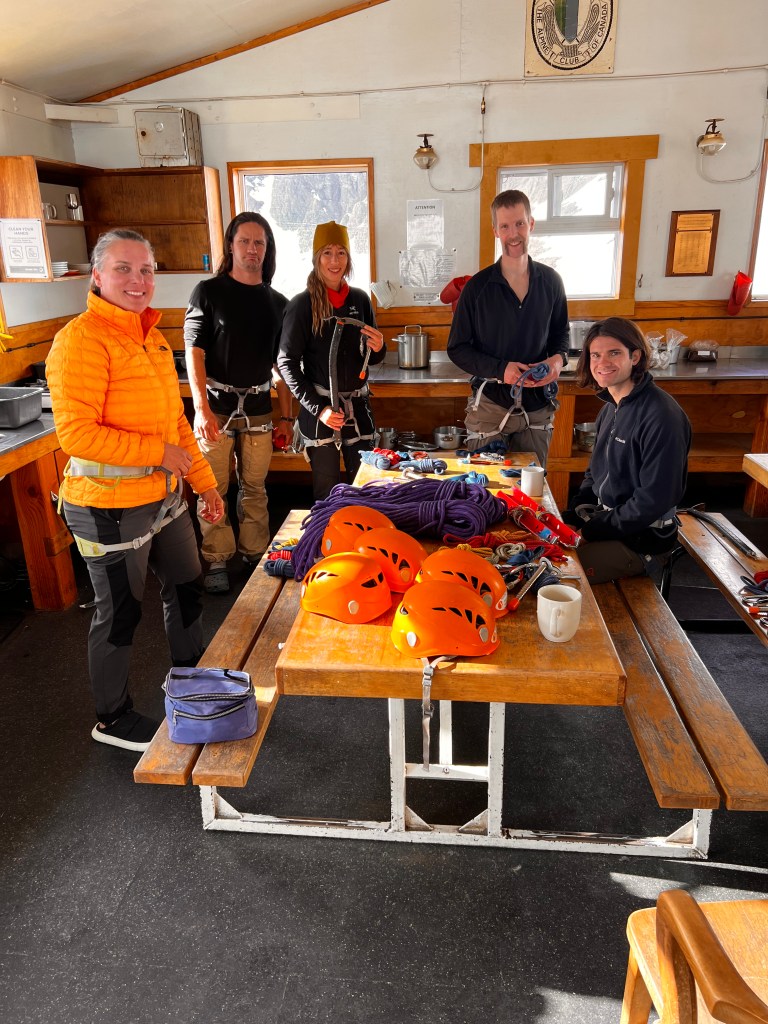
There were four other course participants, and it was quite a varied group!
- Andrew, from Lethbridge, AB, works at a supervised injection site
- Karly, from Edmonton, AB, is a respiratory therapist
- Janet, from Ottawa, ON, is a police officer
- Luca, from Lausanne, Switzerland (originally from Italy) is a doctoral candidate specializing in mathematics
After introductions, going through some hazards and logistical details (as well as being provided with a massive bag of snacks each for the week, as well as our lunch for the day), we packed our things for the week and into the van. I rented a pair of mountaineering boots, as I had not bought a pair yet. Andrew, Karly and Luca had their own pair, and Janet opted to wear her regular hiking boots. The boots, despite being quite stiff, were very comfy! Getting sized was interesting as the boots were a full size up on my regular size.
We were driven up to Bow Lake, in Banff National Park, by our driver Randy, who’s a backpacking guide for Yamnuska. The drive was very scenic and after being reminded it was Father’s Day, I made sure to send a photo to my dad before we went out of service range. Randy graciously lent me some moleskin for my heel just to be safe for blisters, as my feet weren’t used to the boots (I later found out I had moleskin in my first aid kit, oops!). After eating lunch, we set off on the trail up to Bow Hut, our base camp for the week.
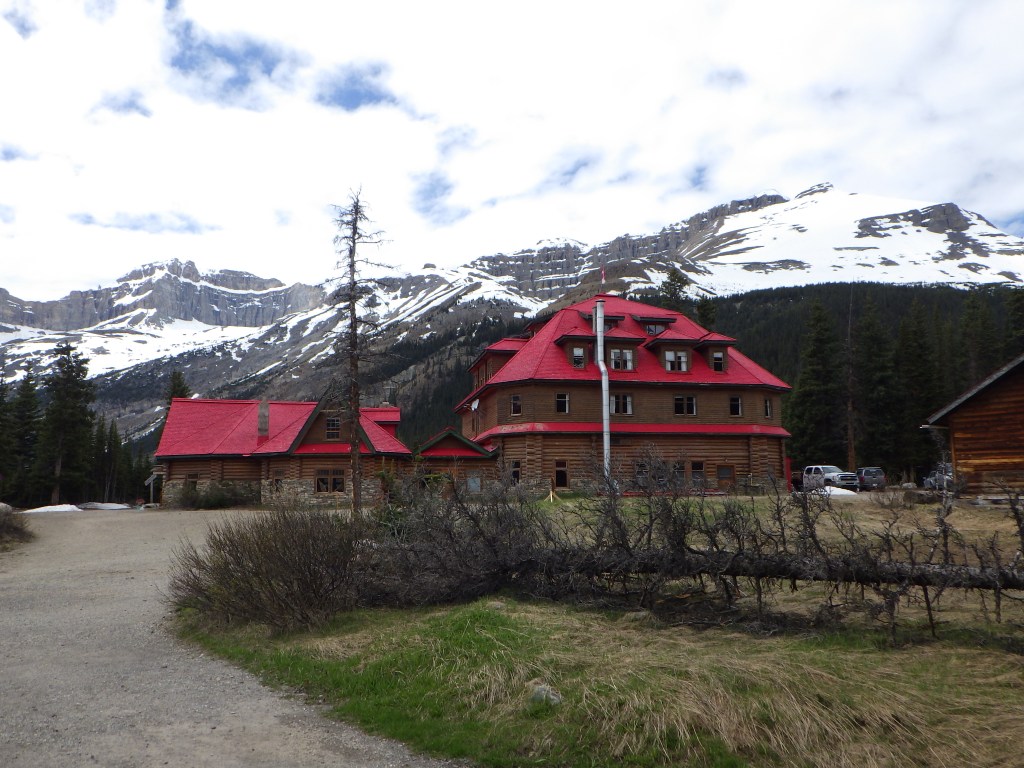
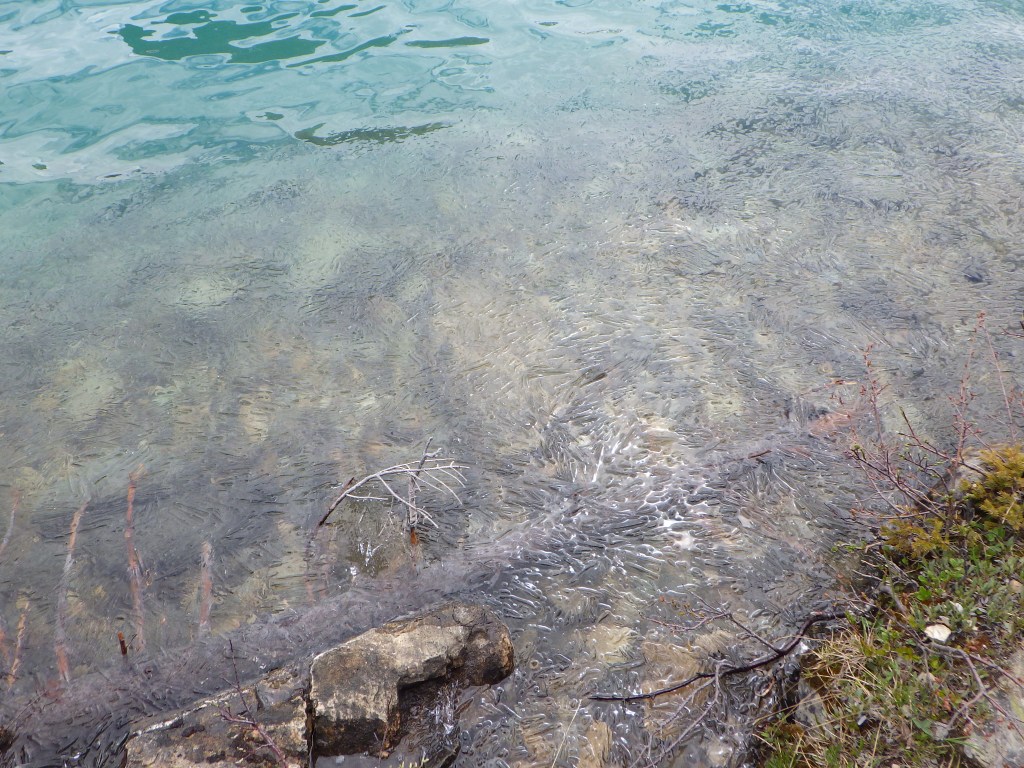
The hike was really enjoyable as the weather was really nice and the views of the mountains were fantastic. The hike started off working around Bow Lake, which was almost completely thawed out, but did contain quite a few small “shards” of ice which provided a delightful jangle as they clanged together. Very cool! We also had to climb over a massive boulder that was conveniently the only way across the river below.
We had quite a bit of snow to contend with as we worked our way up to the glacier. Randy accompanied us for a large chunk of the way but eventually turned around to head back to the bus. As we were still in an area which could be frequented by bears, we took a couple precautions. Three of us (myself, Andrew and Richard) carried bear spray and were spread out among the group, and Richard occasionally yelled out “Hey-yo” to warn the bears of our presence. We learned that being in a group is very safe in bear country as bears are more likely to attack lone hikers.
We eventually reached the bowl just below the glacier and right before the steep climb up to the hut. It was here we all made sure we were wearing our sunnies as snow blindness was a significant concern. I also made sure to reapply sunscreen on my face – the reflection of the sun on the snow/ice was absolutely brutal. I later learned that no matter how often I reapplied, 30 spf is not good enough for me 😦
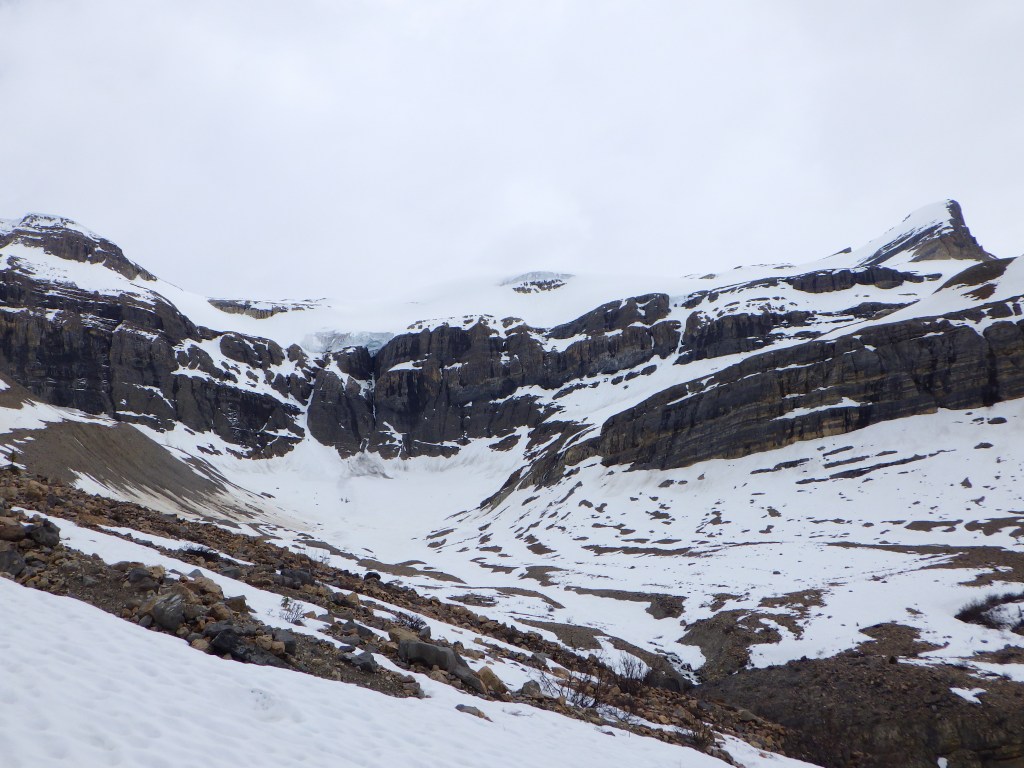
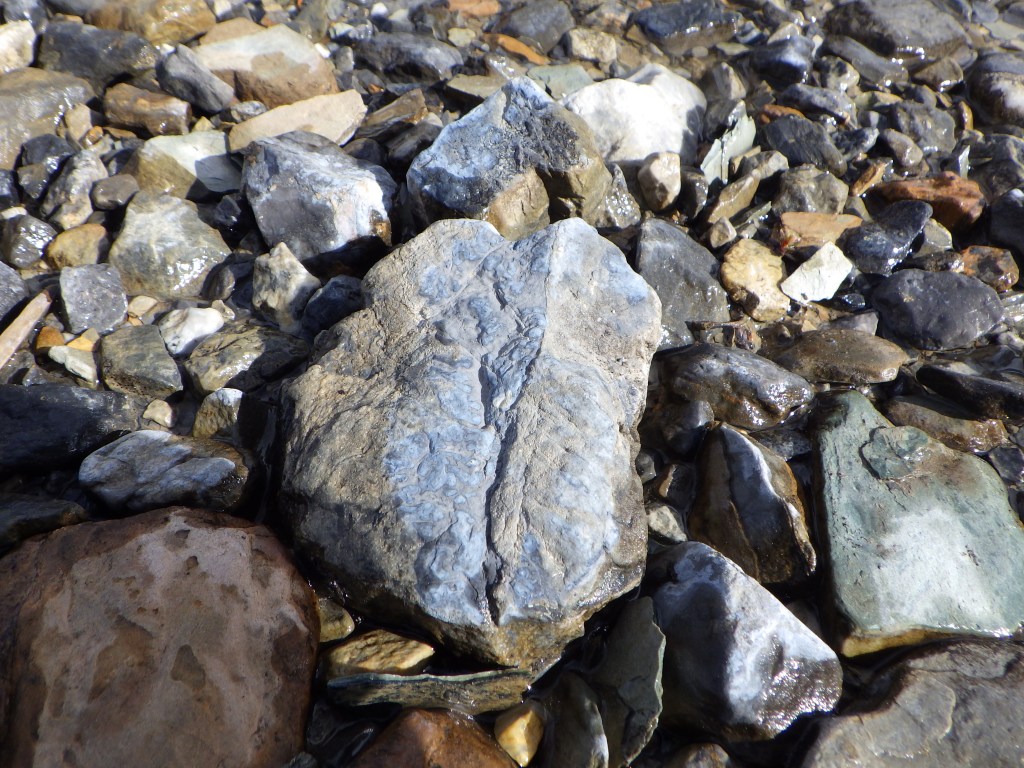
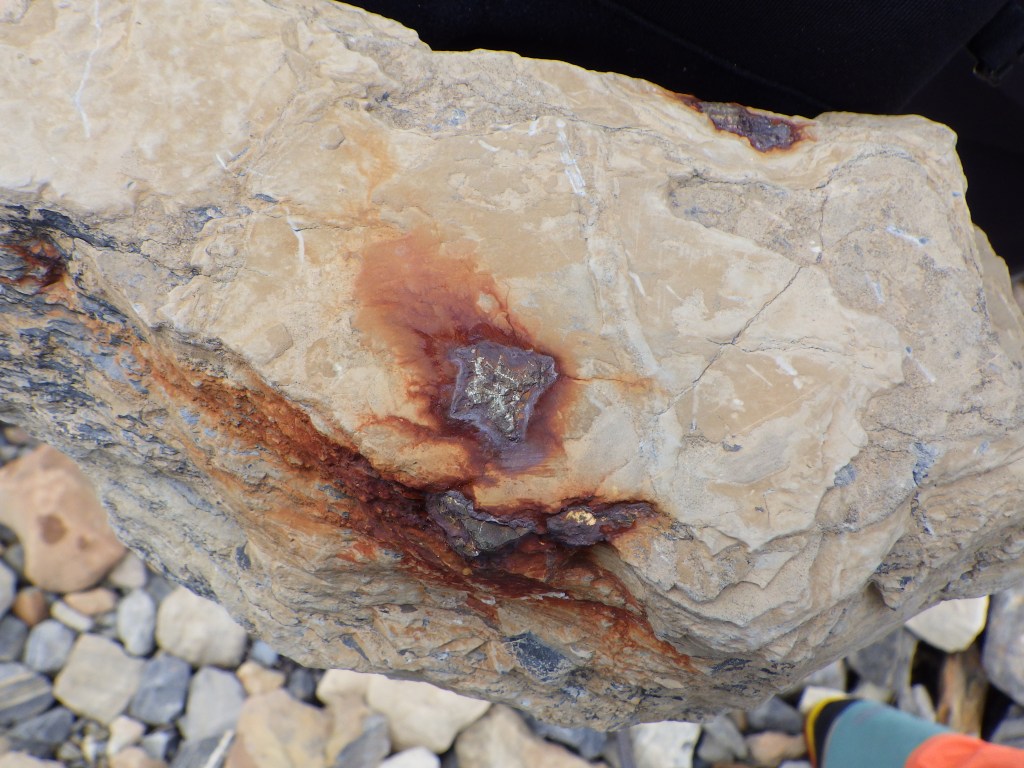
Richard was an incredible resource of knowledge of the geology and features of the mountains. He pointed holes in the snow with rocks at the bottom, and explained that this was not caused by the rocks falling through the snow, but rather a melting phenomenon where there is localized heat from the dark rocks which melts the surrounding snow. In another installment of “Rocks with Richard” he pointed out a few interesting rocks and their colorations which was related to the minerals that the rocks contained. As a materials science nerd, this was of course right up my alley. These included iron-containing minerals (rust-colored Fe3+ or hematite, and the darker colored mixed Fe2+/Fe3+ or magnetite). There were some blue/green hues on some of the rocks as well, which was a definitive sign of the presence of copper compounds with sulfur – ever wondered why the Statue of Liberty is green?
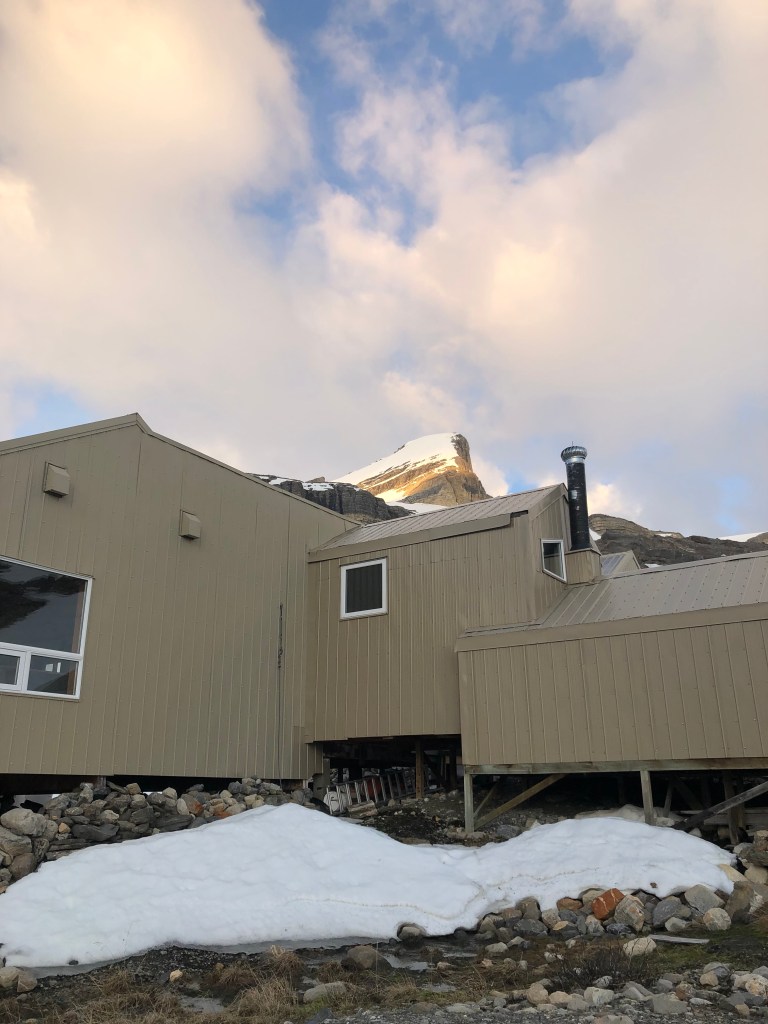
After a steep climb we reached Bow Hut at the edge of the Wapta Glacier, located at approximately 2350m above sea level. This was a really well outfitted hut which featured a number of amenities:
- Large sleeping area with bunk beds (able to sleep maximum 30 people)
- Toilets (effectively porta-potties with barrels that need to be changed so often)
- Common area with plenty of seating and a wood furnace (and lots of chopped wood outside to keep it nice and toasty)
- Kitchen area with propane stoves.
There is no power at the hut, and no running water. We collected water from the nearby stream running off the glacier in large Home Hardware buckets to boil for drinking. Waste of course was to be packed out at the end of our stay (Leave No Trace!), and any grey water (from dishes) was poured into large shafts outside where it goes through appropriate treatment/disposal. This was actually the second iteration of the Bow Hut – the older one, built in 1968, became quite decrepit and was very small, so it was replaced in 1989. The history of the hut was very interesting to read up on! There are three additional huts on the Wapta Glacier – this network serves as a great location to do ski touring and point-to-point glacier travel.
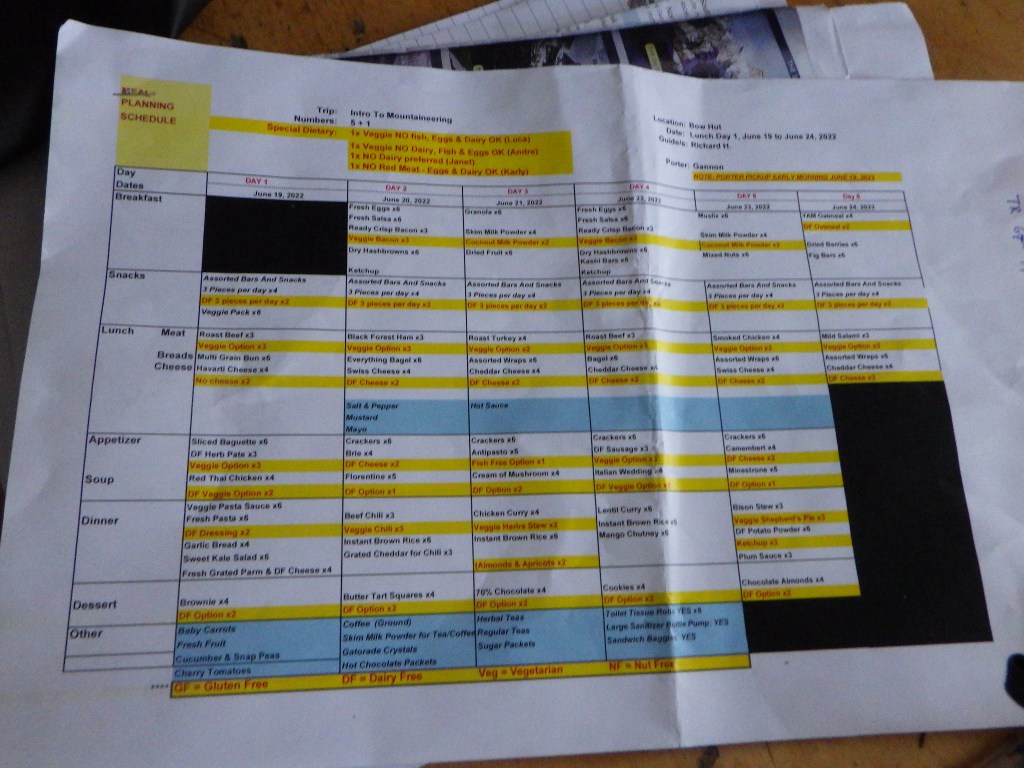
Luckily, we were the only party in the Bow Hut for most of our stay, so we were able to spread ourselves out in the sleeping area, and didn’t have to worry too much about the shared space while we were there (a smaller party joined us later in the week). We also got a chance to see the highly detailed meal plan for the whole week, with breakfast, lunch, dinner (which included an appetizer or “appy,” soup, and a dessert), along with snacks. This also took into account all our dietary restrictions such as dairy free, vegetarian. It was quite impressive seeing how the Yamnuska team put that spreadsheet together.
The rest of the day was fairly low-key, just settling in and getting to know each other. It quickly became apparent that Richard was a soundbite machine (it seems this is a mountain guide thing!), so I took it upon myself to write down every memorable quote he said, in order to provide a “quote of the day” here on this blog. We got some good ones from other people as well, so stay tuned for that!
FATMAP Route (Bow Lake to Bow Hut)
Quote(s) of the Day
“Is there Wi-Fi?”
Luca, to Richard when we reached Bow Hut. Sorry Luca, couldn’t resist adding this one!
“Bob’s your uncle”
Richard – This was one of many Englishisms that Luca learned on this trip.
Day 2
Sleep was pretty good in the Hut, but I noticed over the course of the trip that I needed to get up quite a lot in the middle of the night to pee (I was trying to drink a lot of water but this was still pretty abnormal). Luckily, not an issue – Richard indicated this is something that tends to happen at higher altitudes and is related to the body (specifically the kidneys) detecting lower levels of oxygen and initiating the production of more red blood cells. A side effect of this is increased urinary output, as excess fluid is removed from blood to make room for these new red blood cells. Fluid also tends to collect in the body’s tissues (resulting in minor swelling) which is known as peripheral edema (similar though nowhere near as life threatening as high altitude pulmonary edema or HAPE, which is commonly seen on big mountains like in the Himalayas). These effects can be mitigated through acclimatization.
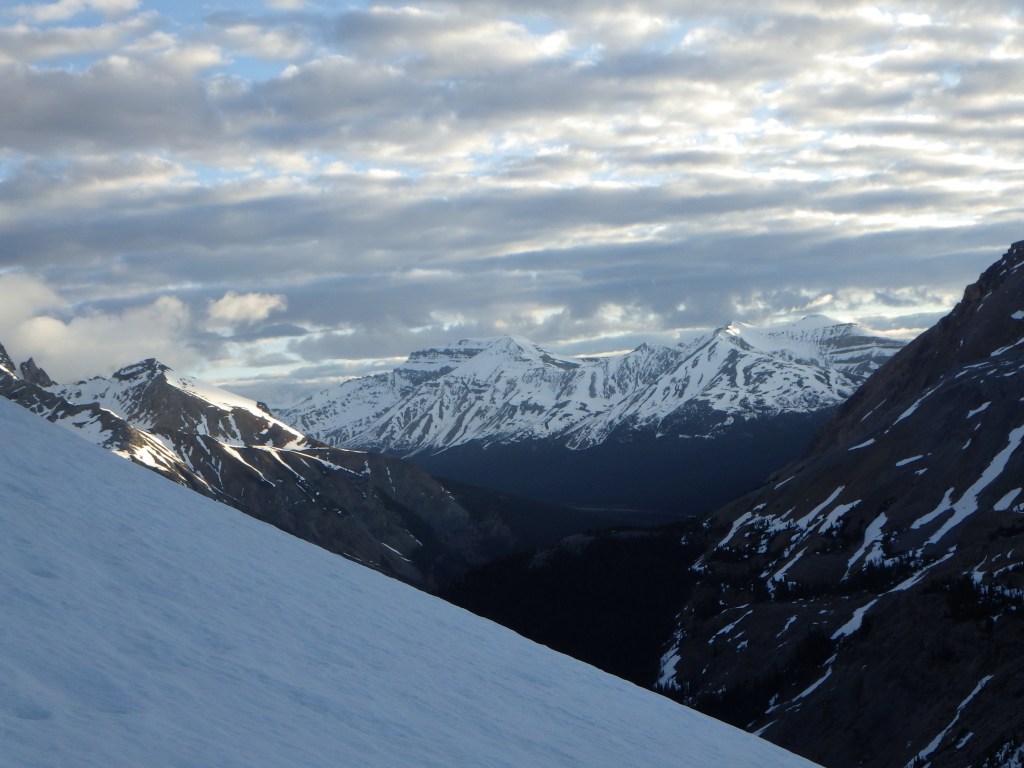
The day started a bit slowly, but we enjoyed a delicious breakfast and collected water from the stream nearby. Being in the hut there was always something to do, whether it was cleaning up, doing dishes, collecting water, emptying the grey water buckets, etc. We all generally had our own go-to chores, and I ended up being the guy who collected water the whole week (often with the help of my fellow tripmates) which was quite fitting as my old dragon boat nickname was “Waterboy.” I also did a bit of wood chopping – Andrew did the heavy chopping outside and I, along with Luca, did some of the lighter chopping (to make kindling) inside the Hut, along with making fire in the wood furnace.
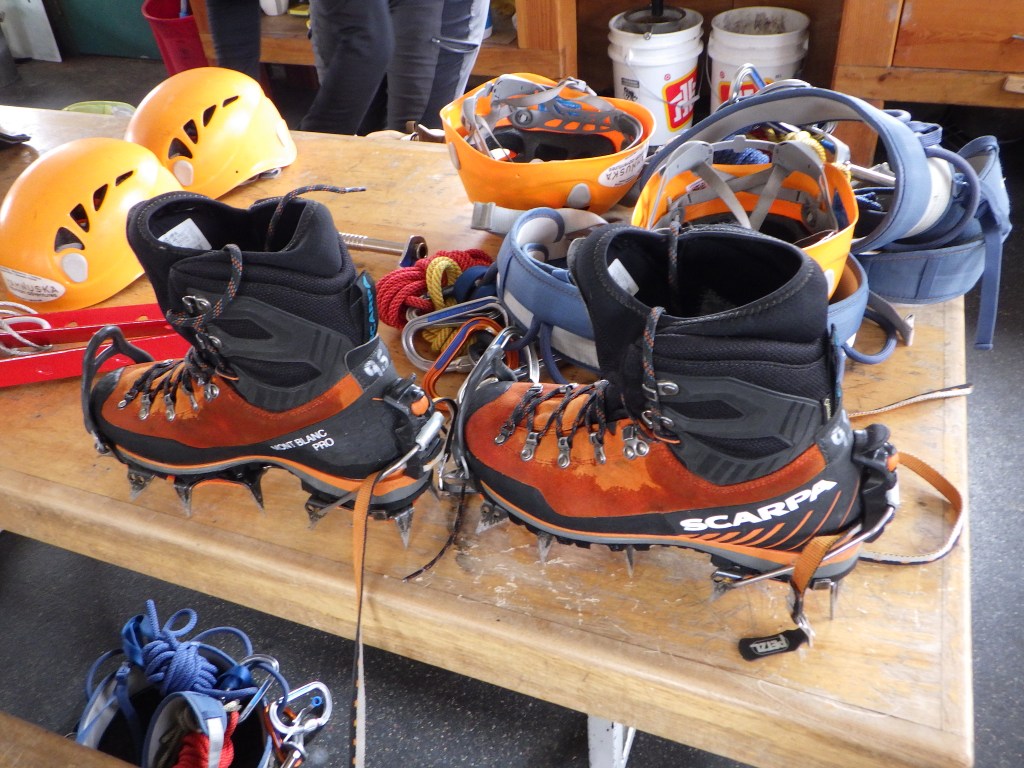
The morning was spent learning about the basics of rope management on the glacier along with fitting crampons on our boots. We also fitted ourselves out for harnesses and learned about all the various accessories that are needed (including caribiners and prussik ropes). After lunch, we headed up towards the glacier for the first time in order to hike up to The Onion, a small peak nearby, and start to get the feel for being roped up.
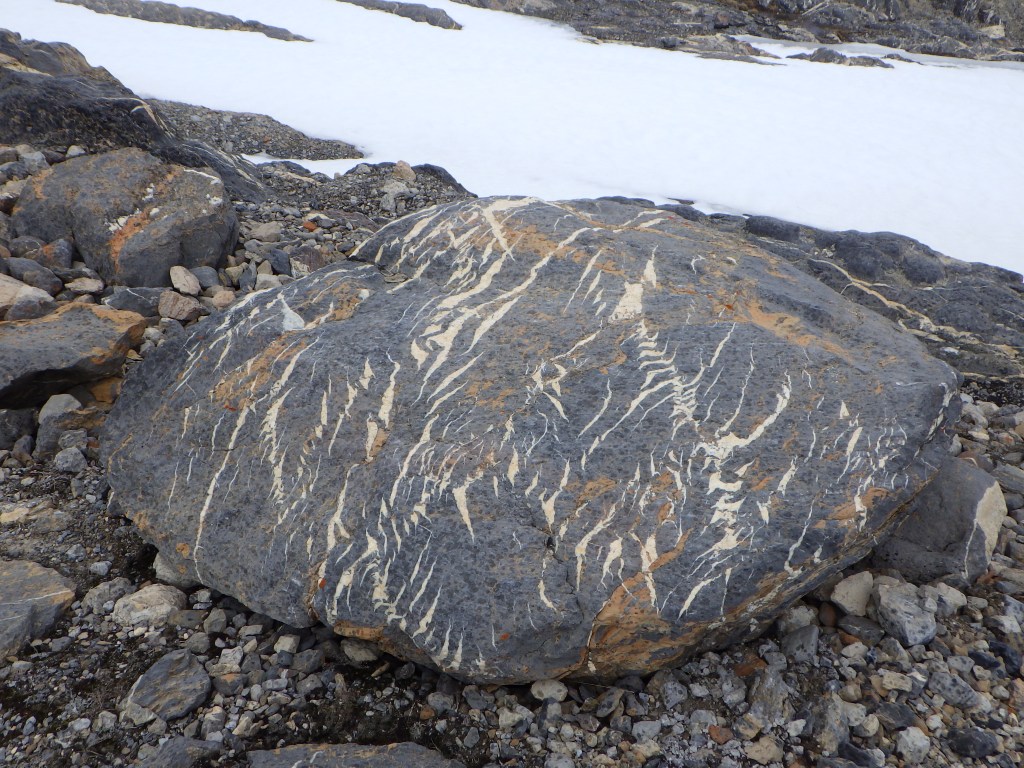
Richard shared that the glacier had receded quite a bit since his last visit, and the area looked quite a bit different as a result. In the latest installment of “Rocks with Richard” he pointed out interesting scratching patterns on rocks as we hiked up. These scratches were very linear and consistently directed, and sometimes several directions were observed. These scratches were the result of glacier movement – a glacier is almost like a body of water in that it flows (albeit very slowly) over time. These scratches indicate the direction of the glacier flow – as it moves, rocks are transported along and abrade against other rocks, causing scratches. Very neat! Richard also pointed out various features of mountains including crevasses, bergschrunds (effectively crevasses near the top of glaciers) as well as some of the flora of the mountain. We also saw a few small avalanches from far away on nearby peaks.
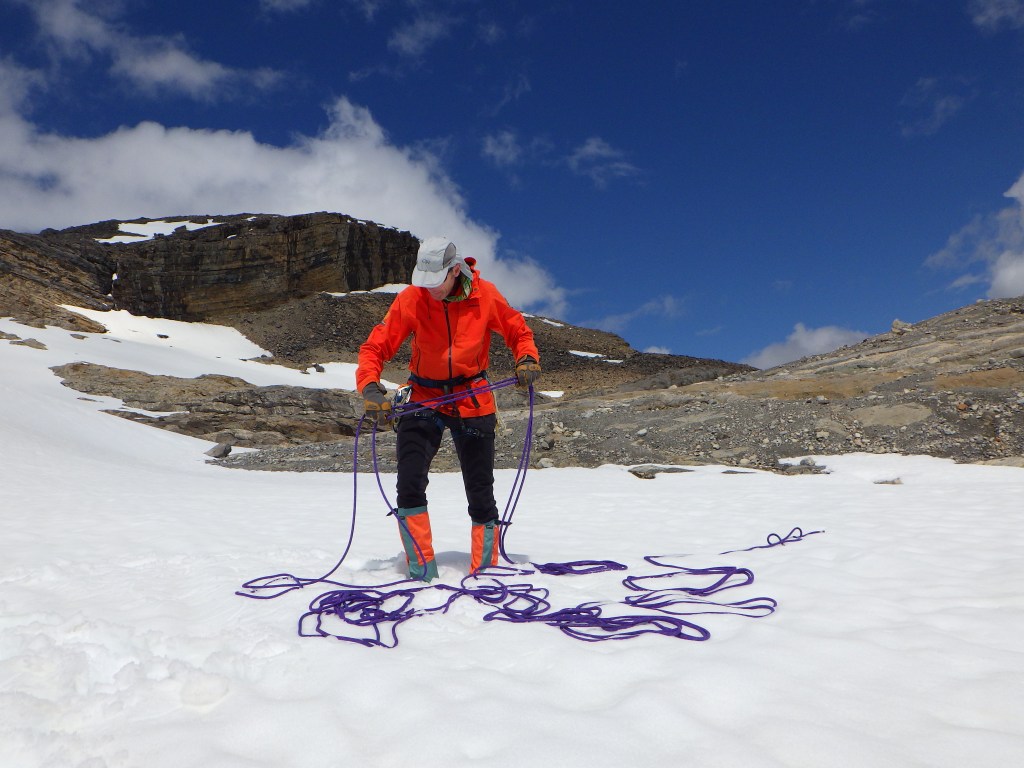
Once we got just below the Onion, it was time to rope up. We learned how to measure off rope – the rope is typically 50 meters long and you want all climbers to be roughly 10 meters apart – so using arm span lengths is a nifty way to measure the rope off quickly. For the purposes of the day’s exercise, all six of us were on one rope, though this is not optimal and one would typically only see maximum five people on a single rope. We also learned to keep an appropriate amount of slack in the rope – you don’t want too much, since if someone falls into a crevasse, they would fall much farther the greater the amount of slack, making rescue more difficult.
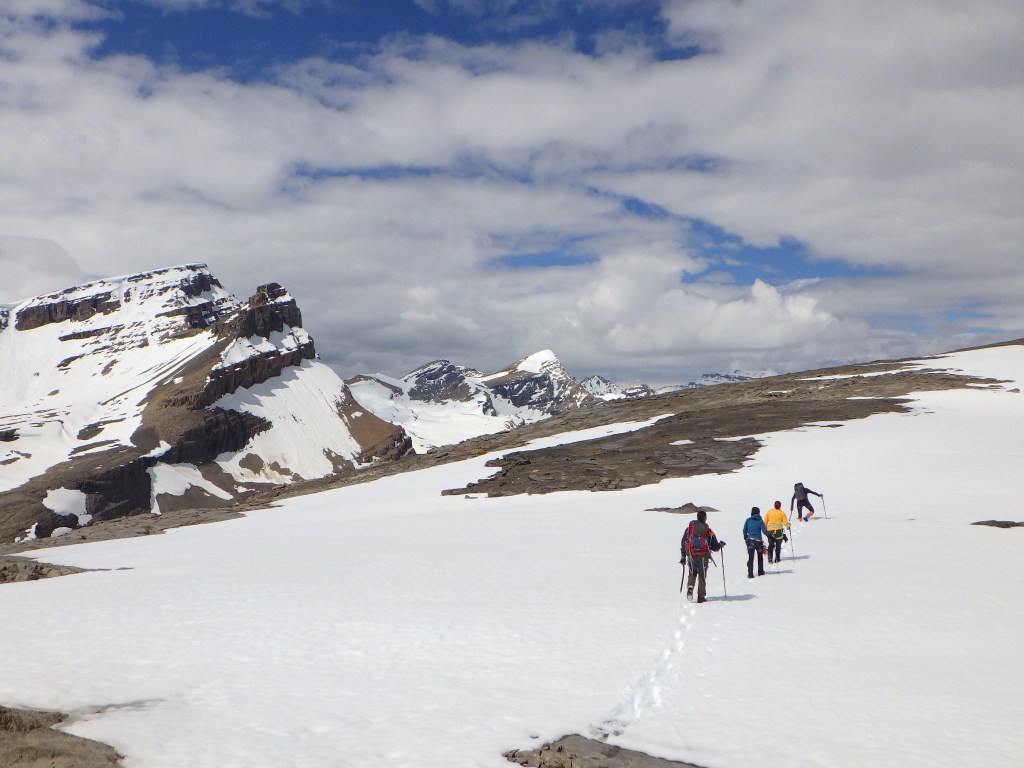
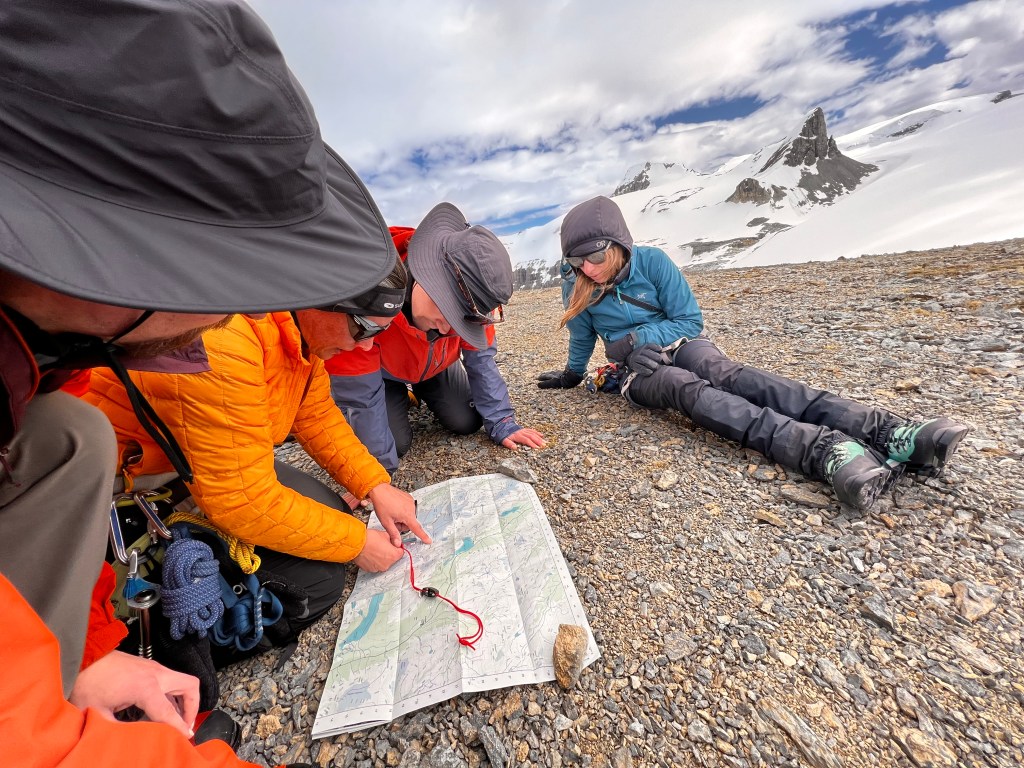
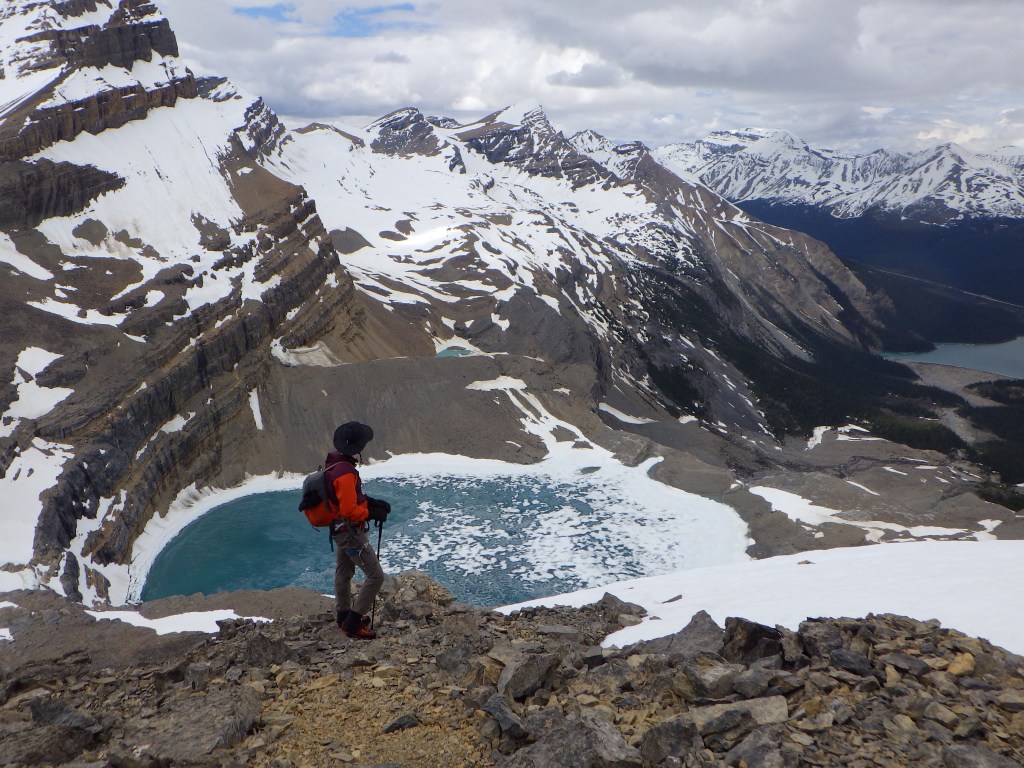
We got to the top of the Onion and enjoyed the view. We also started looking at map and compass usage in order to identify some of the neighboring peaks like St. Nicholas, Habel, Ayesha, Thompson, Gordon, and Rhondda, (interestingly, we learned later on of a couple who got married up on the Wapta Glacier, and their names were Rhonda and Gordon!), and got some photos in front of Portal Peak and the glacial lake at its base. Our plan for the next day was to try for Mount Rhondda and learn a bit about executing crevasse rescues. After returning to the Hut we enjoyed a delicious dinner and it was off to bed.
Quote(s) of the Day
“Hanging around like a fart in a phone booth”
Richard – I can’t remember the context of this, ahaha
“Mr. Hunter, you didn’t come here for the huntin’!”
Richard – The punchline of a very NSFW joke told late at night to myself and Janet
Day 3
Our attempt to climb Mount Rhondda (3062m) started off after breakfast at 8am. For this day, Richard asked me to keep track of the times we took our breaks and how long the breaks were, as I had a GPS watch and it is good practice for on-the-fly time management while on the trail/mountain. Interestingly, as we were so close to the Alberta/British Columbia border, climbing Rhondda would mean we would temporarily enter BC!
After a short hike (Richard stressed the importance of taking it slow to start at higher elevations since the air is thinner), we got to the glacier and it was time to rope up. No crampons for this excursion, as it was pretty soft out on the glacier. We split off into two teams of three, each team on one rope. The way it works for a team of three is still 10m between each climber, with an excess ~10m of rope carried by the terminus climbers (helpful in case crevasse rescue is needed). The teams were myself with Luca and Andrew, with Richard joining Karly and Janet.
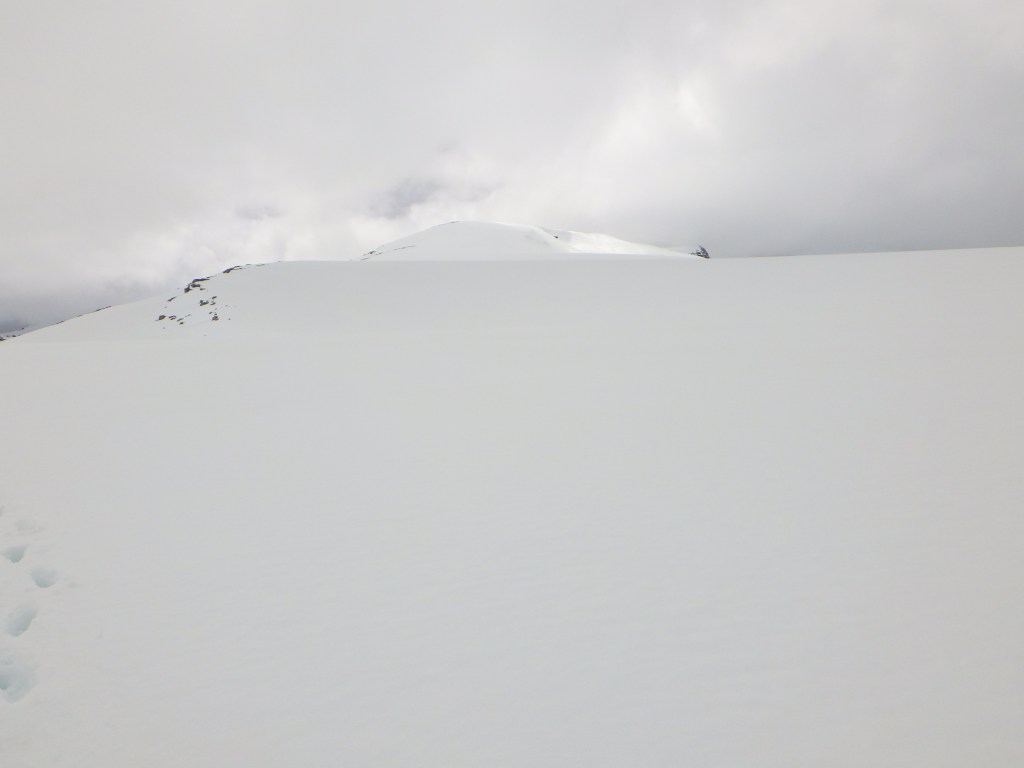
We spent quite a bit of time getting set up on ropes, and then we were off. We took occasional breaks as we worked our way up, with rainfall starting at around 11am off and on. The rain turned to snow and we hunkered down in Richard’s emergency shelters to eat our lunches. It was a huge contrast between the cold windy snowy conditions outside to the warmth inside the shelter. After lunch, we continued onwards but it became apparent that the conditions were not cooperating. At around 1:30pm, Richard made the call to abort our summit attempt and we turned around. While it was disappointing, it was definitely the correct decision.
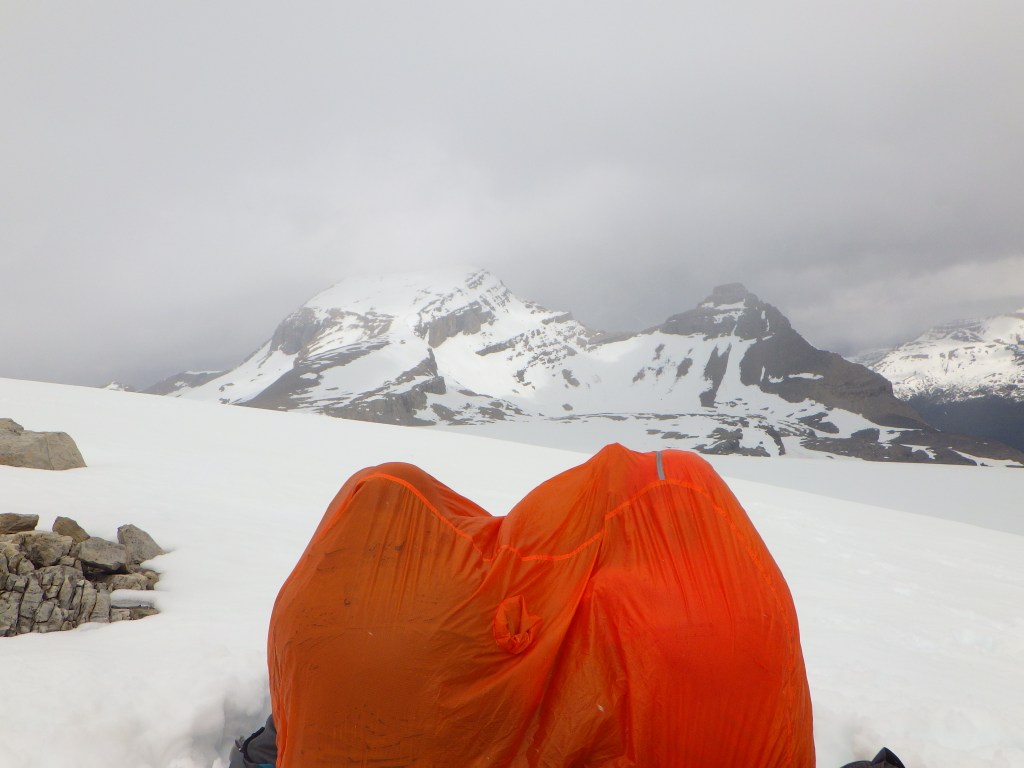
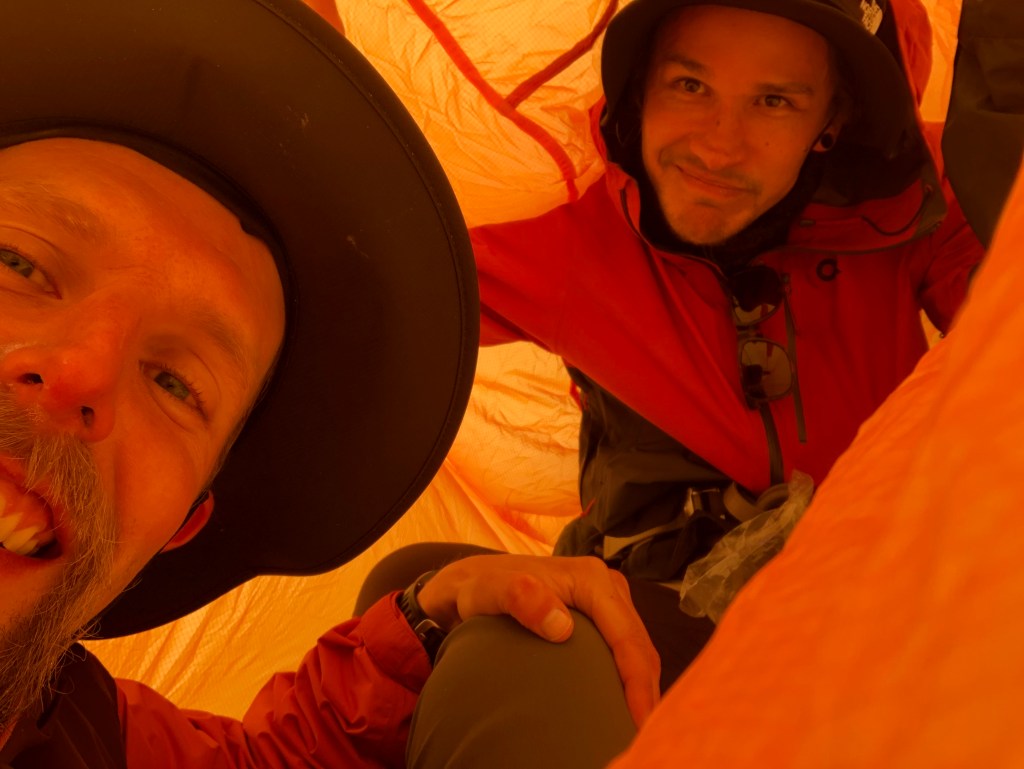
On our return we encountered signs of crevasses, and spent quite a lot of time just below the Onion learning how to make snow anchors using both the ice axe as well as snow stakes (which were developed in New Zealand). It’s important to dig quite a bit to get to the compacted, dense (summer) snow layers (winter snow tends to not be as structurally sound), and also rig the rope such that it’s centered on the axe in terms of its surface area, in order to create the most reliable anchor possible.
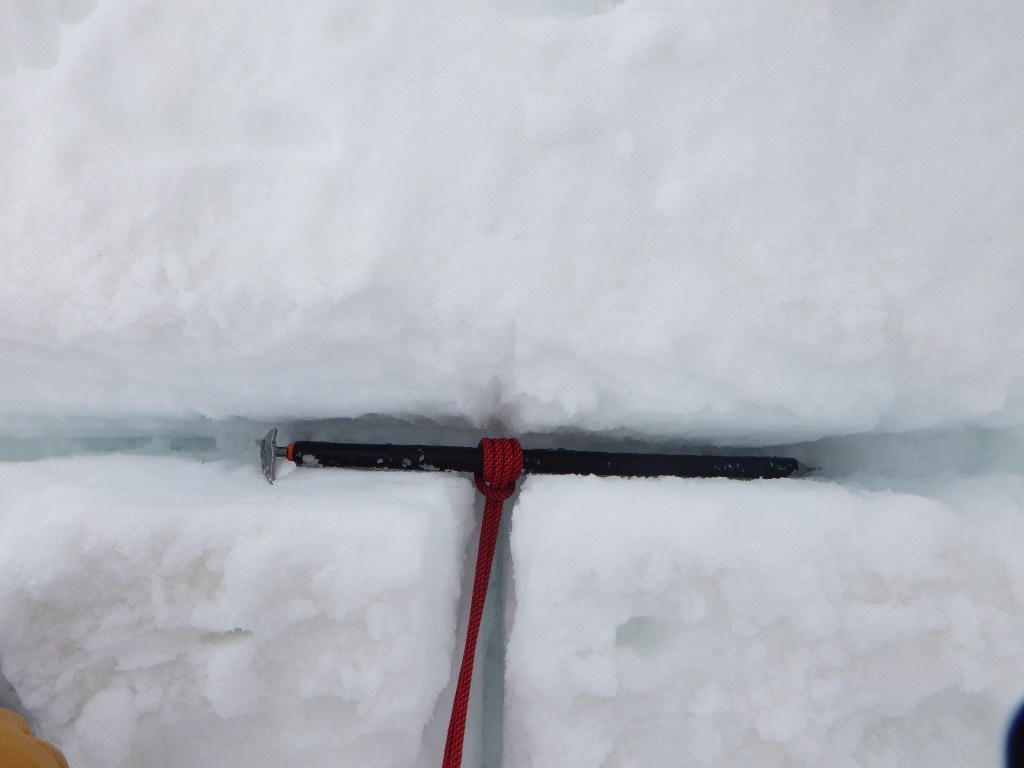
After over eight hours out on the glacier, we eventually headed back to the Hut. While we were unable to bag a summit, it was definitely a day full of learning opportunities!
Quote of the Day
“It’s a phone!”
Richard H. in response to Andrew asking about a photo of emergency shelter on Richard’s phone
Halfway through the course, and already learned a ton and had a lot of fun experiences. More to come, in my post for Part 2B, coming soon!

 Veg 'n' Alpine