Before I get into my account of quite possibly my most epic adventure to date, I wanted to announce that I am rebranding this blog, both to get a custom domain and to have a new name that better reflects the topics I will be sharing. The new name for my blog will be “Veg ‘n’ Alpine” and its new URL will be “www.vegnalpine.com”. I will also try and get a logo/custom graphics done for my blog as well, let me know if you have any recommendations. Now, onto (part 1) of my Mexico trip!
Earlier in the year, I was contacted by Frederick Schuett, a mountain guide in Ontario, who runs a climbing/guiding company, One Axe Pursuits. I had done an outdoor climbing lesson with him the previous year, and he indicated that he was hoping to resume expeditions to Pico de Orizaba (Citlaltépetl), the highest mountain in Mexico and the 3rd highest in North America, after Denali (USA) and Mount Logan (Canada). I mentioned I was interested if he was hoping to resume these trips. Frederick indicated that he was looking to return to Orizaba in November and whether I’d be interested. After climbing Mount Whitney in June, and with an Alpine Club of Canada mountaineering camp (which was derailed by injury) and my Pyrenees trip planned later that summer, I indicated my interest, since Orizaba would be a logical step in my alpinism journey (though well over 5000m high, it is a fairly straightforward, less technical climb than many peaks of comparable height).
Even though my summer was marred by a frustrating ankle injury, after consultation with my physiotherapist we determined that ten weeks (between my return from Spain and the start of the proposed expedition in Mexico) would be enough time to properly recover and strengthen my ankle, as well as train for the trip. So in early September, I sent One Axe my deposit.
After a great many ups and downs (including several minor ankle tweaks as well as repeatedly feeling that my ankle would never get better) things finally started to take a turn for the better with two weeks to go before my trip. I had a solid outing to Vermont and followed that up with a strong ascent of the 3851m Humphreys Peak in Arizona immediately prior to my departure to Mexico. As I finished up my visit to Arizona I felt the healthiest I’ve felt all year and was very optimistic about climbing in Mexico, though still a bit undertrained given I was being very cautious and conservative with training, and my main form of training for alpinism, trail running, was off the table.
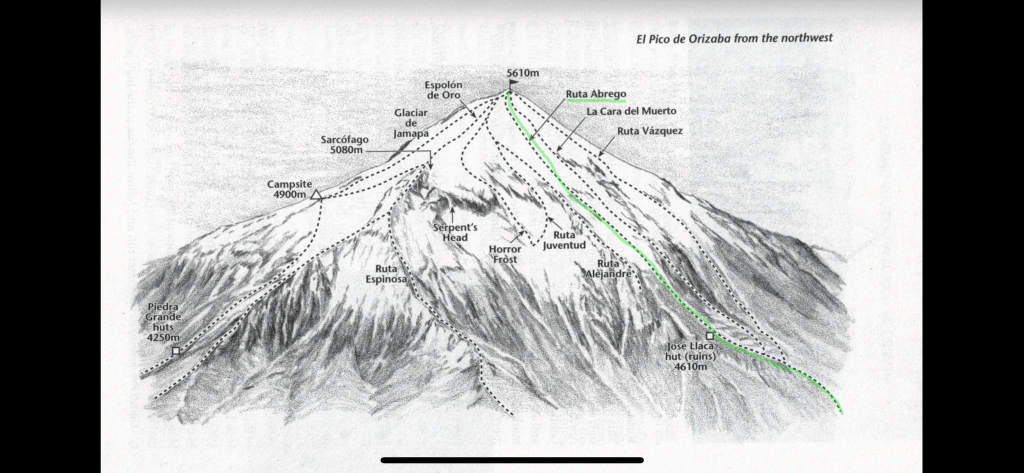
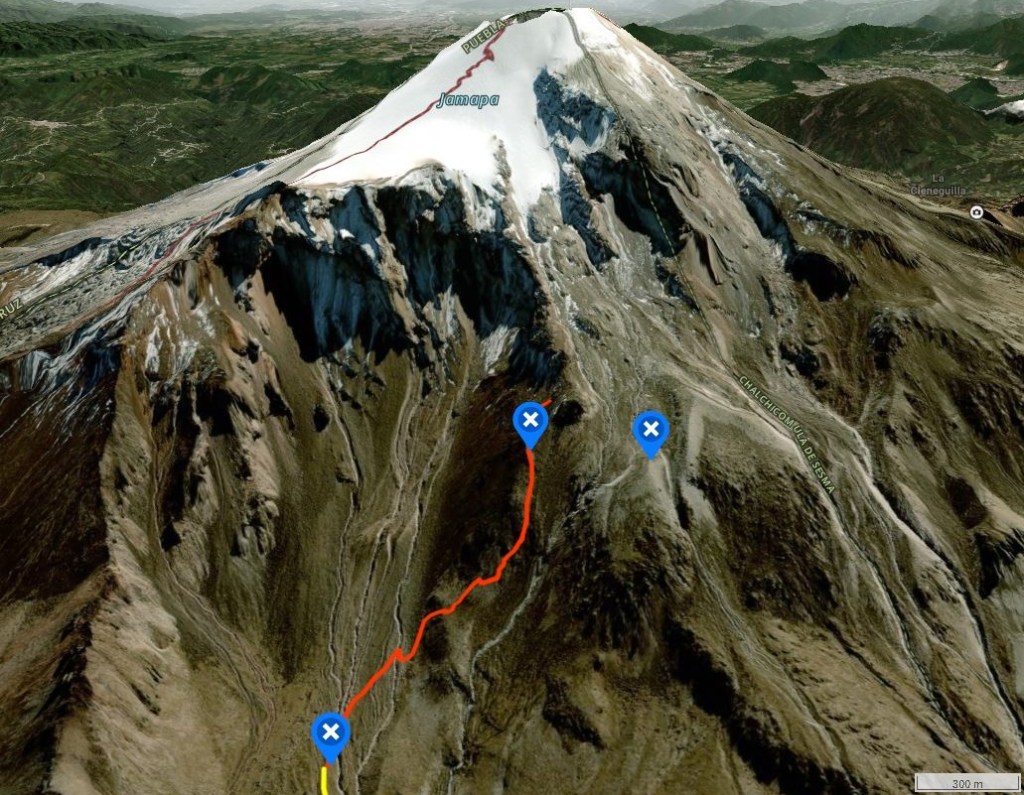
For this expedition, I would be joined by Luca, who I had met way back at the Intro to Mountaineering course with Yamnuska in summer 2022. Our plan for the trip was primarily to summit Pico de Orizaba, via an alternative, not commonly climbed route “La Ruta Abrego” on the west side of the mountain. We would likely be the only people on that part of the peak during our ascent. Orizaba is most commonly climbed from the north via the Refugio Piedra Grande (a classic glacier ascent via the Jamapa Glacier) or the south (Ruta Sur) from the Refugio Fausto Gonzales. The southern route, due to its aspect, is steeper, has no glaciers and has very little snow, making it a slightly more challenging rock/scree ascent. Frederick had only done the standard glacier route in the past, however one of his colleagues noted a large amount of snow on the Ruta Abrego a couple years prior, piquing his interest.
We also decided to tack on an additional day to our trip to be able to also summit Iztaccíhuatl (Izta, or “The Sleeping Lady”), the 3rd highest peak in Mexico, immediately after Orizaba (taking advantage of the prior acclimatization to do a quick one day ascent). Izta is about halfway between Orizaba and Mexico City so it was well located on our way back to the latter. It’s also a fairly non-technical climb but boasts a large ridgewalk to its summit, with climbers spending a lot of time and distance above 5000 meters. It also offers great views of its twin, Popocatépetl (Popo), the 2nd highest peak in Mexico and by far the most active volcano in Mexico.
As I started writing this post, I realized that it was going to be a long one, thus, for easier readability, I will be splitting it up into two parts, each released one week apart. In addition, I included lots of Luca’s and Frederick’s photos in this post – thank you to both of them for sharing!
Day 0: Travel to Mexico
Picking up from my Arizona trip, I woke up in Flagstaff, at 5:30am, and after a quick bowl of instant oats (leaving me with 2 packets of the original 18 that I bought at the start of my trip), finishing my carton of oat milk, and eating a quarter of an avocado (I could not eat the remaining quarter, so it had to be tossed unfortunately), I was off to Phoenix. It took some time to defrost the windshield of the car, so I was on the road at around 6:15am. The drive wasn’t too bad until I hit some heavy traffic entering Phoenix, but as a driver in Toronto (probably the traffic capital of the world) for six years, it was child’s play. I had to make a quick pit stop at a gas station, five minutes from the Enterprise location (yes it was pretty dire), and quickly made my way to the terminal to check in for my flight to Mexico City.
Security went fairly well and I grabbed a coffee before settling down at the gate to do some work. The flight was a bit rough in places (namely the descent into Mexico City) but not too bad. I had a friendly seatmate which was an added bonus. After landing in Mexico City and going through immigration, I collected my bag and exchanged some USD for pesos, in order to buy some duty-free before my flight home. I grabbed a taxi to the hotel, and the traffic was absolutely chaotic – there’s no way I could ever drive in this place! The streets were partially closed due to a parade on Wednesday, so my driver dropped me off about 500m from the hotel and I walked the rest of the way. I intended to meet Frederick (who had flown in the previous day) partway, but Whatsapp conked out on his end and we missed each other, and I waited a while for him at the hotel..I was almost thinking that I was in the wrong place!
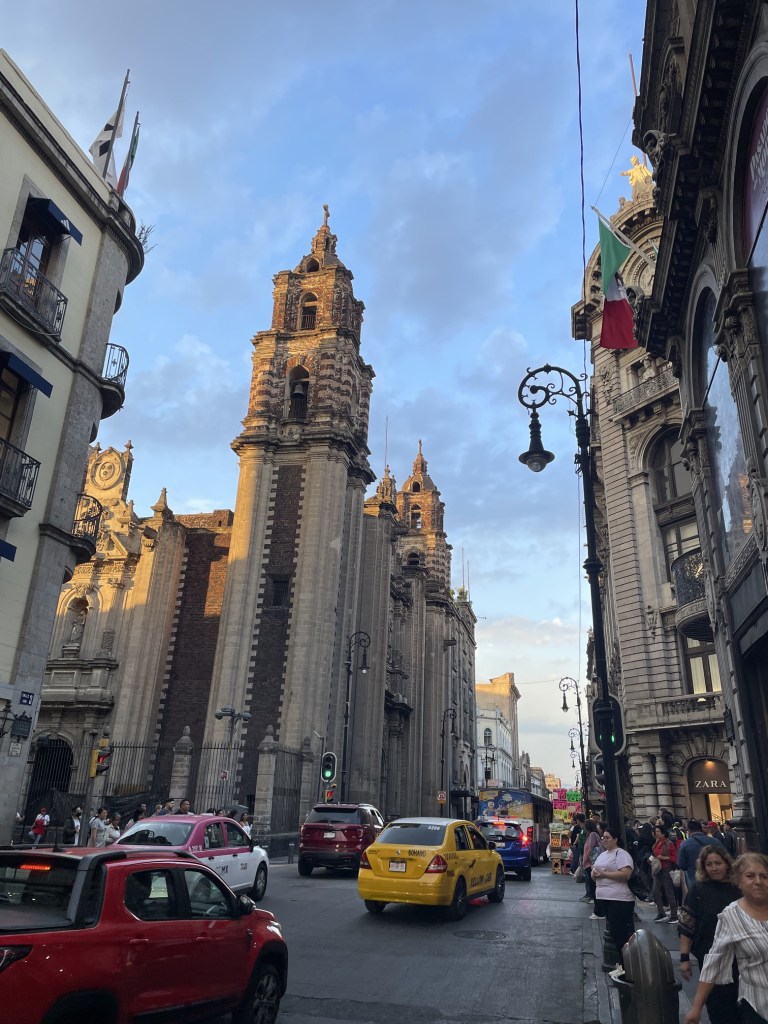
Before long, Frederick showed up, and shortly after Luca arrived after flying in from San Francisco. We grabbed dinner and discussed the plan for the expedition a bit. Luca and I then walked around outside the hotel and then we retreated to our rooms to pack properly for the expedition. I planned to leave a bunch of items (including my laptop) behind in the hotel and pick them up when we returned after the expedition.
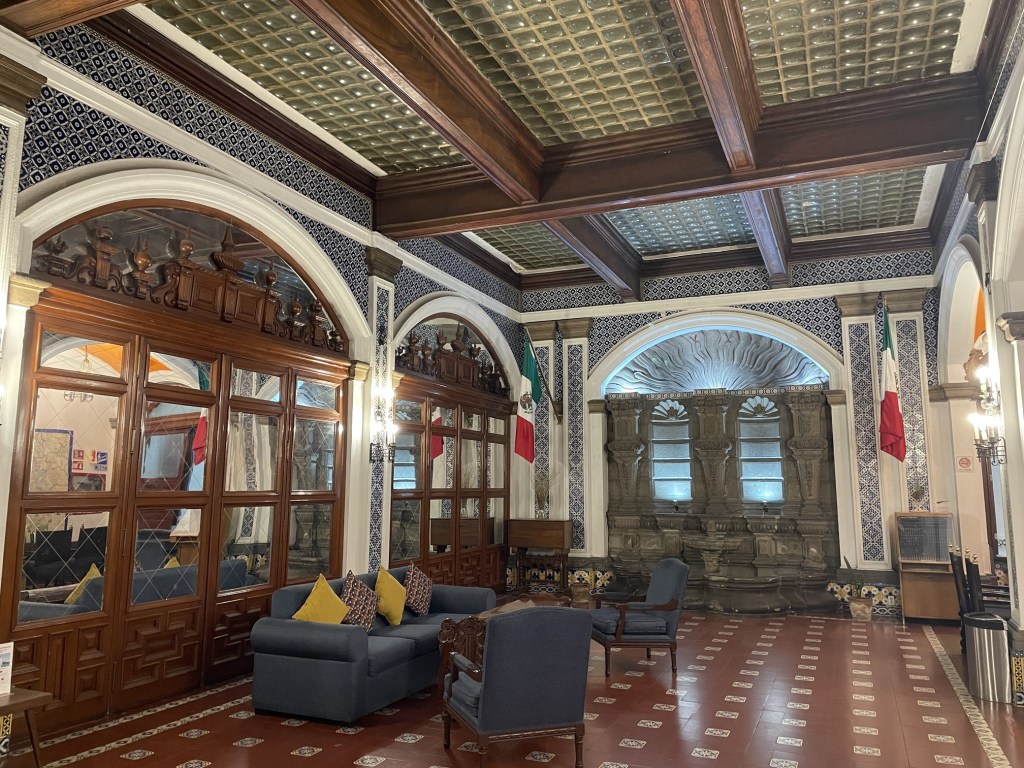
It was extremely noisy outside, with dogs incessantly barking, and I ended up getting to bed far later than I intended, just after 11pm.
Day 1: Travel to Hildago
The night was pretty noisy and I only got about five hours of sleep. People were outside cleaning the streets at 1am, which was audible even with earplugs. It turned out that our departure from Mexico City was the same day as the national holiday, which explained why the streets were hectic. After a buffet breakfast on the roof of the hotel (where we had a view of the Zócalo (Plaza de la Constitucion) where preparations were being made for the festivities, I did a bit of pack reorganizing and dropped my duffel with a few items, including my laptop, at the front desk which I would pick up when we returned at the end of the trip.
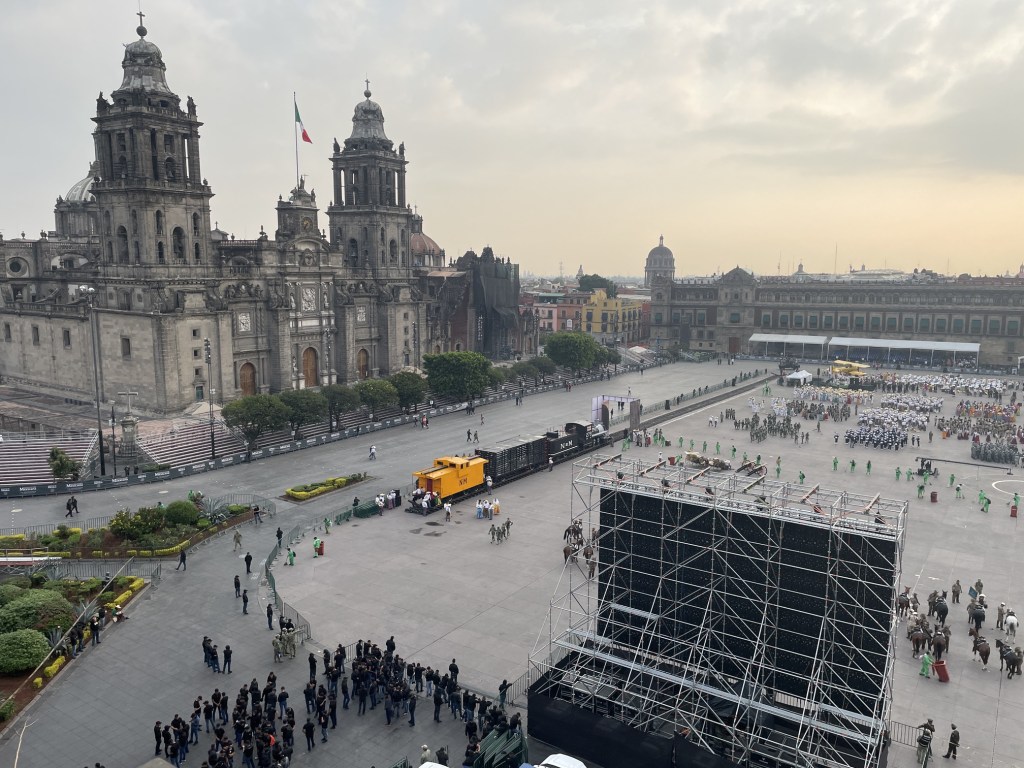
Due to the road closures, we had to walk a decent ways to meet our driver who would be taking us to Miguel Hildago y Costilla (I’ll refer to it as “Hidalgo” from here*), the closest town to Orizaba. We met our driver, Jose, and loaded all our gear in the car for the drive. The drive took a while (Mexico City traffic is insane) and there weren’t too many views due to cloud/fog.
*Note: The name “Hidalgo” is also given to one of the 31 states of Mexico. Hidalgo (the state) is two states north of Mexico City. Most of our travels would take place in the state of Puebla.
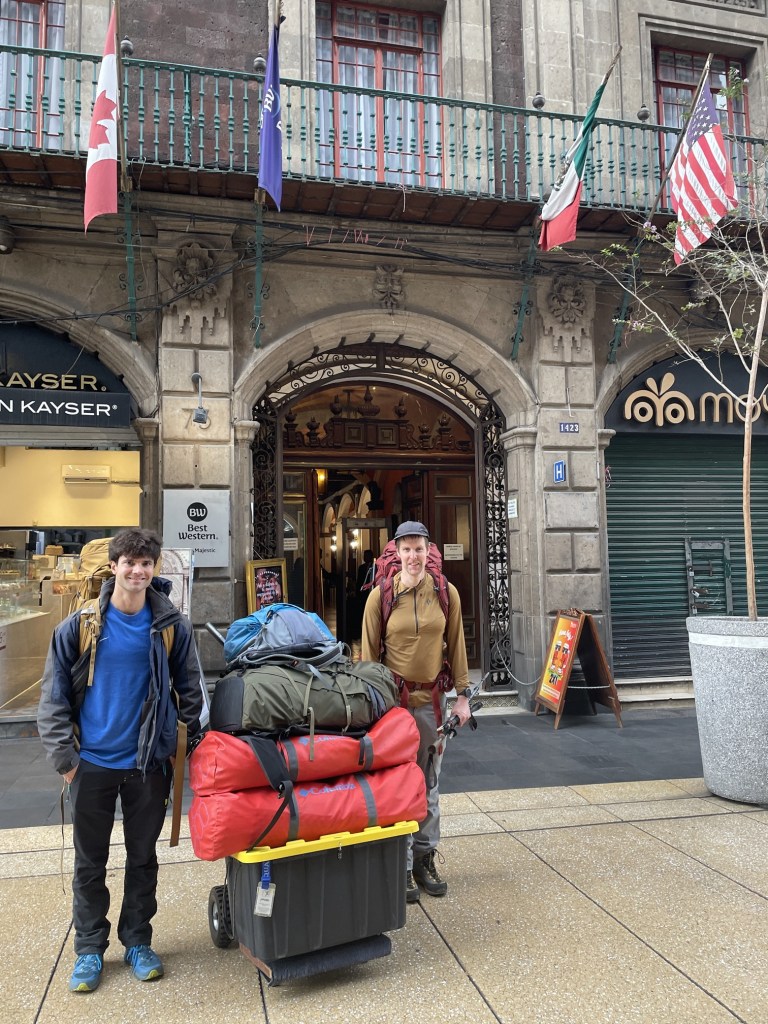
We stopped in Tlachichuca (about 30 mins from Hildago) for lunch and to pick up some fresher foods (Frederick had packed a container full of snacks and freeze dried foods from Canada), including corn tortillas and avocados. We also grabbed lunch and ended up visiting a bunch of different places since we had to find somewhere which had meals which fit my diet (no meat or chicken, AND not very spicy). One of the places didn’t even have a menu, the lady verbally told us what they served. With the help of Jose (who spoke no English) and Google Translate, we were able to figure things out and ate at a seafood place. Unfortunately, the clouds prevented us from seeing Orizaba from Tlachichuca.

We made our way over to Hildago – our accommodations for the evening would be at “Orizaba Peak (Transportation, Accommodation and Mountain Guides)”, the property of a man named Rutillio. Frederick’s previous contacts in the area had retired, and Rutillio was the only one to reply to his correspondences. Frederick had described to Rutillio his plans to climb Orizaba from the west via the Ruta Abrego, and Rutillio had confirmed that they would be able to get us there via 4×4. Hold that thought for now.
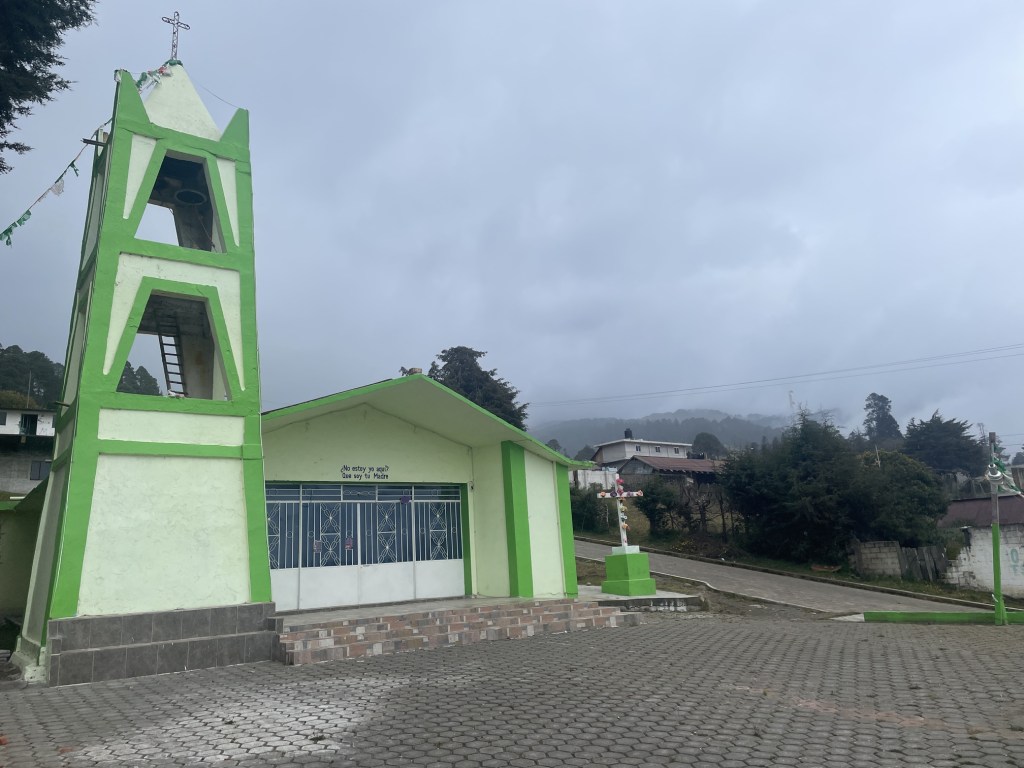
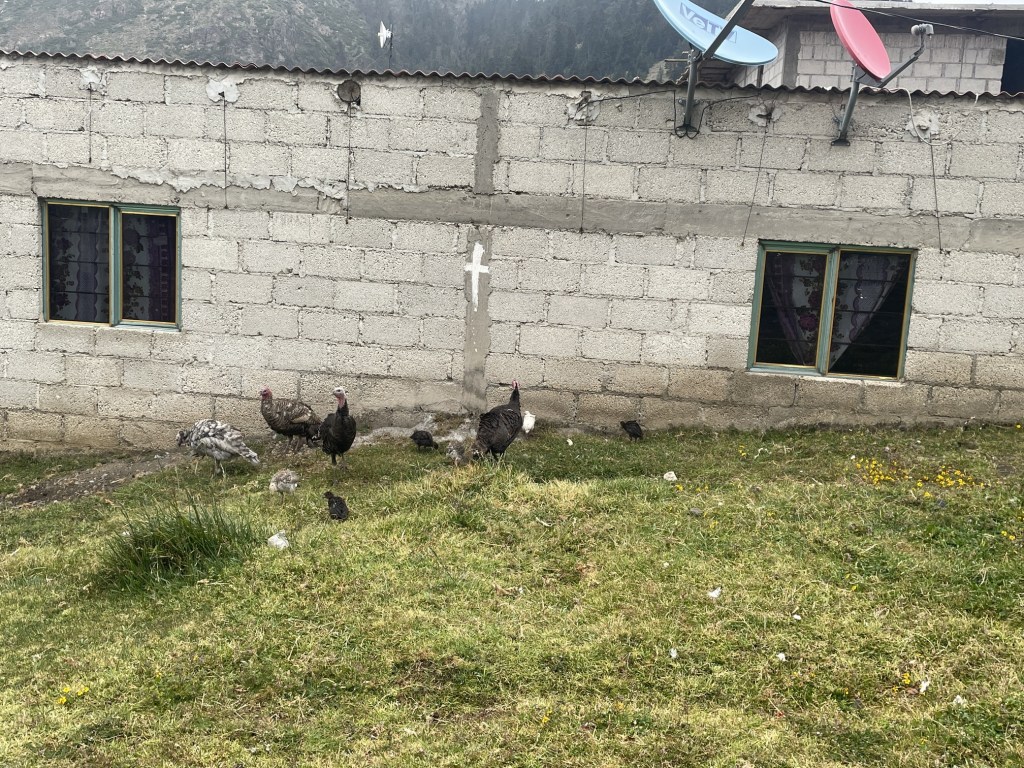
In Hildago, we met our driver for the drive to our base camp – Rafael. We took a short walk around town, a fairly hilly place situated at around 3350 meters (11180 feet). There were tons of animals roaming around – dogs, turkeys, sheep and horses. There were donkeys at the property next door which were audible from inside our sleeping area. After dinner, it took quite some time to explain to Rafael that we were attempting a new route, what our plan was for getting to our base camp, and that if we needed to make a high camp he would need to stay with our base camp to watch our stuff.
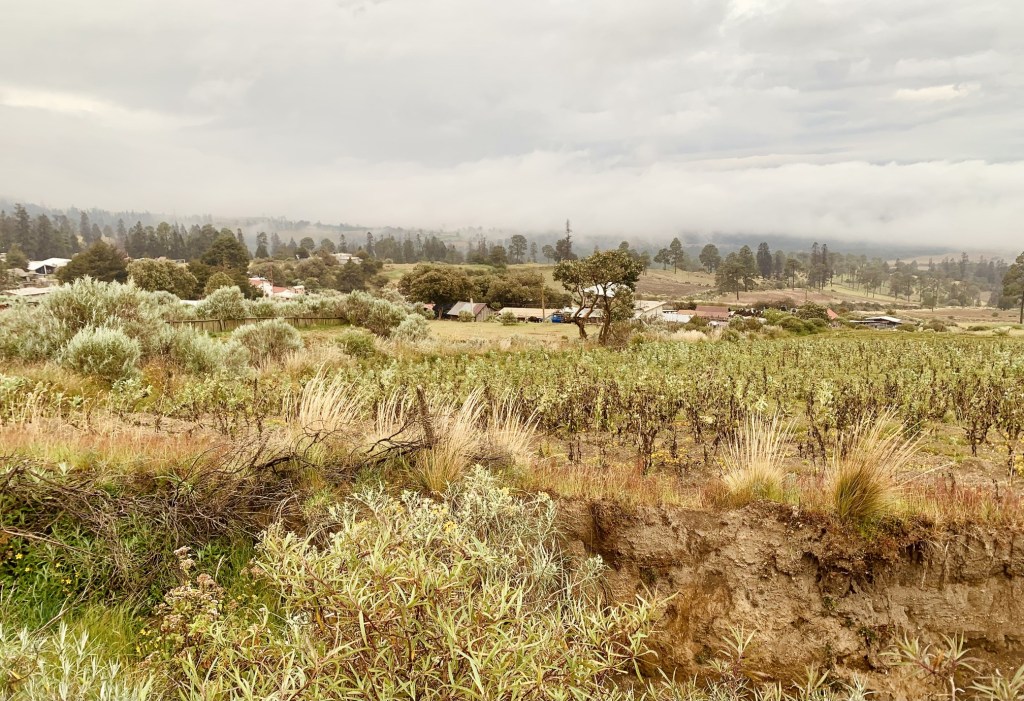
Day 2: The Misadventures Begin
The following morning, after a night where we all got up frequently to use the bathroom (a result of the altitude and taking diamox for acclimatization), there was still some confusion on Rafael’s end as to what our plan was. Frederick eventually called his friend’s wife (who is Mexican) back in Canada on Whatsapp to speak with Rafael directly and things got hashed out. I also checked my O2 saturation in the morning and it was at 88%, which wasn’t too bad. After loading up Rafael’s 4×4 truck with our gear, as well as 8 ten-gallon jugs of water, a shovel and pickaxe (specifically requested by Frederick) as well as fuel for Frederick’s stove, which turned out to be car gasoline. Frederick had requested white gas or naphtha, but the translation for white gas in Spanish is “gasolina blanca”, hence the confusion. We were also finally able to get a decent view of Orizaba, as the clouds finally started to lift.
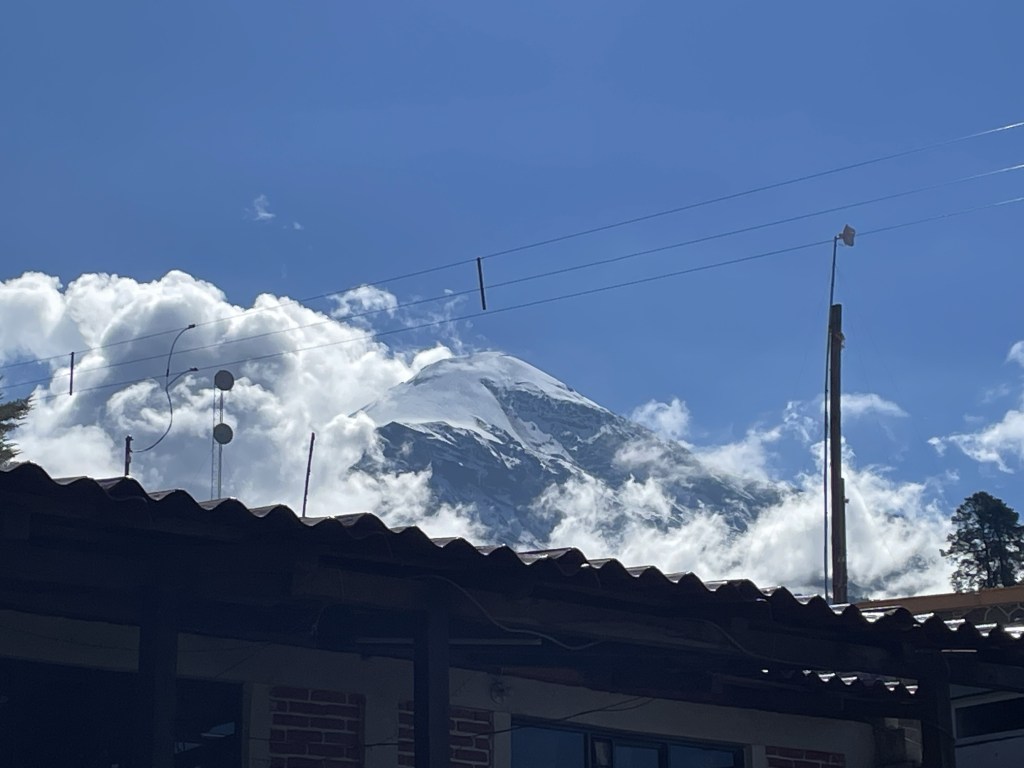
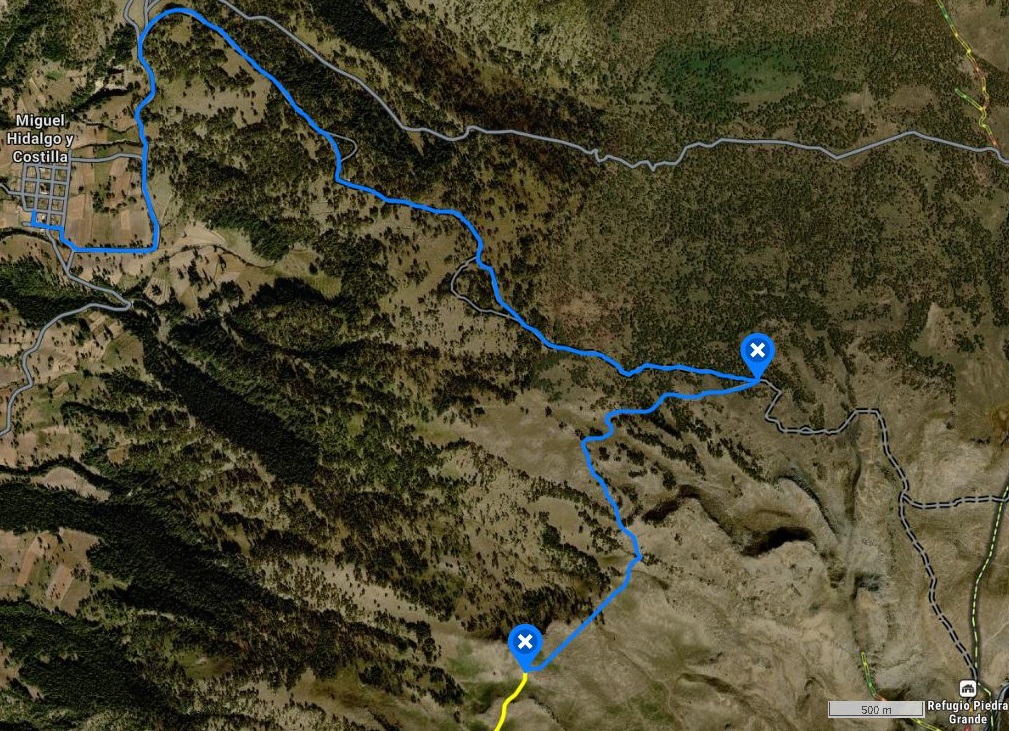
Our drive, contrary to Frederick’s expectations, started up the usual road taken to the Refugio Piedra Grande, the hut where most climbers begin the climb up the main route. Frederick expected us to take a more direct line up the west side of the mountain to our base camp. Upon returning to Canada and doing some research for this blog post, I happened upon a posted route on Wikilocs where some folks hiked from Hidalgo to the old hut on the Ruta Abrego, the Refugio Jose Llaca. Frederick mentioned that the hut was in ruins and it would be fun to try and find them on our expedition.
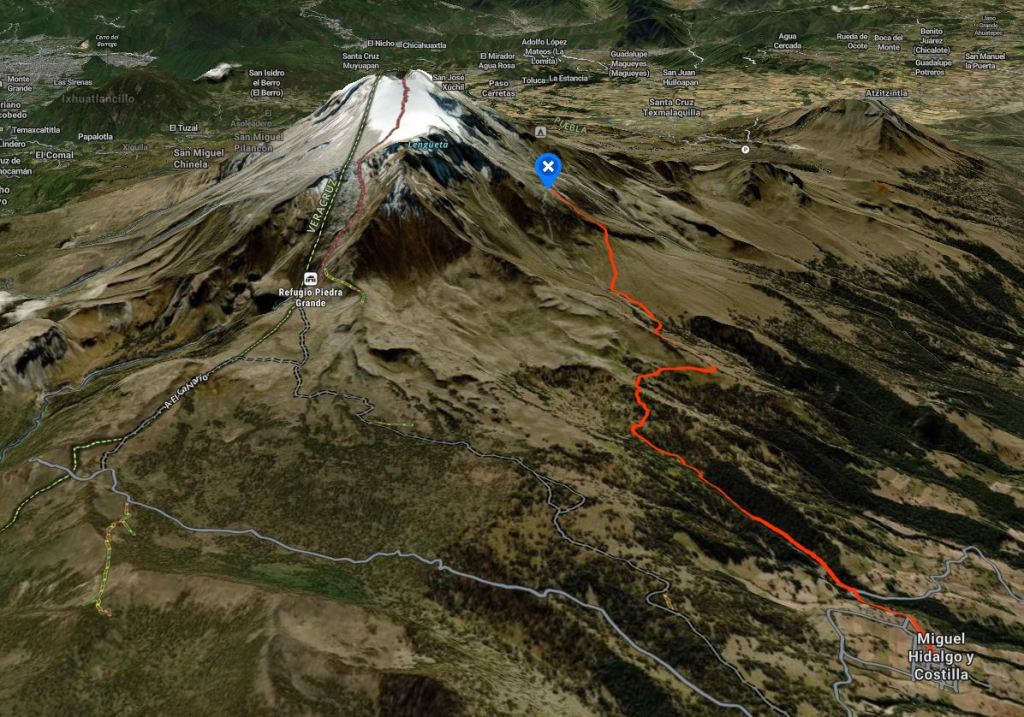
However, after Rafael made a few calls, he determined there was a side road branching off the main road which would get us there. It was very clear that Rafael had not been prepped properly by Rutillio as to what our plan was. The road was extremely bumpy and unmaintained, but Rafael was able to carefully maneuver as needed. In one spot, Rafael exited the truck and wielded the pickaxe to break up a nasty rock embedded in the road/trail.
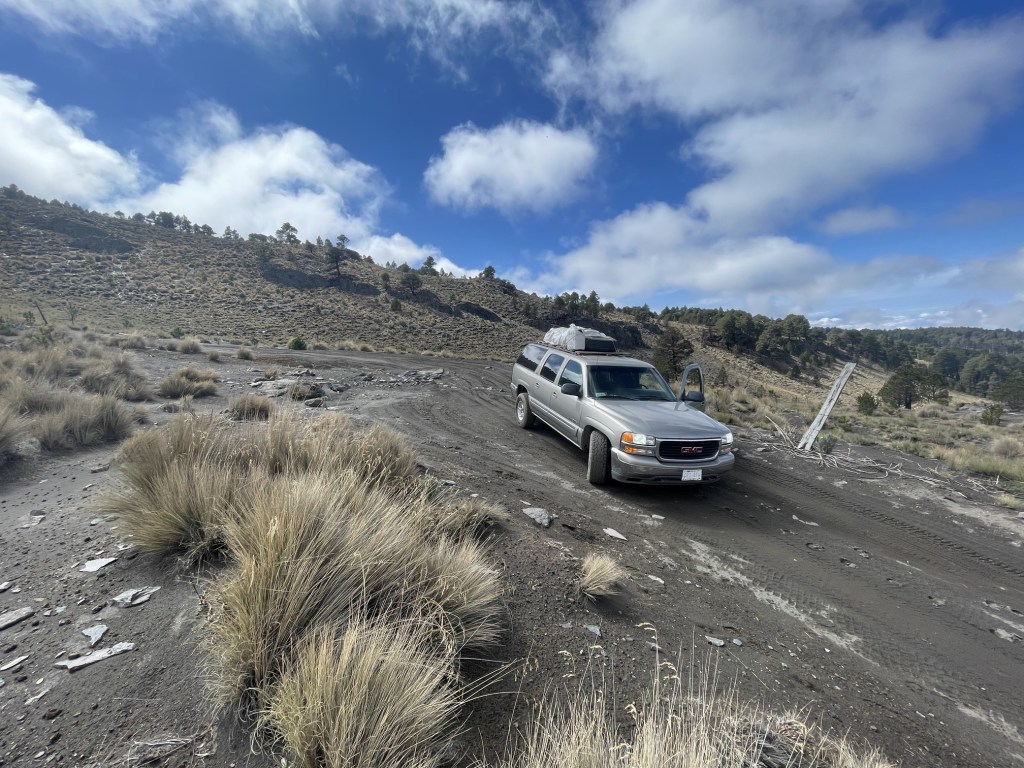
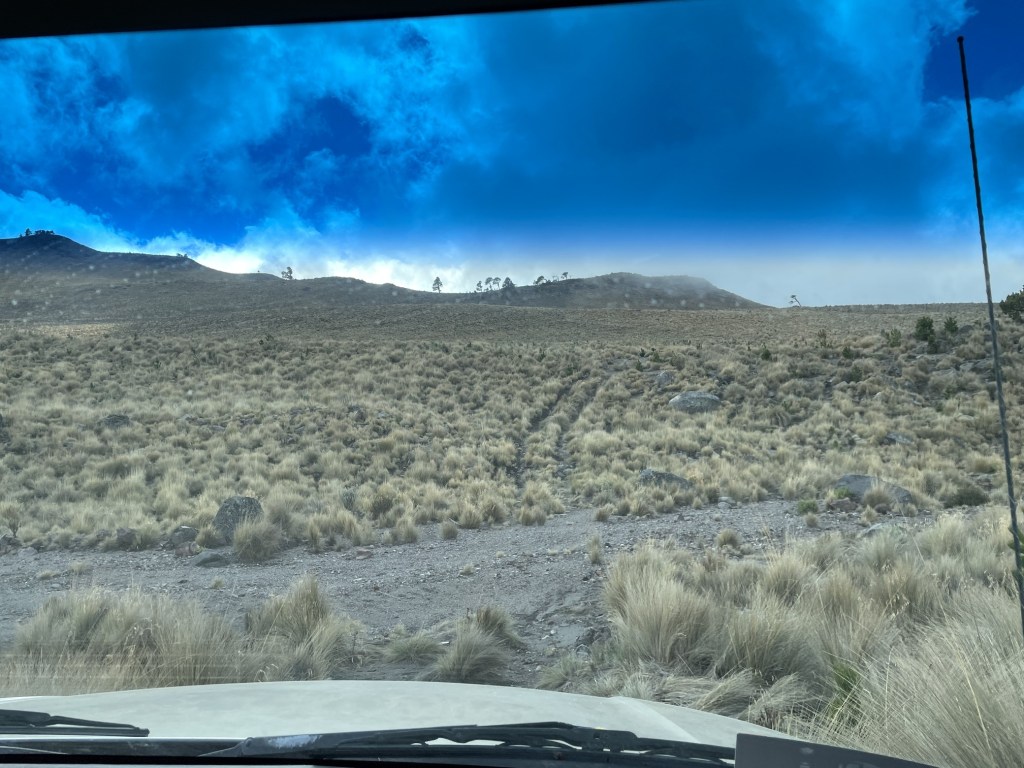
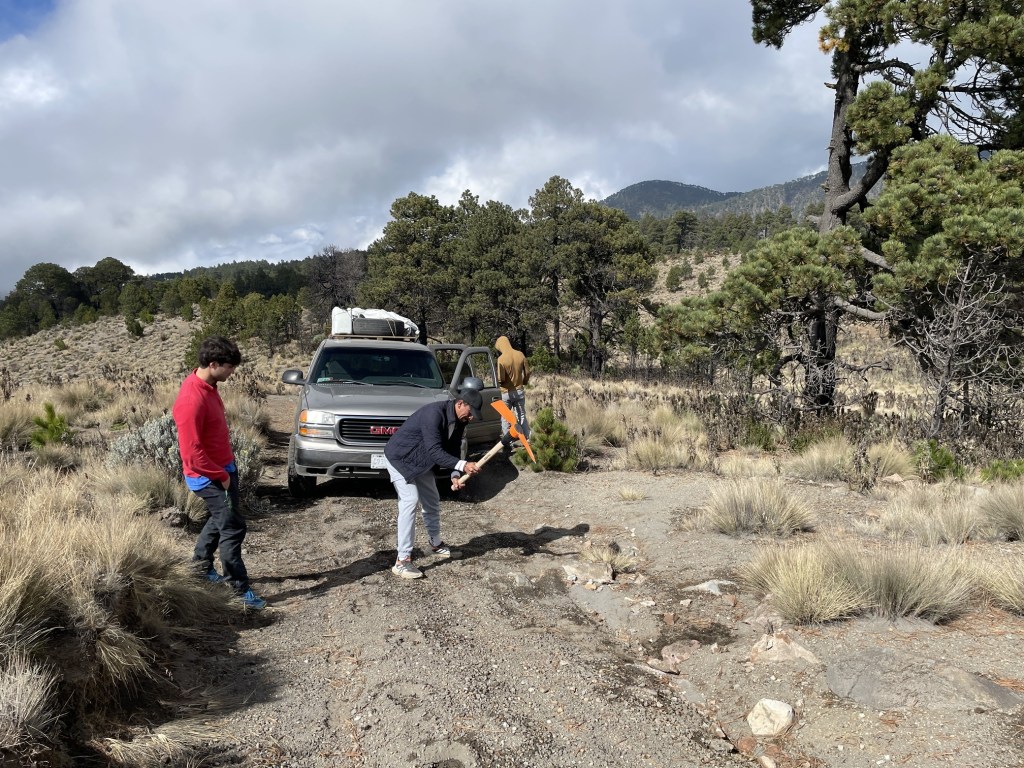
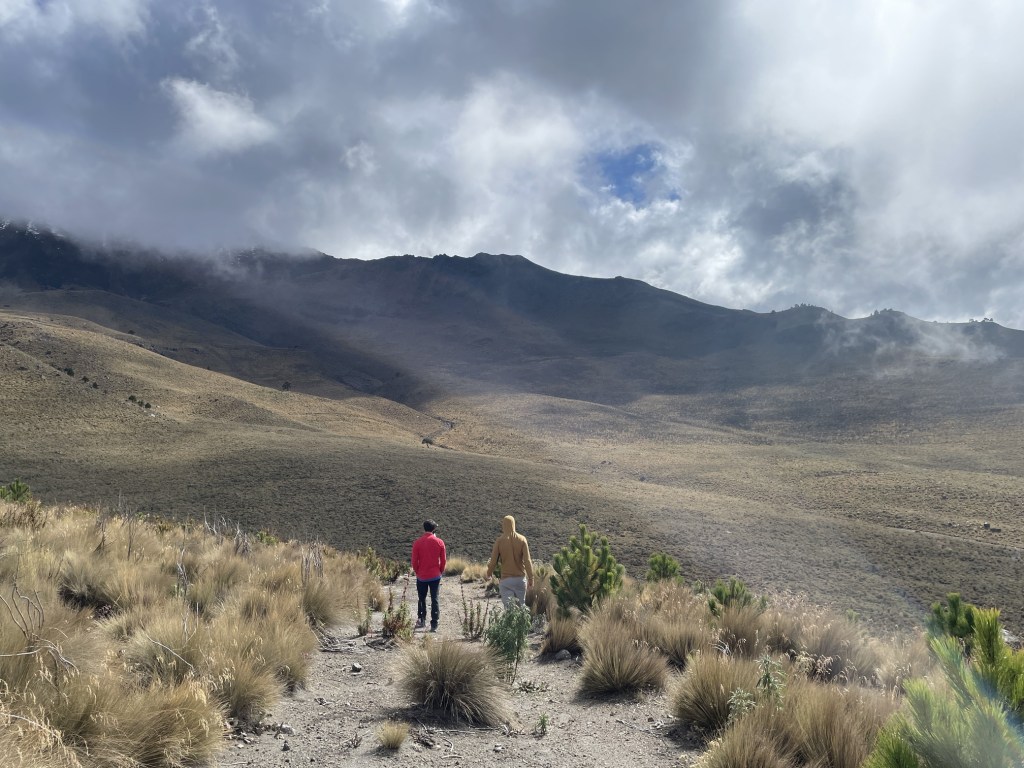
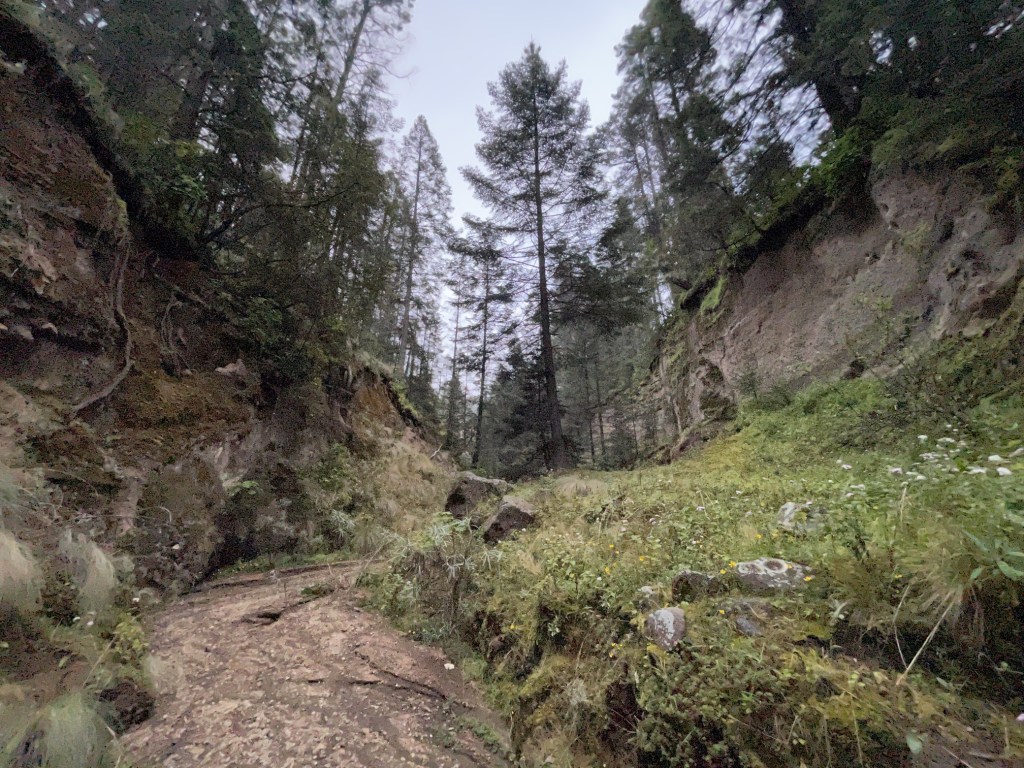
As we progressed, the trail became increasingly fainter, but the scenery and terrain were stunning to pass through. Eventually, we reached a barb wire fence which was partially flattened. After shovelling dirt and placing vegetation on the fence, the truck was able to proceed. However, a mere 100 meters later, on a very rugged side slope trail, the truck ran into some difficulty, with tons of thick grass and rocks blocking the way. After the four of us tried to clear the obstacles, it was clear the truck could go no further, we would need to make camp back near the barb wire fence for the evening, and the truck would need to reverse back to the fence as well. Unfortunately, when it rains, it pours, and the truck struggled to make any progress backwards, even with us digging ruts for the tires to follow as it gained momentum. The truck was gradually sliding sideways down the slope and it was clear that between the four of us and the tools at our disposal, we would not be able to move the truck.
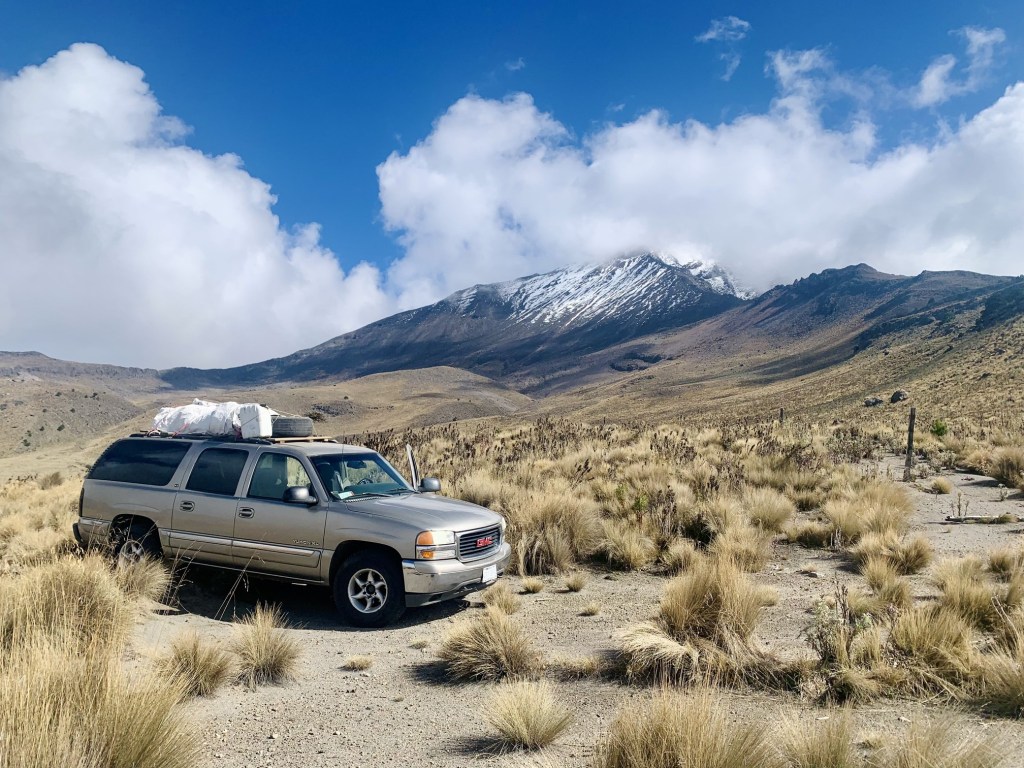
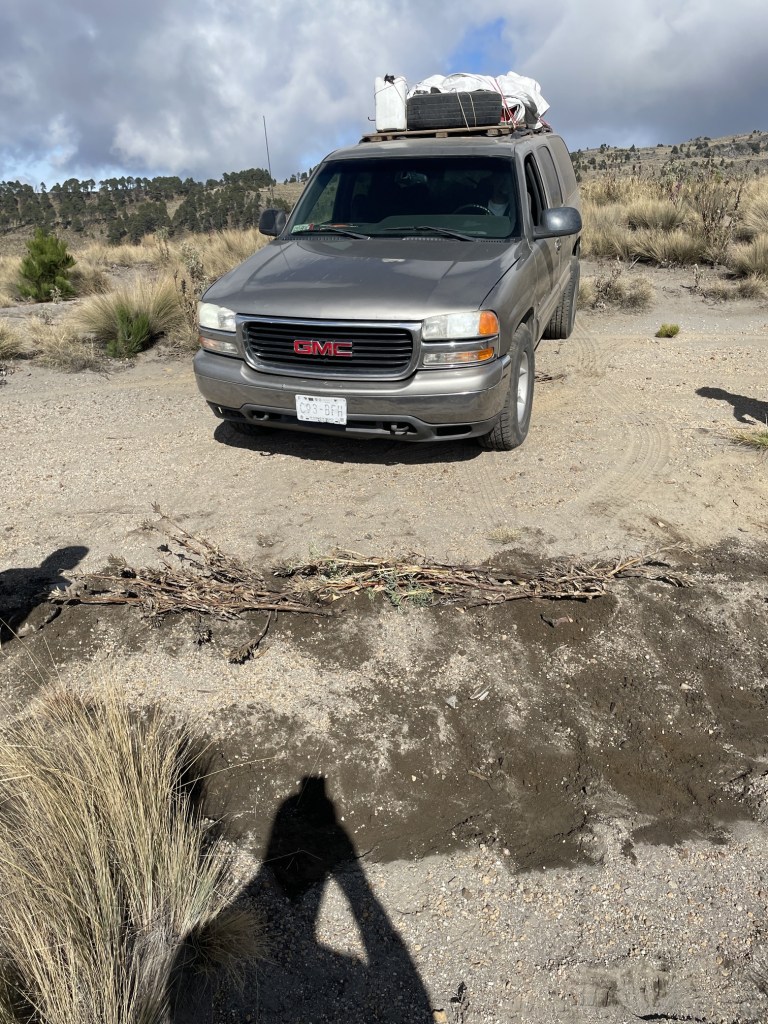
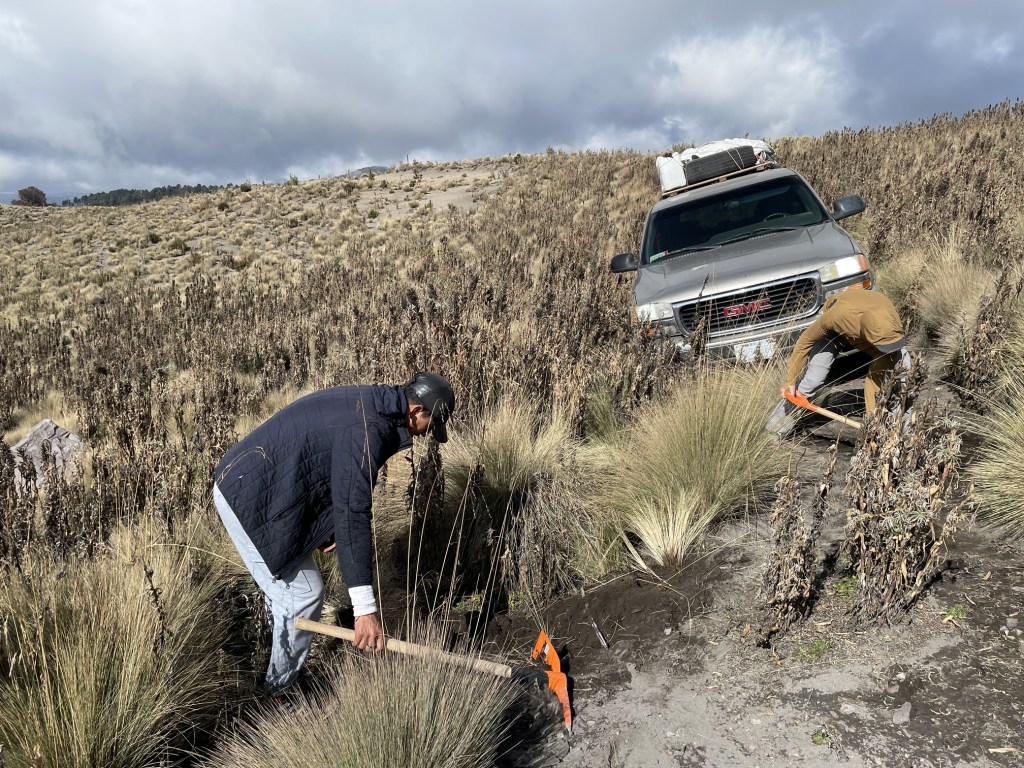
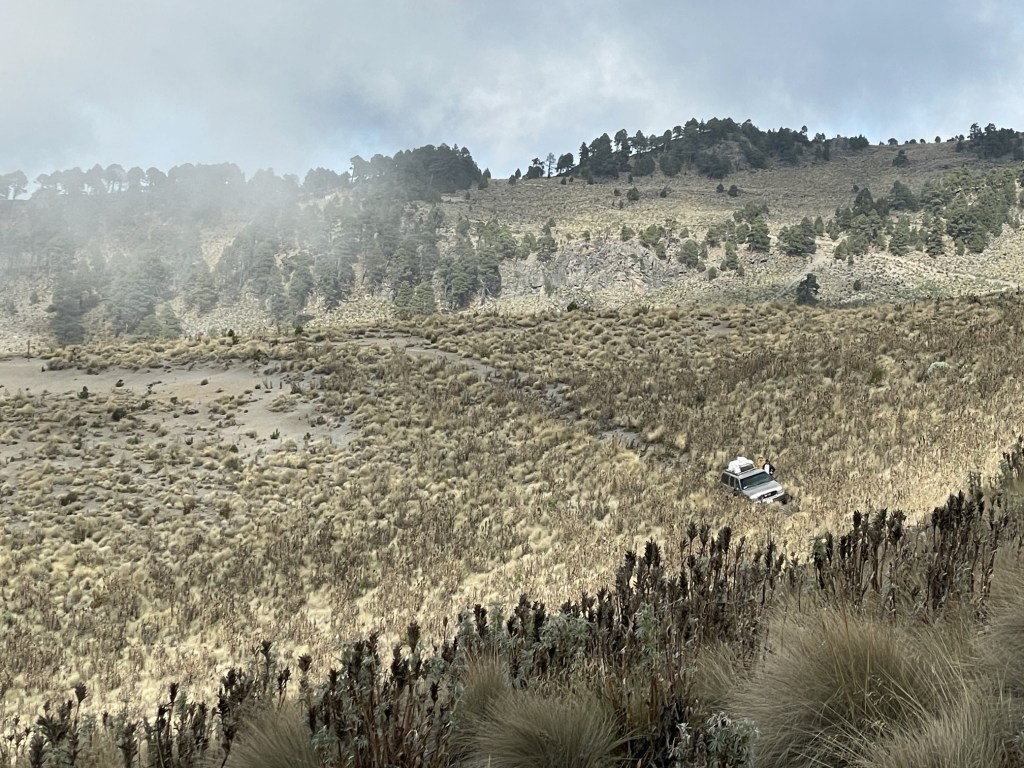
We unloaded the truck and carried our provisions and gear back to the area with the fence and set up camp (I’ll call it Camp 0.5). Each of us slept in our own backpacking tent (I had brought my MSR Access, a four season tent I had only used in the snow, so this meant my tent would be getting quite a bit dirtier on this trip) and we also set up a floor-less tent as our kitchen and gear storage tent. Pretty sweet place for a campsite, despite being far away from our intended base camp location.
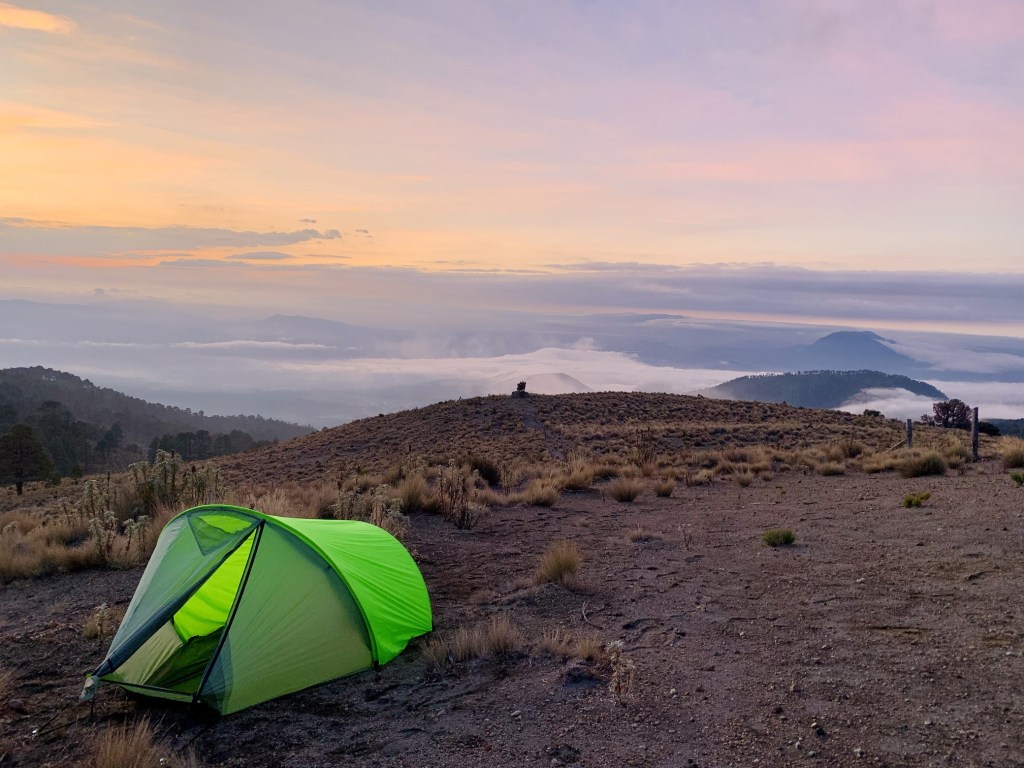
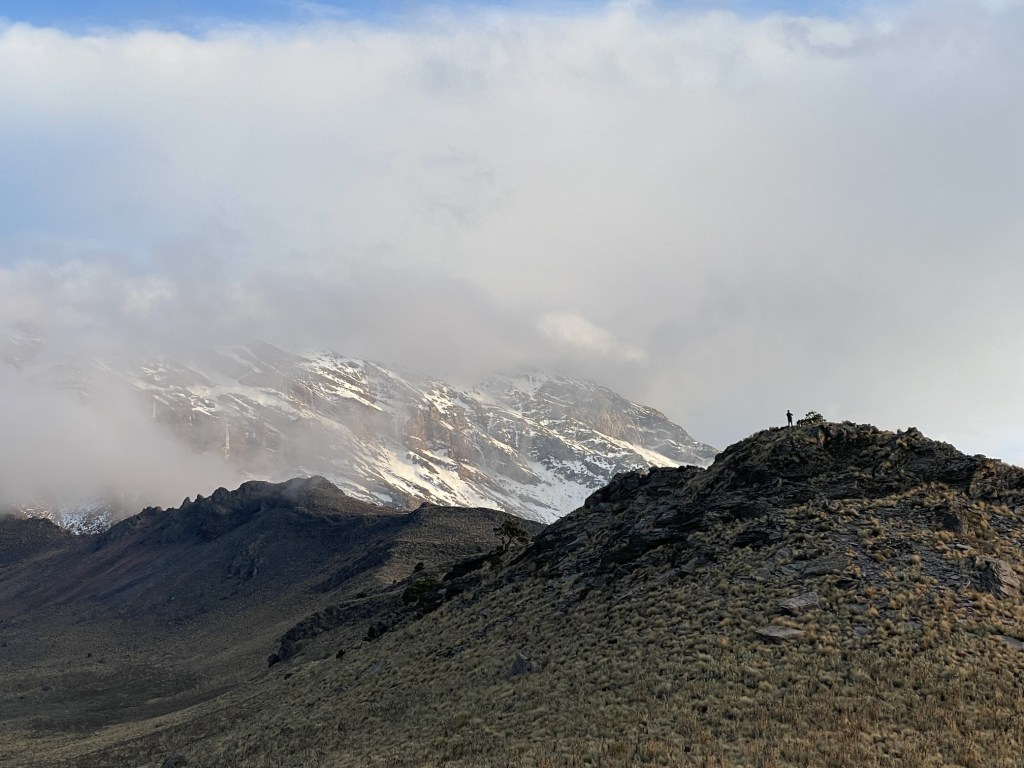

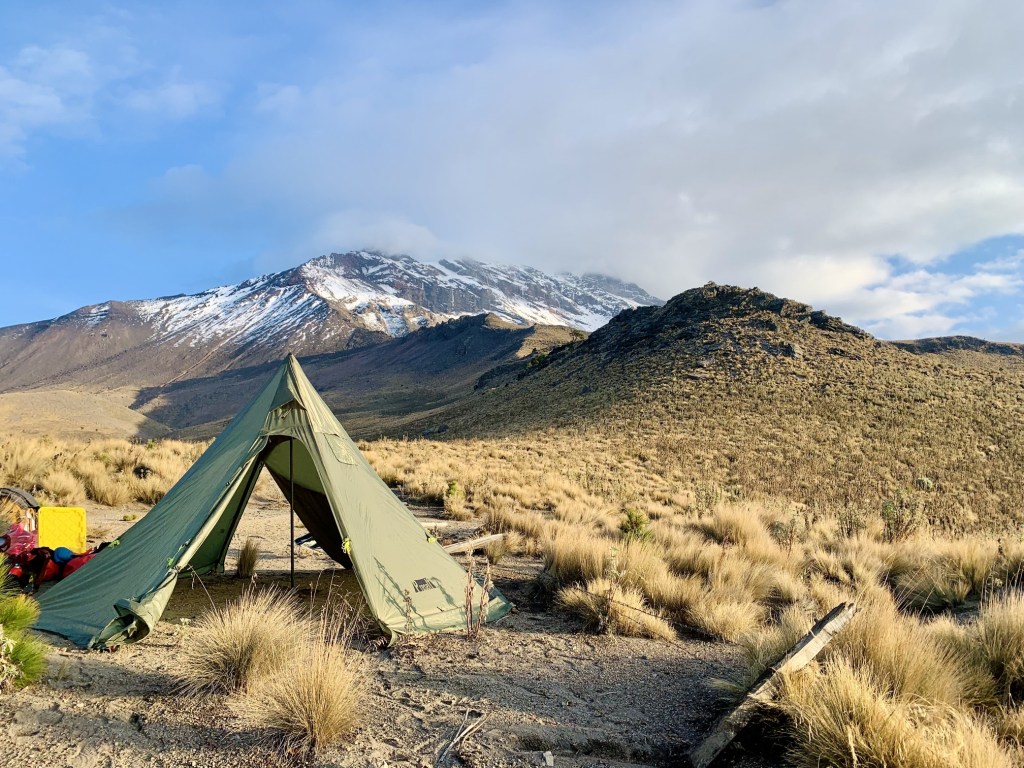
While setting up, Rafael was able to get a hold of some folks with horses, and they planned to arrive the next day to rescue the truck and carry our gear and provisions further. Rafael then walked back down to Hidalgo while we cooked dinner. Frederick had brought two stoves, and thankfully he did, as the first one would not run at all on gasoline. The second one worked, but not particularly well. It was enough to boil water for our freeze dried meals by Backpacker’s Pantry.
Day 3: Birthday in the Mountains & The Cavalry Arrives
My third full day in Mexico was my 35th birthday and I could not have imagined a better place to have it. The night at altitude was pretty solid other than the usual bathroom excursions. My O2 saturation was around 85% in the morning which is pretty good considering the rapid gain in elevation. Note it is generally recommended to ascend to a sleeping height of no more than 500 meters per day, and we had gone from 2250m in Mexico City to 3350m in Hildago (+1100m) to 4020m (+670m) at Camp 0.5.
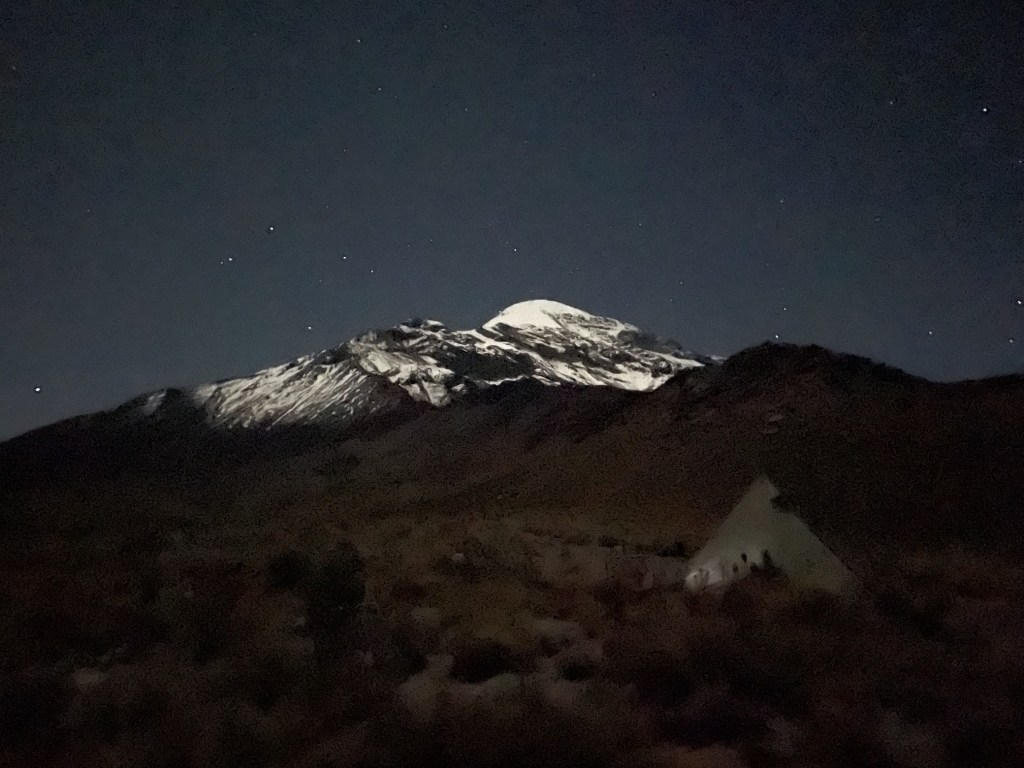

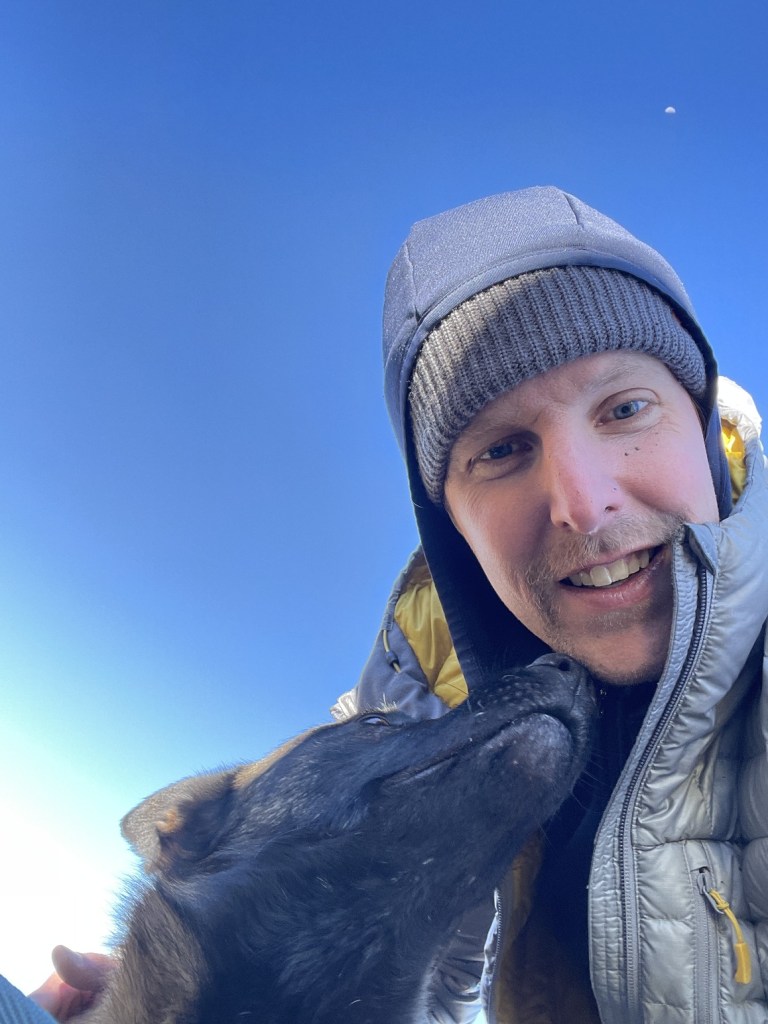
After breakfast in the tent, right on time at 8am, a massive army of Mexicans, led by Rafael, came galloping into camp on horseback, accompanied by at least four dogs. While the horses and dogs relaxed near our camp, the guys immediately began excavating a track for the truck to be able to back out. It was pretty remarkable seeing them work quickly to clear all the obstacles out of the way. Most of the dogs were pretty skittish and ran away when you approached them, but one of them was very friendly and affectionate (likely because it thought I had food!).
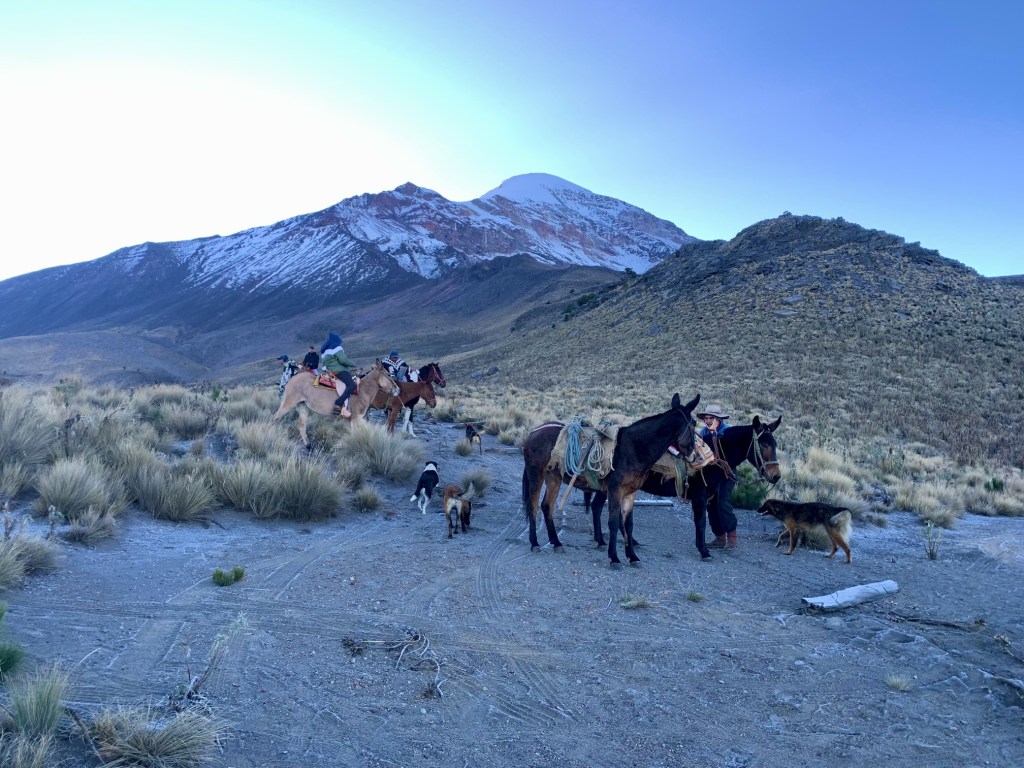
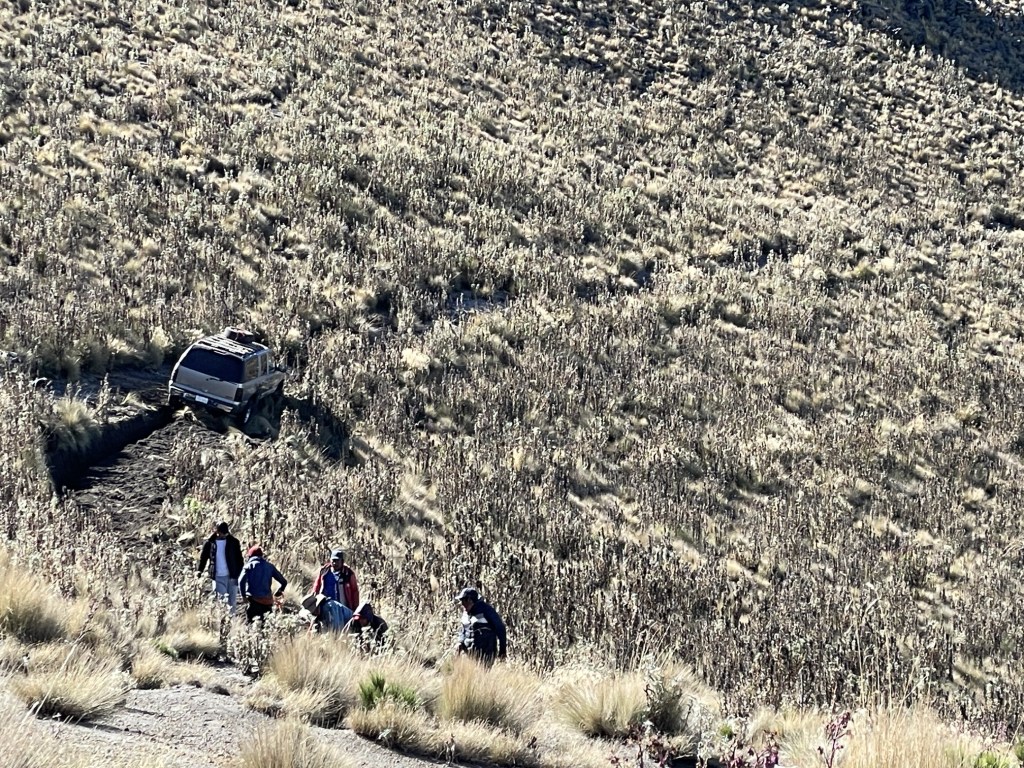
At around 11am, the truck was finally freed. Despite our efforts to cover up the barb wire fence, the guy driving the truck completely ignored these efforts and recklessly drove over an uncovered section of the fence, much to our mix of amusement and horror. We relaxed at camp for a couple of hours while the Mexicans escorted the truck back to the main road. Frederick started hiking out towards the ridge ahead to scope out the terrain on the other side for areas to place our base camp. At around 1:30pm, the horses returned and they began loading up our gear and supplies. Shortly after that, we set out – Luca joined the convoy to take the longer route around the ridge, while I followed Frederick’s path. The hike up was pretty fun – I was able to follow Frederick’s footsteps in places and clamber up to the top of the ridge. The way down to the valley on the other side seemed a bit spooky, and it took me a while to get down, with a lot of loose rock and small cliffs (this was definitely way beyond hiking at this point). One section had me lowering myself about seven feet, and I was very relieved when the terrain started to level out.
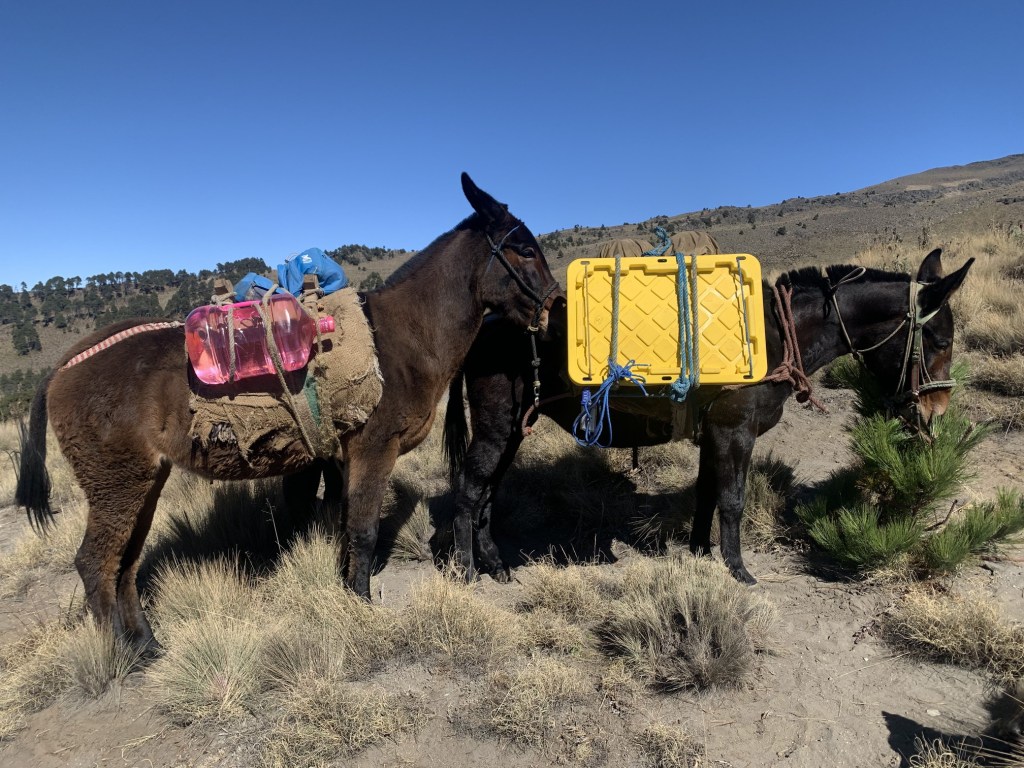
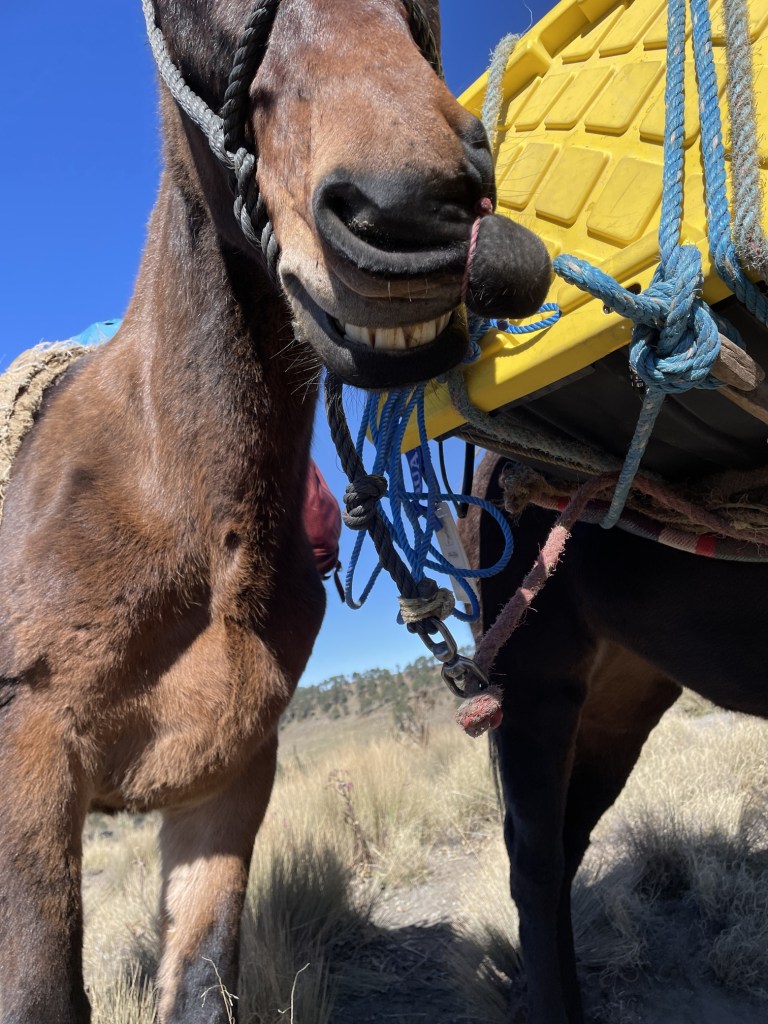
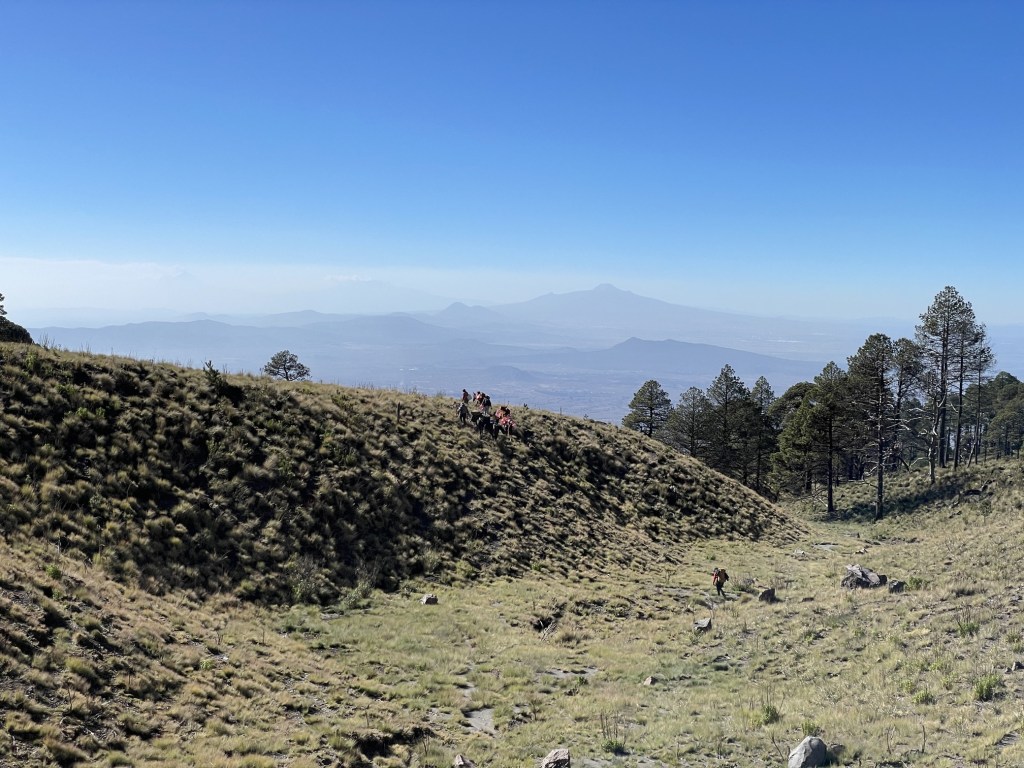
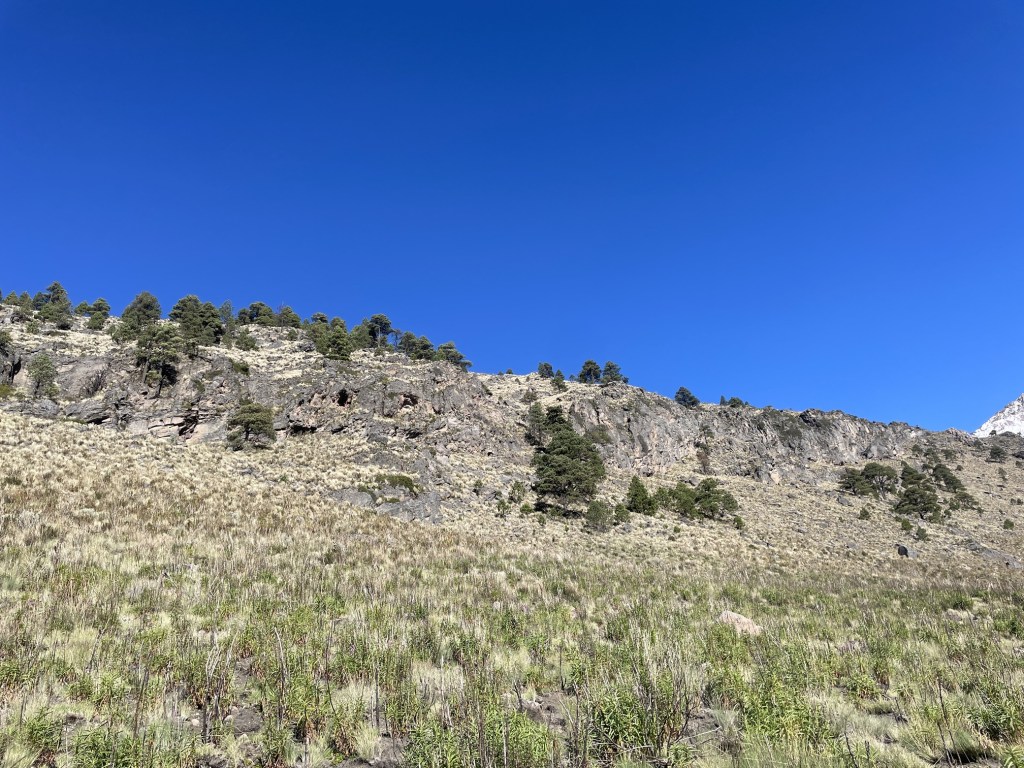
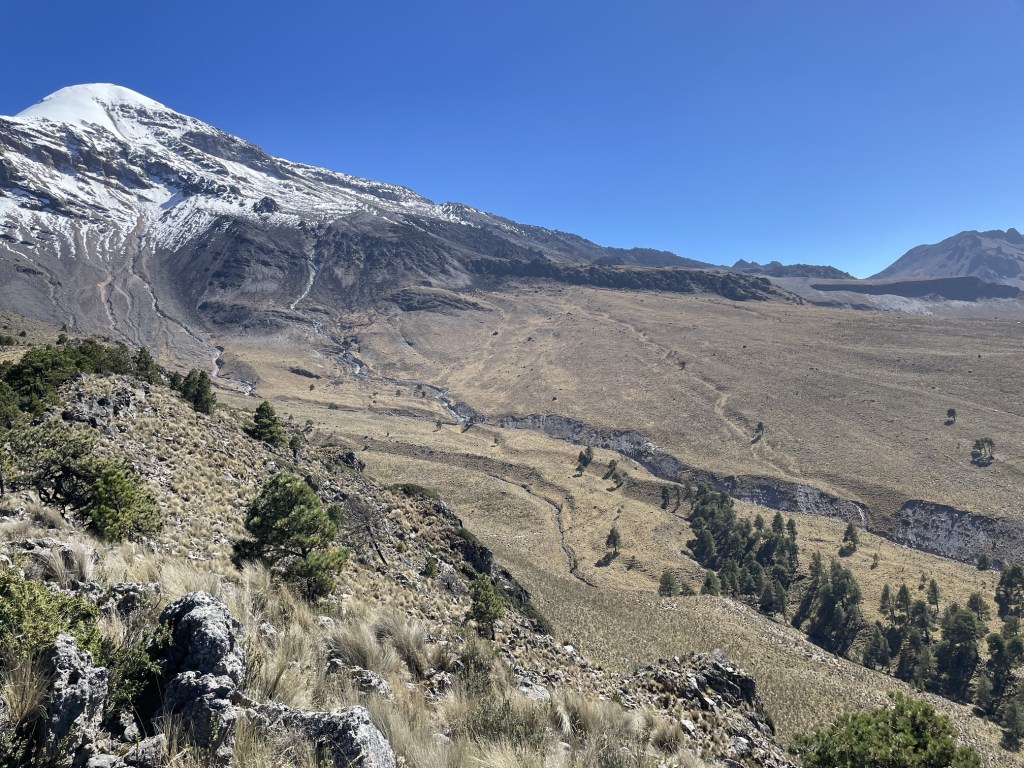
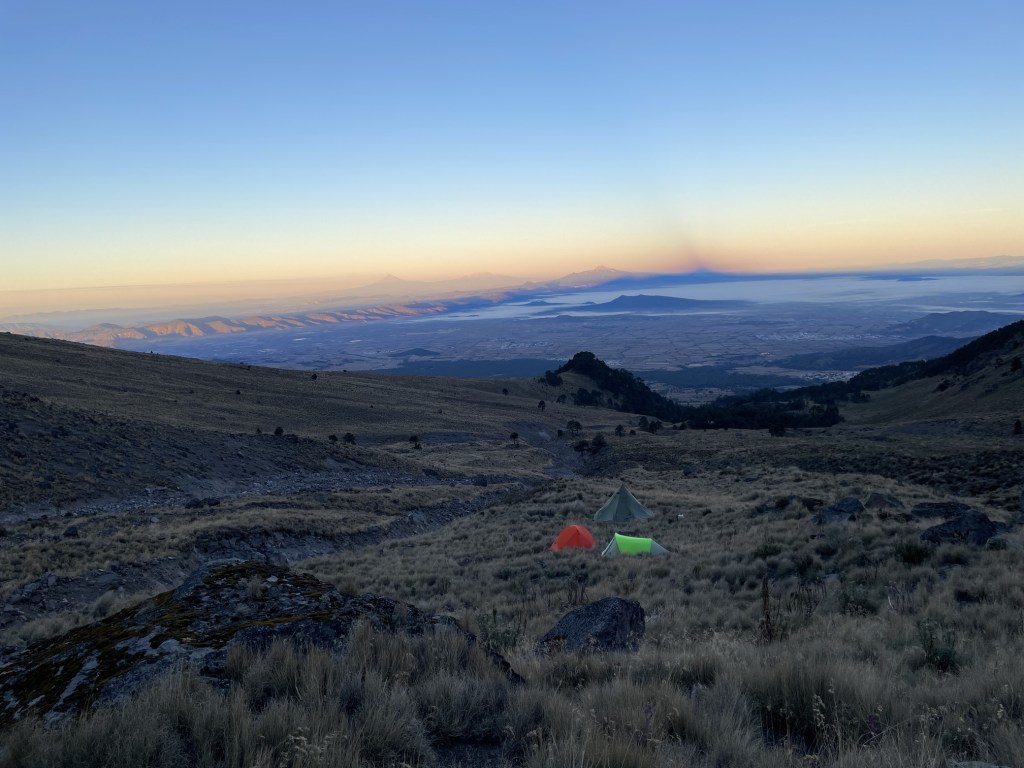
I met up with the group at the bottom and we resumed trekking up . Unfortunately, the terrain was very rugged with large ruts/riverbeds to navigate. These proved tricky for the horses and we weren’t able to get to the exact camp location we were aiming for. The horses did get us to a fairly decent spot, however, at around 4180m, only a couple hundred meters higher than Camp 0.5. Our campsite was on a gentle slope with large clumps of grass and boulders, but had plenty of good spots for tents.
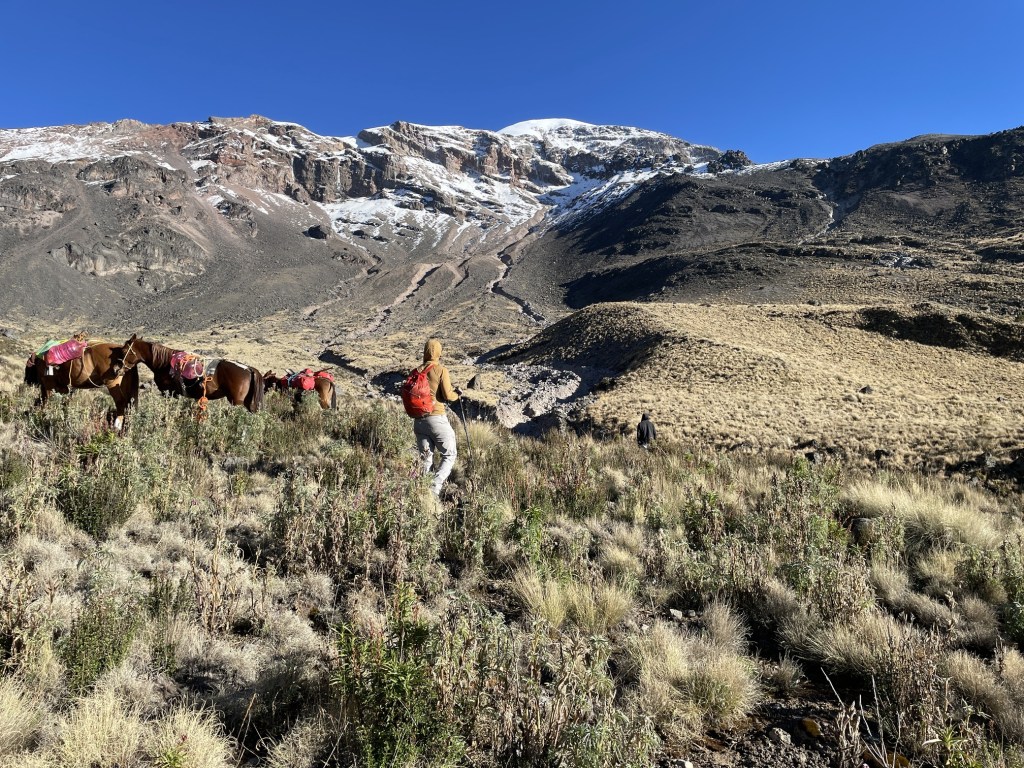
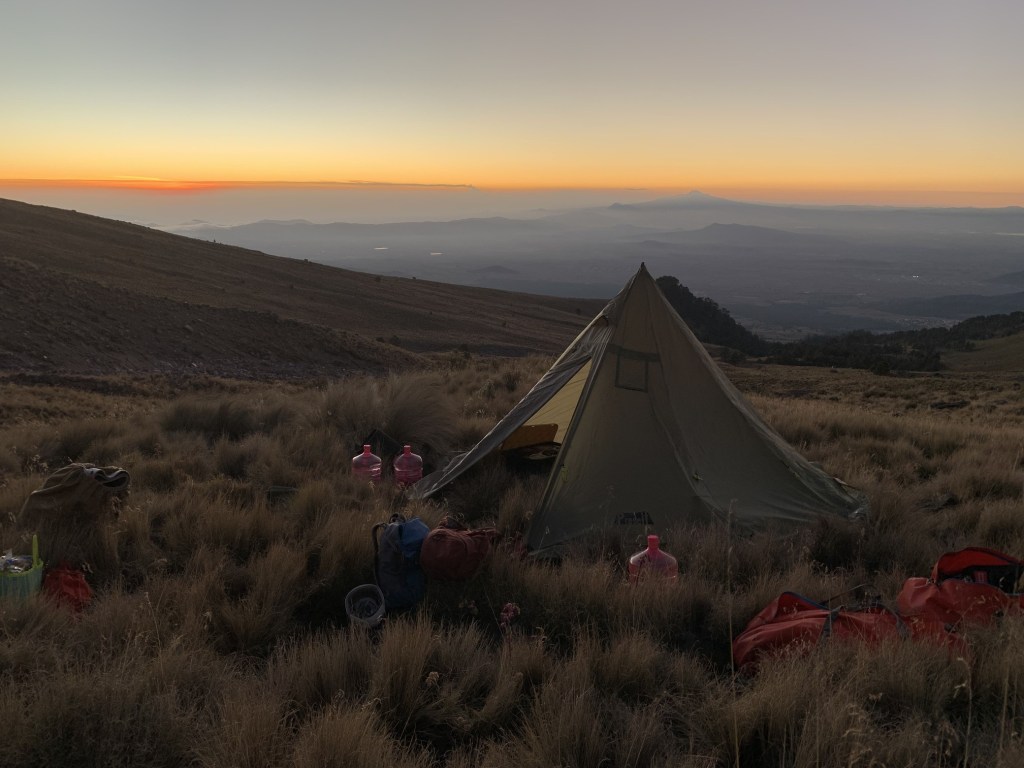
After the horses were unloaded, Luca and Frederick set up the kitchen/eating tent while I started carving out areas a bit uphill for our sleeping tents. This involved hacking out grass chunks, relocating rocks, and levelling out the terrain with dirt and grass. I was only able to get two pads completed before dark, which meant that Frederick would sleep in the kitchen tent that night.
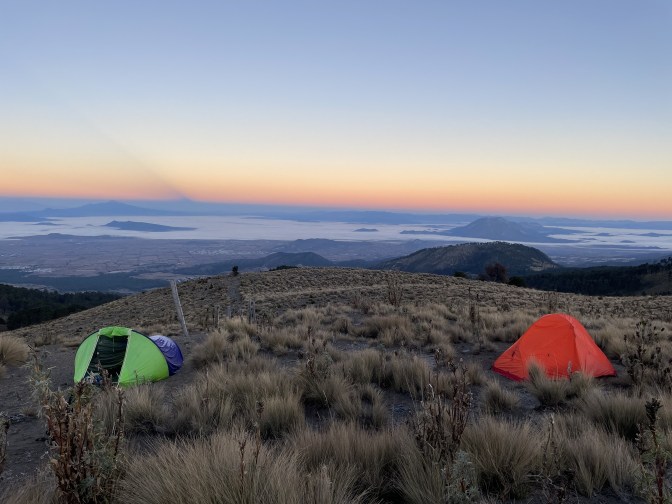
We were able to catch a great view of the plume from Popo during sunset, along with Izta and another smaller volcano, La Malinche (4461m) which we had passed on the way to Tlachichuca.
Day 4: Scoping out the Lower Route
As it turned out, the space I had cleared for my tent was nowhere as even as I would have liked it to be. It would have been fine if my feet were downhill, but I was lying perpendicular with the fall line, so it was a bit uncomfortable. Oh well. The morning views of…everything…were incredible. Honestly, even though this wasn’t our ideal campsite, I could have camped here for a week, it was such a serene, gorgeous spot.
Our goals for the day were to hike up and find a route through the lower parts of the mountain, find a spot for a high camp (from which we would make our summit attempt), and ideally get to an area with sufficient snow to practice self-arresting. This trip was technically a course as well as an expedition, so Frederick wanted to make sure Luca and I were up to speed on the technical aspects of the climb. I definitely wanted to get some more practice self-arresting, having last done some reps at the ACC mountaineering camp in July.
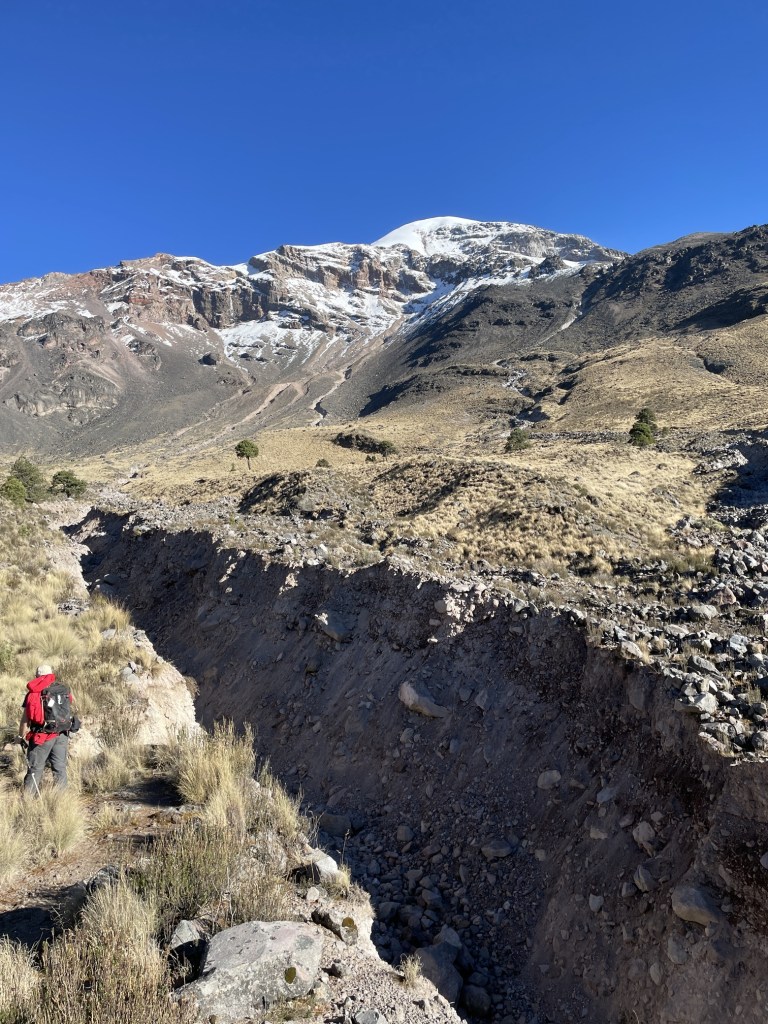
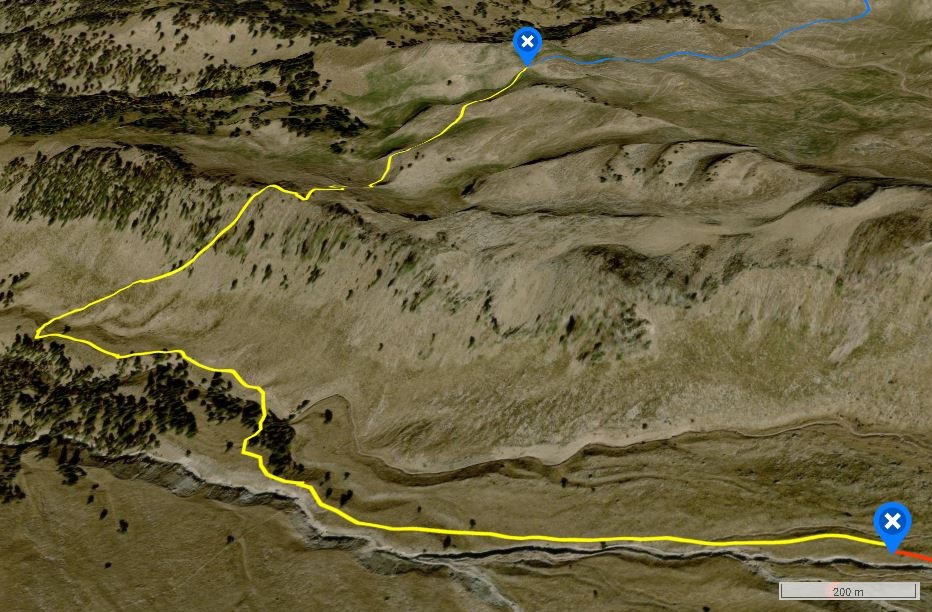
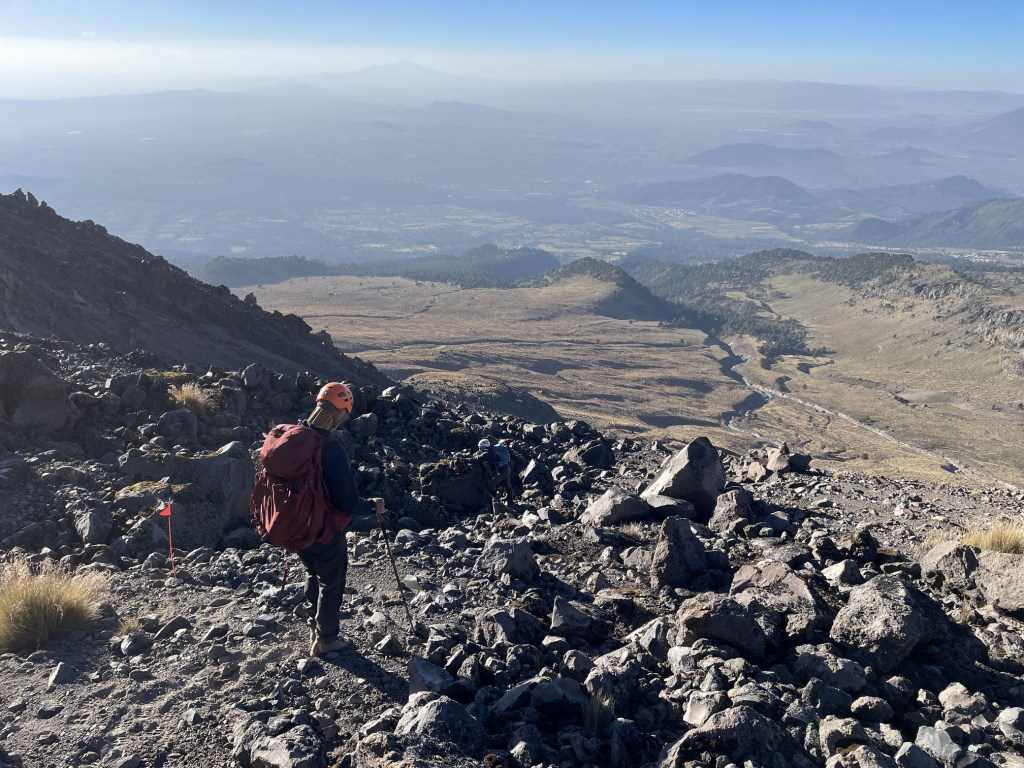
Getting access to the plateaus to the south of our camp proved to be challenging with the steep, deep ruts in the terrain. After hiking uphill a ways from camp, we ended up going back down a bit to find a safe, moderate section to cross over one large rut. Frederick had also brought along some wands to mark our route, so these were placed in strategic locations as needed. After ascending a steep, rocky slope to the lower of the two plateaus (around where Frederick ideally wanted our base camp to be), things got a bit easier ascending the next scree slope, though the terrain got a bit trickier from there.
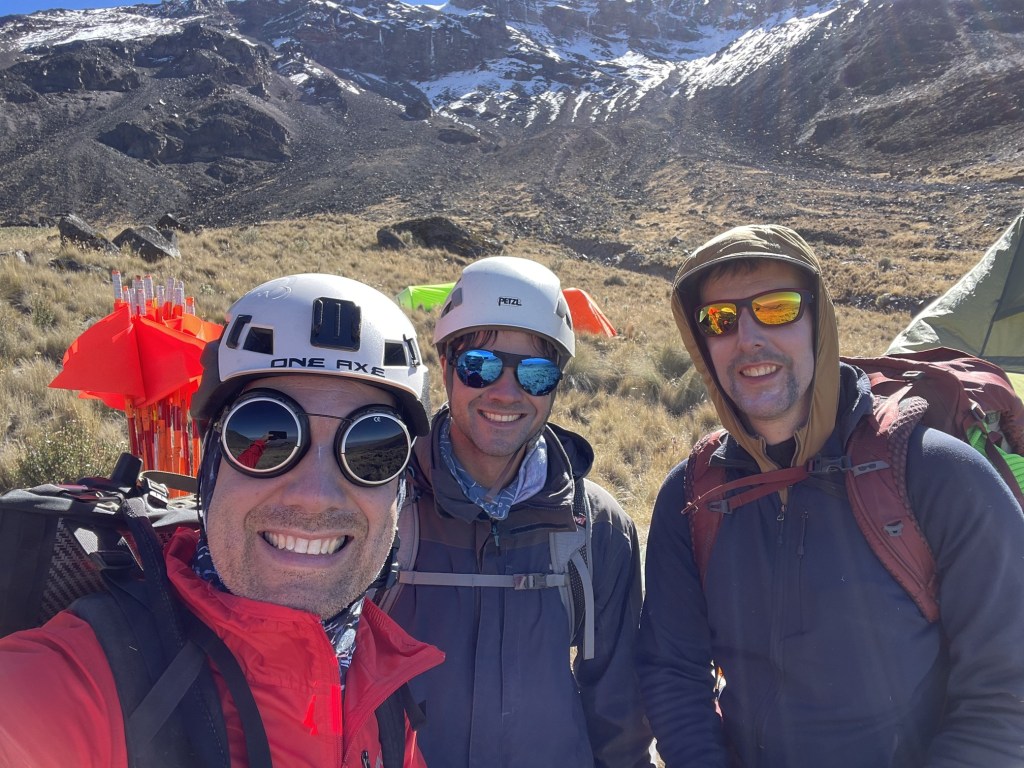
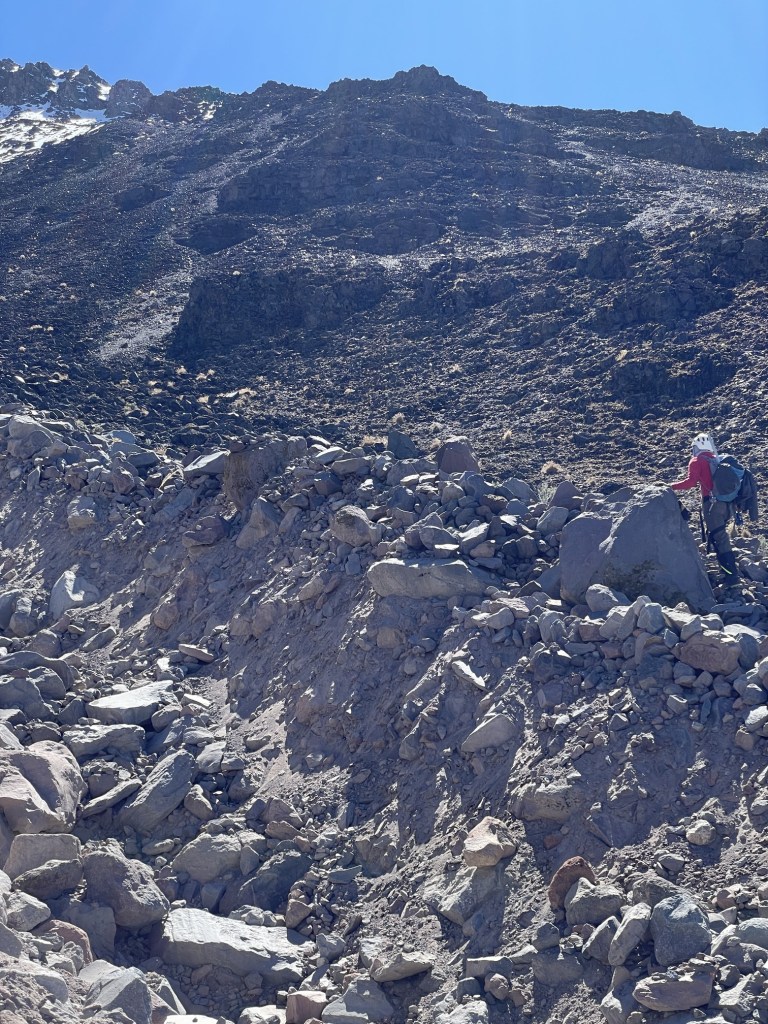
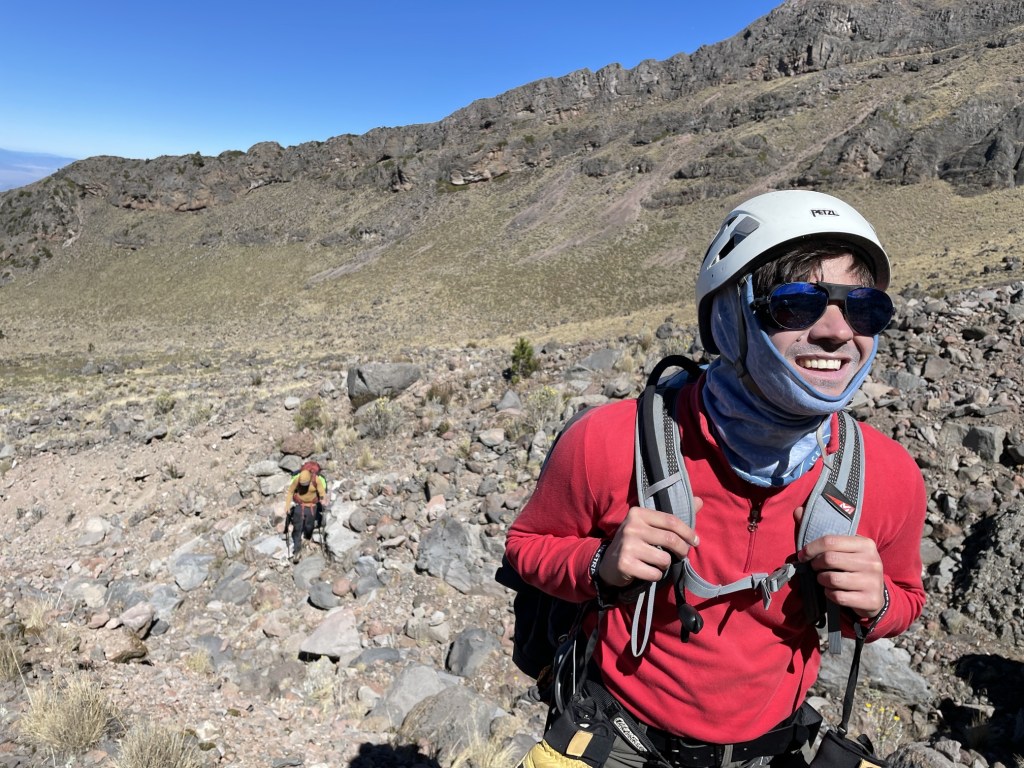
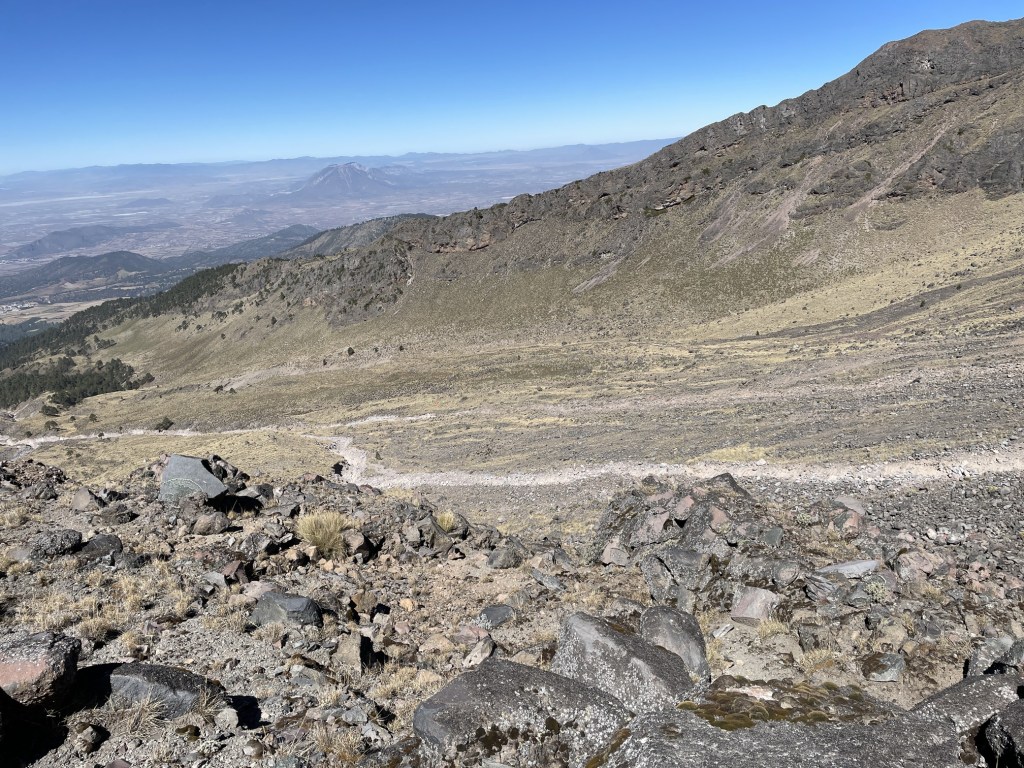
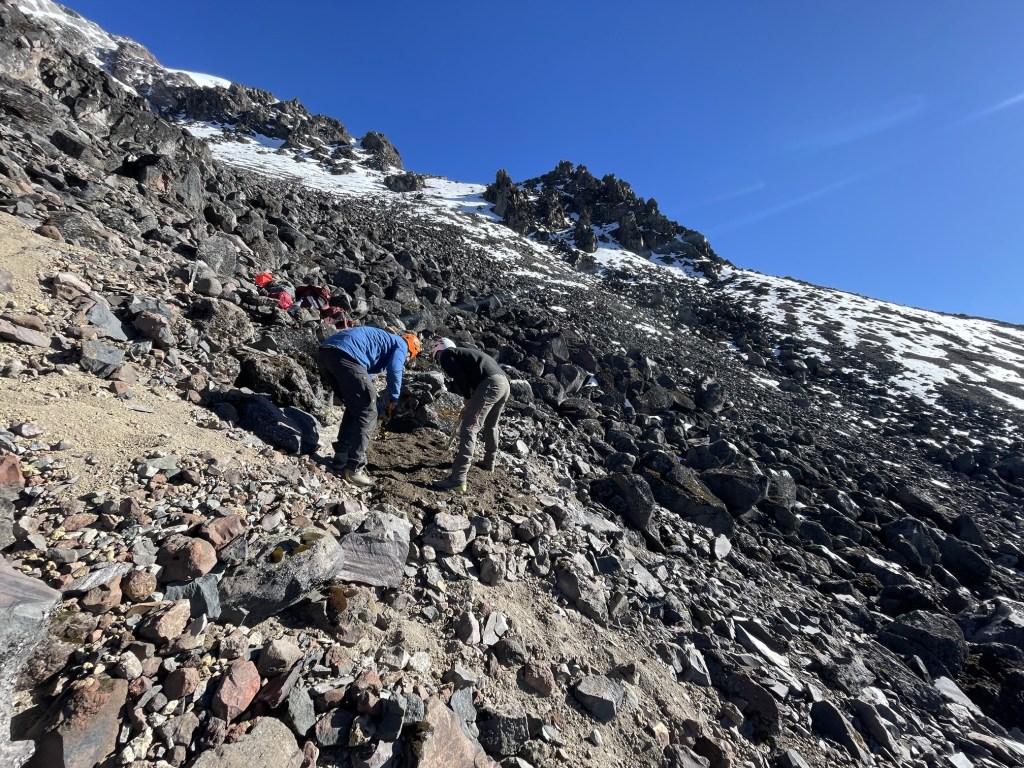
At about 4500 meters, Luca cut his shin, so Frederick had to do a bit of first aid. We observed a number of cairns a bit higher up – likely from previous ascents of the mountain, though based on the terrain, this area had likely not been visited in some time. We found two spots that looked like campsites – the first was more of a bivouac location (able to only accommodate a bivy sack), the second, at about 4630m, looked big enough to set up a tent. We placed a wand at this spot so we could find it later. About 100 meters higher than the potential campsite, the snow field began and we donned our crampons and ice axes to practice self-arrest. We got about 45 minutes in before beginning to descend at 3:45pm. We stopped by the marked potential campsite and dropped off the technical gear in our packs – ropes, crampons, gear, and hard shell jackets. The plan would be to return the next afternoon to set up our high camp at this spot.
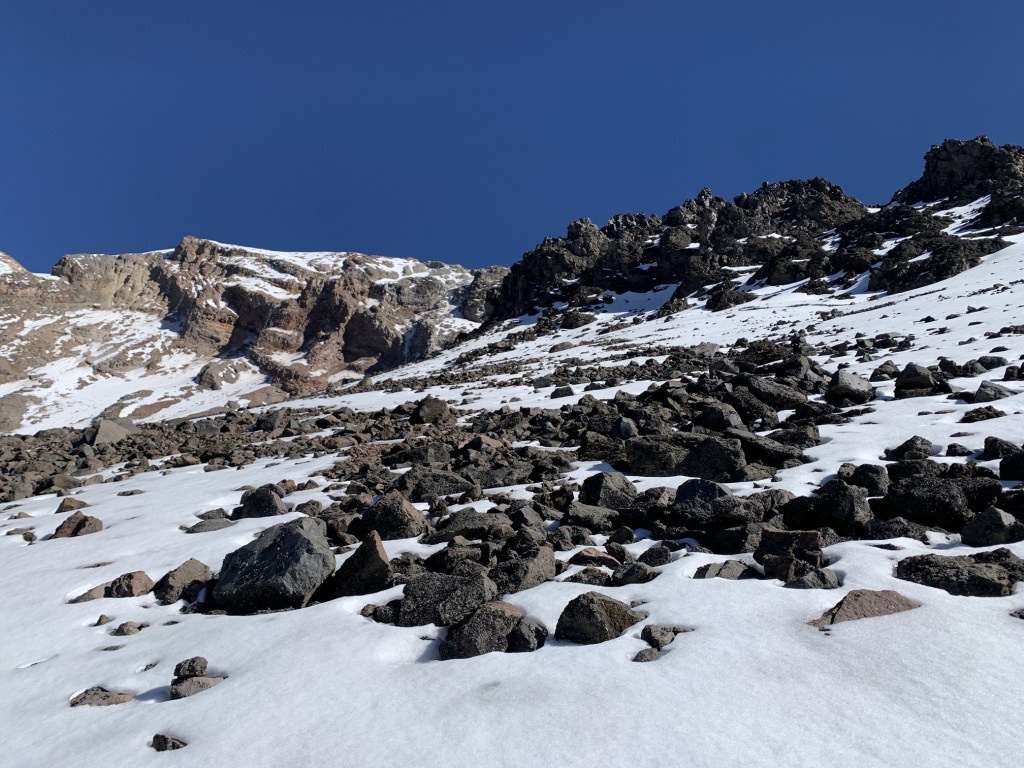
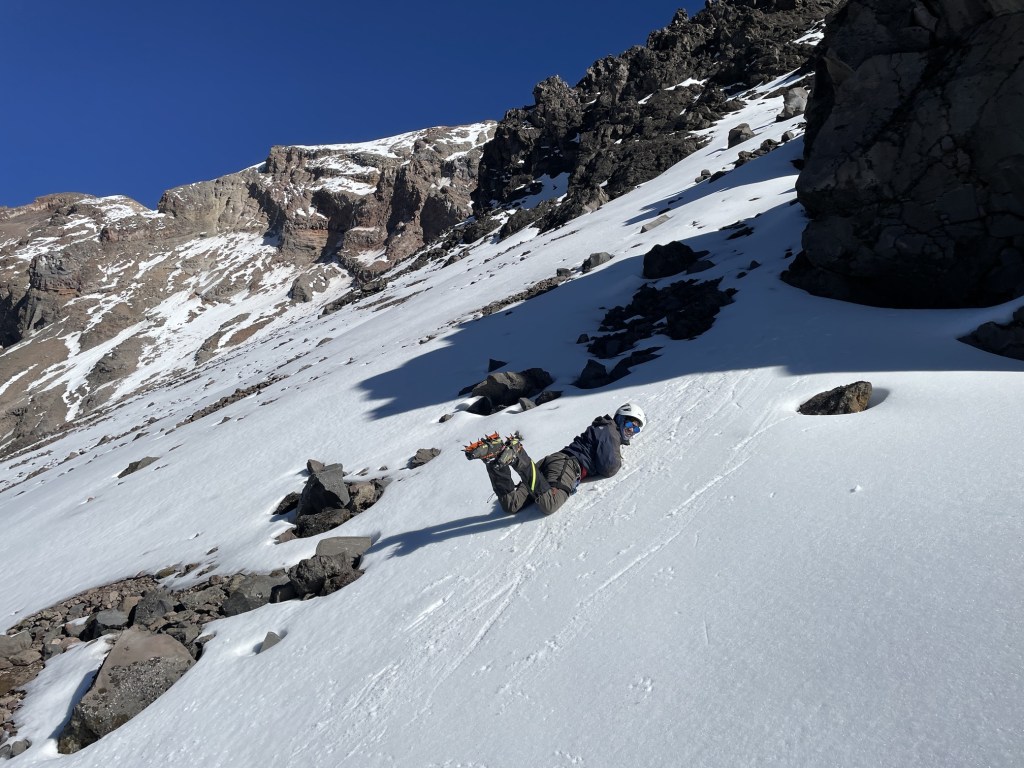
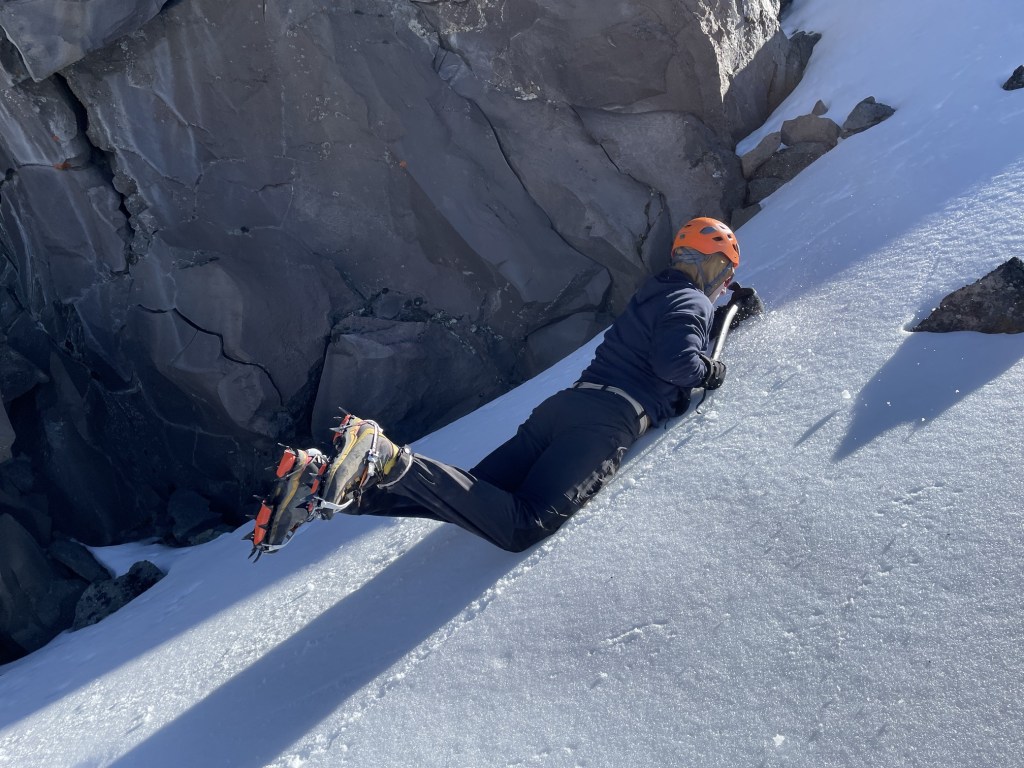
The descent was slow, especially for me as I was being careful with my ankle on the uneven terrain. We arrived at camp just after sunset and met Rafael, who had gone down to Hildago the night before and hiked back up to spend the next couple nights at base camp. Rafael had brought along white gas (finally), however the stove stopped working at this point (likely clogged by the gasoline) so Frederick spent quite some time trying to clean it out. The upside (once it was cleaned out) was that water boiled 3-4 times faster, it was ridiculous how much better the stove ran on white gas versus gasoline. Rafael also put in a lot of work to carve out a good (and level!) spot for Frederick’s tent, as Rafael would need to sleep in the kitchen tent the next couple of nights.
Day 5: High Camp
The next morning was very cold – it took some time for the sun to rise over the summit of the mountain but once it did, it became quite pleasant. I discovered that morning, thanks to Rafael, that avocado flesh is a pretty decent skin moisturizer. The skin on my hands was quite cracked due to exposure to cold temperatures and dry air. It was a pretty slow morning as the plan for the day was simply to hike up to our high camp, set up, and try and get some sleep before our summit attempt.
We departed at around 12:20pm, and were joined by Rafael for the first part of the hike. The plan was to carry 6 litres of water each up to camp – Rafael had generously offered to carry 6 litres himself part of the way which was super helpful. The hike was tough at first (still recovering from the previous day’s hike) but felt better after an hour, once we cleared the first slope up to the lower plateau. As we worked our way up, Frederick swapped out some of his homemade wands with some cheaper “construction site style” wands – he wanted to save the good ones for higher on the mountain. Rafael ended up getting most of the way to camp with us (we asked him to turn around around the spot where Luca cut his shin as that area was a bit more dangerous) and each took a 2L bottle from him. What a trooper!
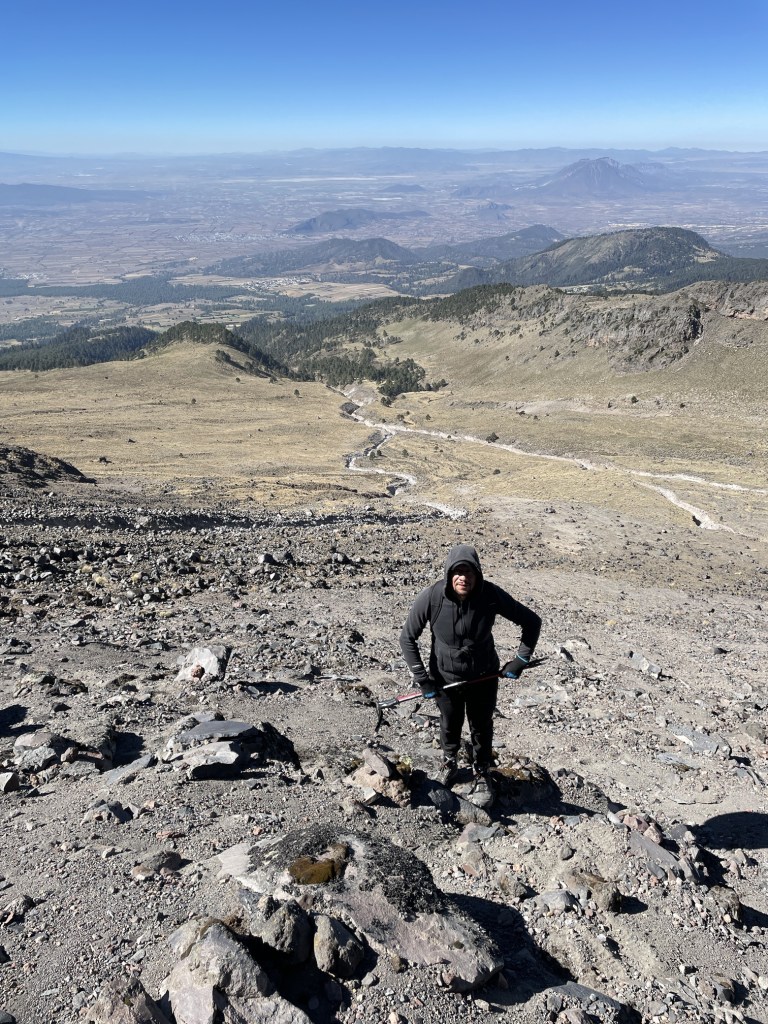
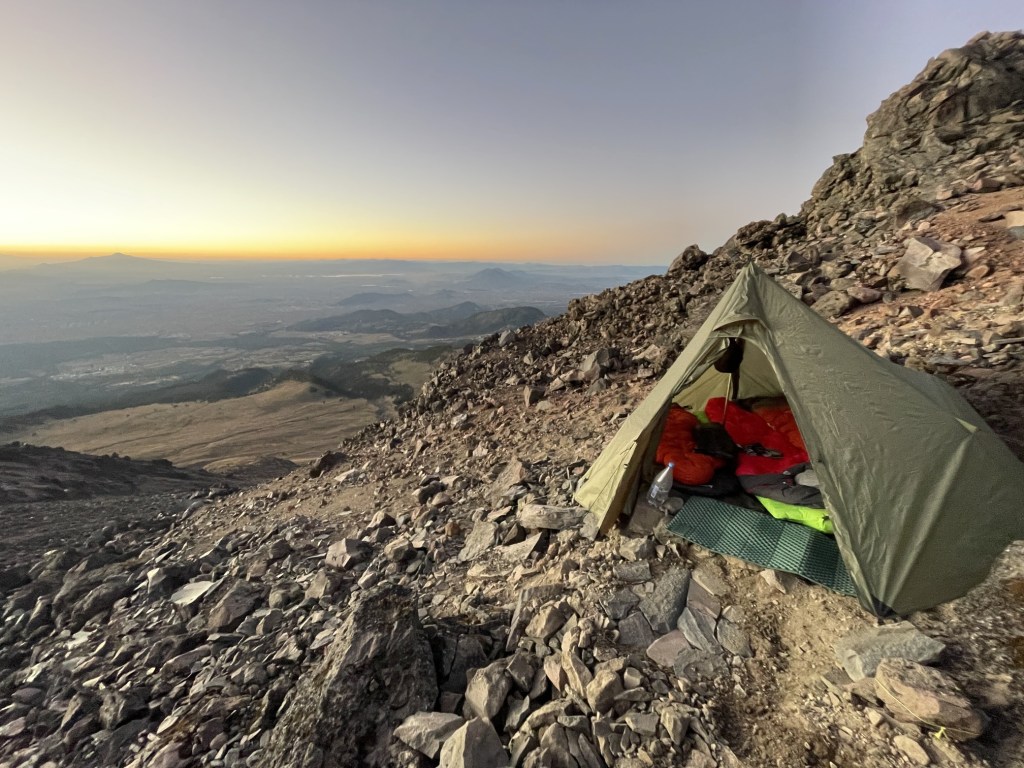
It took just under three hours in total to reach our site, and Luca and I spent quite a bit of time shifting dirt from one side of the platform to the other (the platform was originally quite slanted) and built up some rocks to make a wall. The setup of the tent (originally intended to be our bathroom tent, a smaller version of the kitchen tent at 8 feet in diameter) was a bit awkward as the platform was roughly 8 feet x 5 feet, but we managed to make it work using a ton of guylines as well as rocks to anchor the tent (stakes weren’t very useful in this rocky environment).
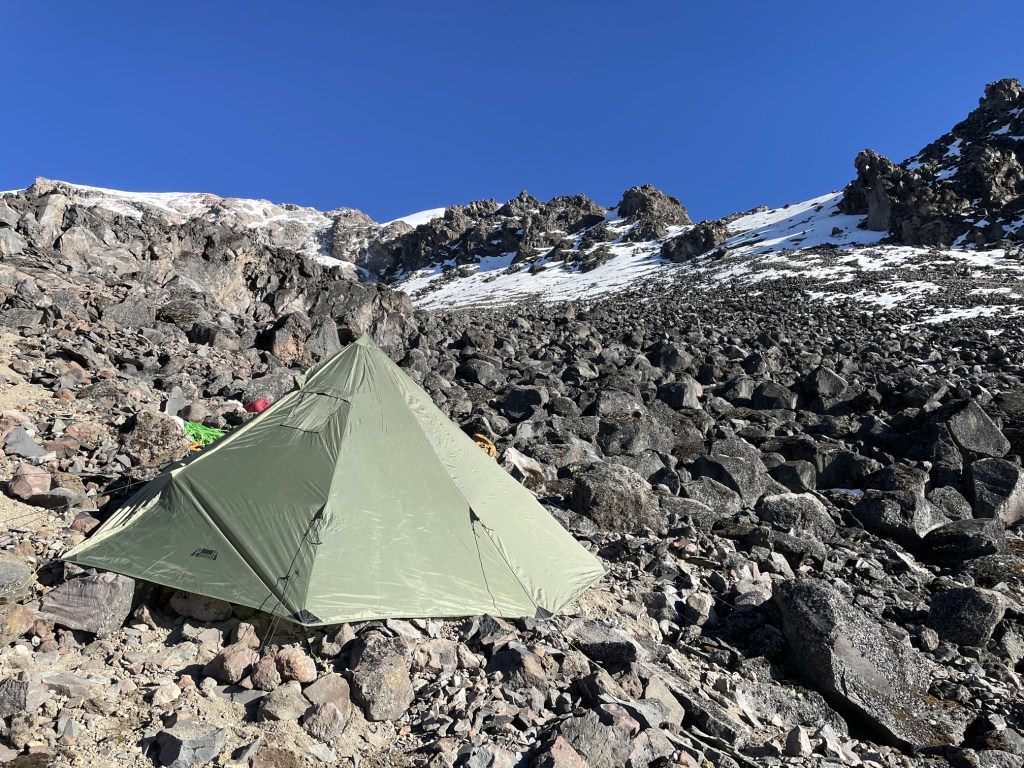
Like its sister further down the mountain, the tent did not have a floor, but Frederick brought the footprints from his sleeping tents, and it was moderately comfortable with sleeping pads, though a very tight squeeze with the three of us sleeping side by side. Frederick drew the short straw and had the smallest piece of real estate, his feet would be dangling over the edge of the rock wall. With the time we had left before bed, Frederick did a brief review of roping up and rope management, as well as knots (including the alpine butterfly, which I had never tied before and is a far superior knot to the figure eight). We crawled into our sleeping bags at 7pm.

 Veg 'n' Alpine