My first multi-day skiing trip of the 2025-2026 winter season, in late November 2025, was a bit of a bold choice – a ski mountaineering expedition to Ecuador with Alpenglow Expeditions (Ring of Fire), where I would climb and ski a peak (Volcán Cayambe) higher than I’d ever climbed before. In addition, this would be my first visit to South America and the furthest south I’d ever been. All this a month into a new job in another country and just 14 weeks after dislocating my shoulder.
Why choose this trip and the third highest peak in Ecuador at 5790 meters (18996 feet)? I decided to do this trip as part of my preparation for Mount Logan in May/June 2026, which would be tangentially comparable – ski mountaineering on a glaciated peak around 5800-5900 meters tall. Big difference is Cayambe is far less remote, less cold, much more well travelled, and also wouldn’t require multiple days with a heavy pack and camping, but definitely a good place to get my first taste of ski mountaineering.
Cayambe is the third highest mountain in Ecuador behind Chimborazo and Cotopaxi, and is home to the only location on the Earth’s equator which has permanent ice cover. In addition, the summit of Cayambe is the point on Earth’s surface furthest from its axis. Effectively, the summit of Cayambe is travelling faster than anywhere else on the planet. Cayambe was first climbed by Edward Whymper (the same guy who first climbed the Matterhorn) in 1880.
Ecuador is notable for its rich biodiversity and geography, situated at the equator, and split down the middle by the Andes, with the Amazon rainforest to the east of the Andes and the coastal lowlands to the west. The Cordillera de los Andes formed due to the collision of tectonic plates, which caused uplift in two distinct longitudes, producing the western Cordillera Occidental (which includes Chimborazo, the highest peak in Ecuador) and the eastern Cordillera Real (which includes Cayambe). There is even distinct biodiversity between these two chains, in the inter-Andean valleys (where Quito is located). Finally, being at the equator, the typical seasons seen in the northern and southern hemispheres are absent, though at certain times of year (and depending on location) there is more precipitation. As a result, the late November-early December timeframe is optimal to be able to ski the four volcanoes under consideration for the Ring of Fire trip – Cayambe, Cotopaxi, Chimborazo, and Antisana (I was only signed up for the base trip so I would only get a shot at Cayambe – a few others on the trip signed up for the extension and were able to climb two more of these – I’d definitely recommend this to anyone interested).
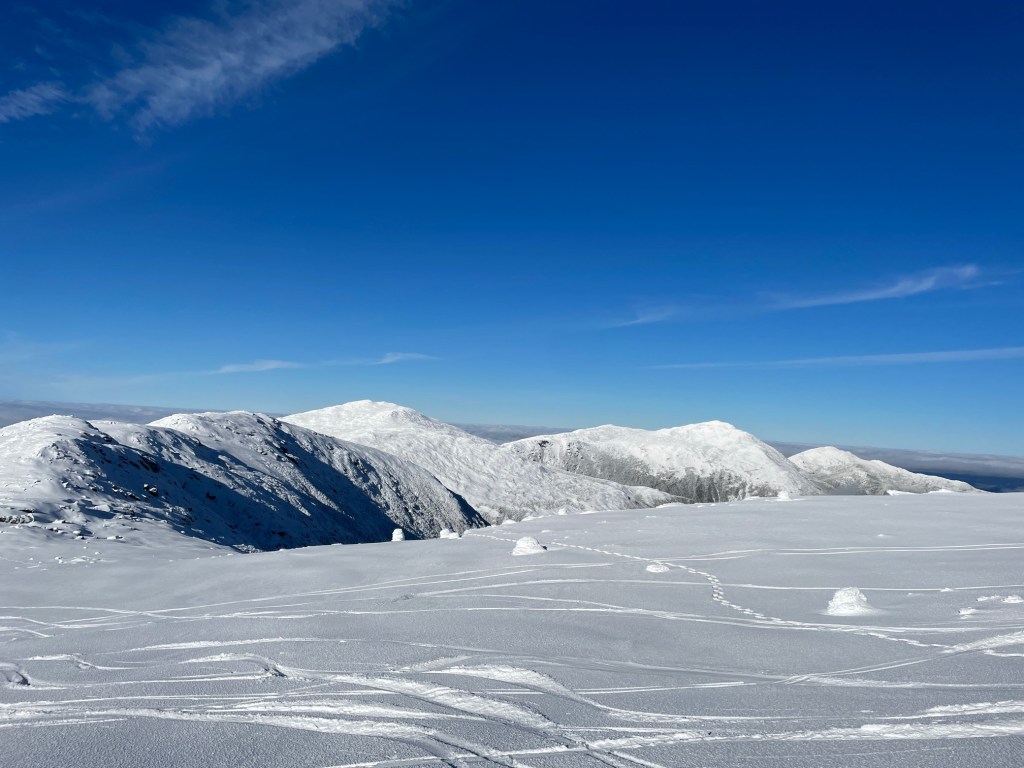
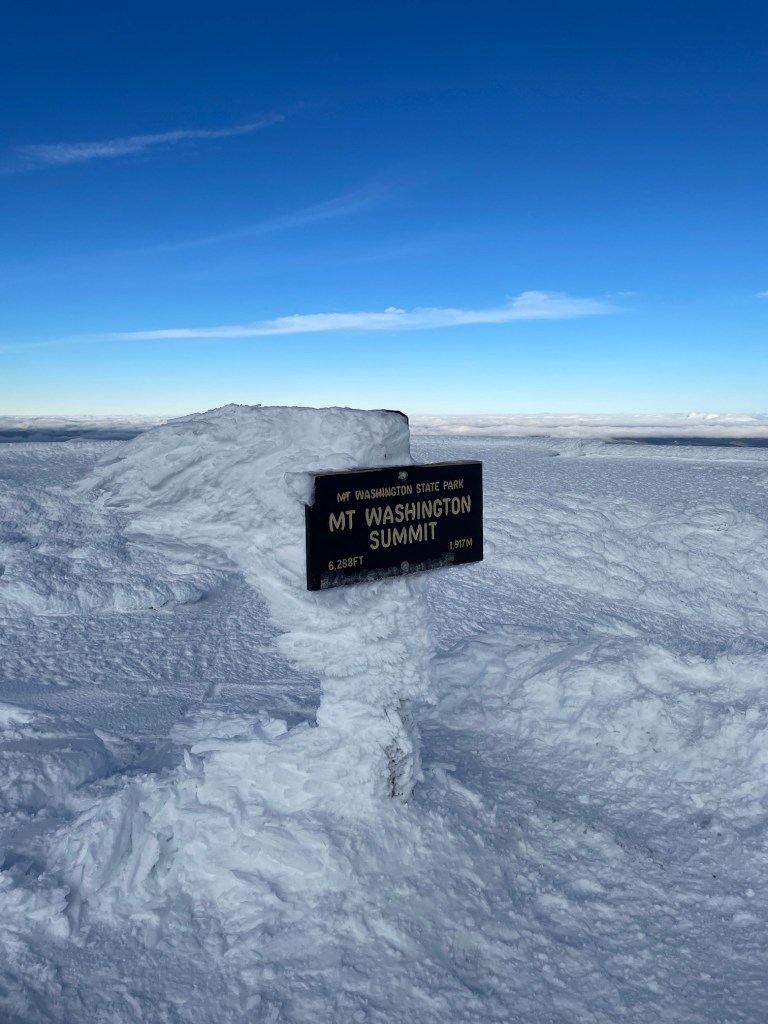
A week prior to my departure, I was able to get one day of touring in New Hampshire, and the conditions were so great that I was able to get to the summit of Mount Washington for the second time. This was promising as I had been dealing with sore/tight calf muscles for a couple of weeks and was actively going to physio to ensure I was in good shape for Ecuador.
My trip was complicated slightly due to my move to the USA. I had booked my travel to South America while I was still living in Toronto, and went with Avianca (Toronto-Bogota-Quito). My problem was that Avianca doesn’t fly to Boston, and rather than cancelling my travel (did not pay for flexible fares) I decided to add on a Boston-Toronto leg on either side of my travel. On top of this complexity, the US government decided to shut down about six weeks before my departure, and although it did reopen about a week before my trip, there were some lingering issues with flight cancellations that I was worried about. I decided to monitor the flight status between Boston and Toronto the week leading up to my departure, with my last resort being to drive to Toronto to catch my flight to South America if things got gnarly. Coincidentally, I still had a valid Toronto parking permit I could use as well, which expired at the end of November when my trip concluded. So my parking would have been covered.
Days 1 & 2 – Travel to Ecuador
The first couple days of the trip were travel days so I won’t spend too much time here. Prior to my first flight from Boston to Toronto, I put in most of a full day at work and was able to park my car at the office to catch an Uber to the airport. I was initially planning to try the airport express bus which left from a town about 30 mins away from the office, but opted to pay a bit more for a smoother trip. The traffic into Boston Logan was predictably terrible, but I had given myself a lot of time and had no issues making my flight.
I flew to the downtown Toronto airport (the better one, YTZ) as flights were cheaper, but that meant needing to take another Uber to a hotel near Pearson airport (YYZ) as my flight to South America departed from there the next morning. My flight to Quito, Ecuador was in two phases – Toronto to Bogotá (Colombia) and then on to Quito. My flight to Bogotá was slightly delayed but overall went fine – I flew Avianca and was disappointed to find out that all food/snacks and drinks (save water) were paid items. I ended up eating a pack of Honey Stinger Energy Waffles to satisfy my hunger (I regretted this later in the trip). I was a bit rushed in Bogotá due to the delay and barely had time to wolf down a poke bowl after going through security before boarding the final leg. I managed to catch a glimpse of Cayambe just before landing.


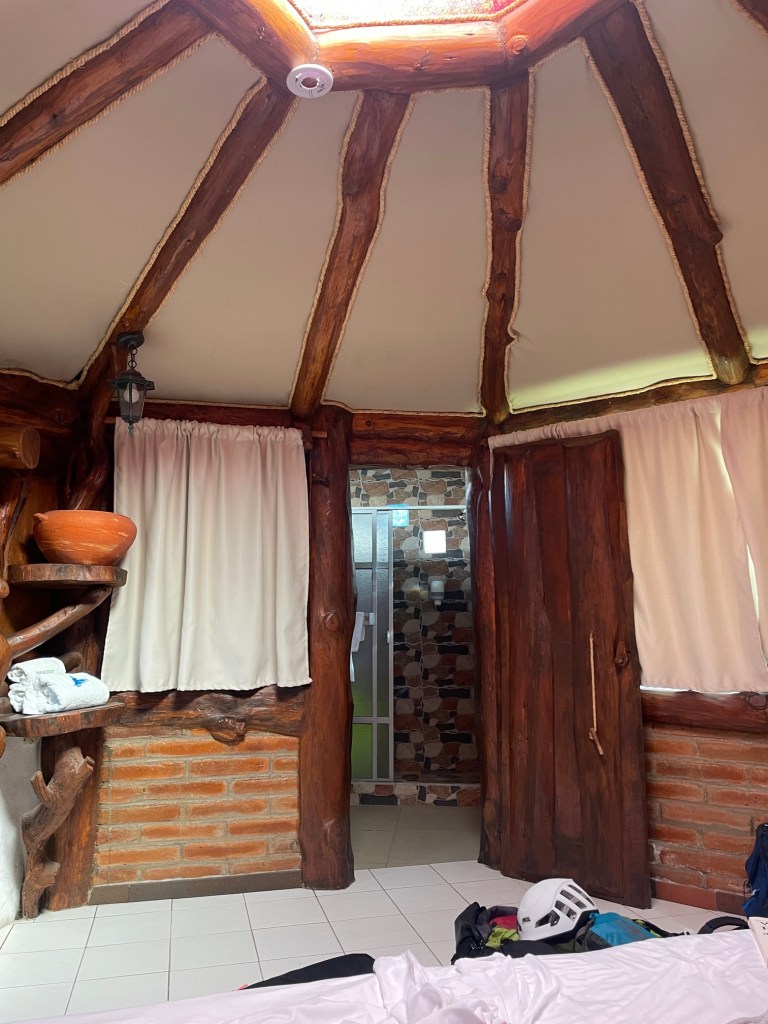
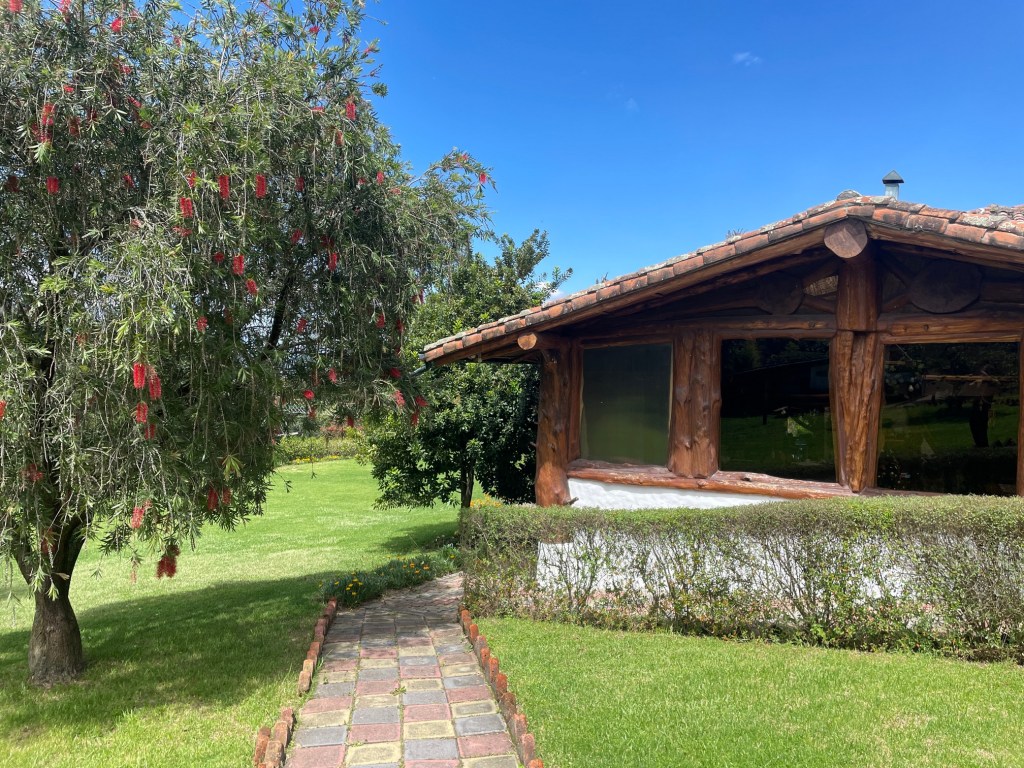
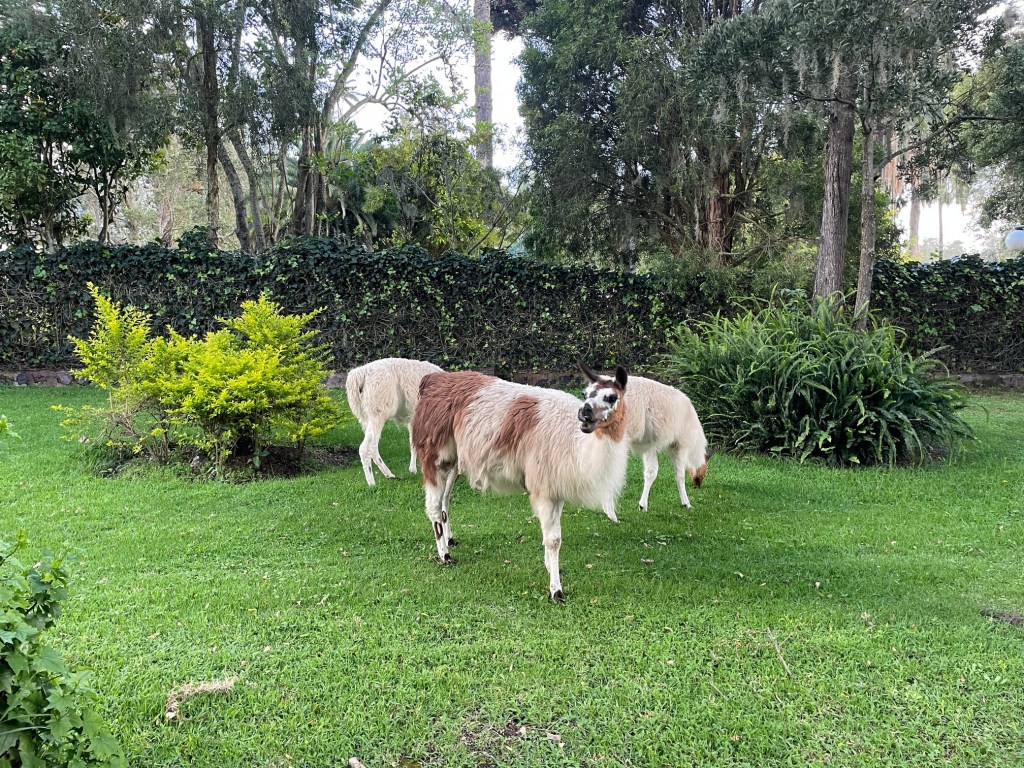
Upon arrival in Quito (elevation around 2400 meters) and waiting almost an hour to get through immigration, I grabbed a taxi to my hotel for the first night, Zaysant Ecolodge, situated in Puembo and coincidentally very close to the hotel that Alpenglow had booked for the team. The hotel was very nice and rustic, and is family owned. The people were super nice – I was greeted by Sayid and he offered some spaghetti for dinner which I graciously accepted.
Days 3 & 4 – Meeting the Team & Exploring Quito
My first full day in South America happened to be my birthday (back to back years celebrating on a mountaineering trip) I got up at 7:30am and went for breakfast, where I met two of the guides for the expedition, Diego (from Chile) and Michael (from the PNW). There was no space for them the previous night at the team hotel; as a result they ended up at Zaysant. After breakfast together, I repacked my stuff and met them at the front of the hotel – we would all be getting a ride to the team hotel, the San Jose de Puembo. Upon arriving at the hotel, the rooms weren’t quite ready, so we grabbed coffee in the restaurant area and chatted until Gaspar, the lead guide, arrived. Gaspar drove us into Quito (I rode shotgun as the birthday boy) and we grabbed lunch – first time trying ceviche and it was pretty good! Ceviche is a Latin American dish consisting of raw seafood marinated in citrus juice (which “cooks” the meat without heat) and served cold. After lunch we stopped by Gaspar’s friend’s place so he could help with a bicycle (his friend is also a guide). Very interesting property including some very rustic banos (bathrooms).


We headed back to Puembo to check in to our rooms at the hotel – the rest of the team would be arriving over the course of the day/evening. Kevin (a leather store owner in Tahoe), one of our teammates, was already in town spending time with his family (his wife is Ecuadorian), and the two of us had dinner with Jennifer and Ryan, a married couple from San Francisco, once they arrived. My roommate for the trip, Dave (a urologist with an engineering background from Fairbanks) arrived a bit later in the evening. Thankfully not too late – two of our teammates had encountered quite a few travel snafus and were scheduled to arrive past midnight.
The following day, with the full team in place at our hotel, we had a team meeting planned after breakfast at 8:30am to discuss the trip and do proper introductions. Rounding out our team were Chris (a dental surgeon from Reno) along with Taylor (a mechanical engineer) and Eric (living the dream), both from Los Angeles. Taylor and Eric both arrived in Ecuador pretty late and understandably were a bit late to the meeting – Taylor had been travelling in South America and Eric helped him out by bringing his splitboard gear. It turned out that American Airlines was prohibiting Eric from flying with three bags to Quito, and he had to deal with a house leak the prior day. As a result he was at one point ticketed on three different airlines. Sounded like a time and a half…
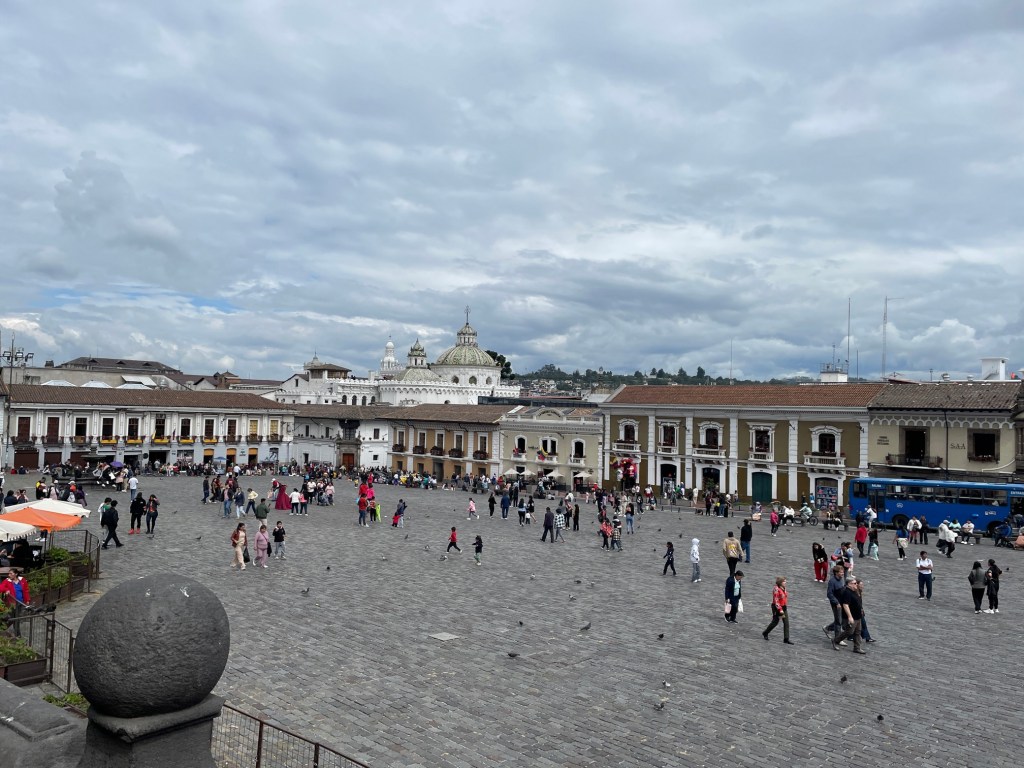
The hotel was situated at about 2300m above sea level, so it was instantly quite high in elevation, so we spent the day taking it a bit easier with a city tour to Quito. Our guide, Mickey, did a great job explaining the history of Quito during the bus ride downtown. We spent some time at the Basílica del Voto Nacional, a famous Catholic church and the largest neo-Gothic basilica in the Americas, and got some great views from the rooftop.


After visiting the Basilica, we spent some time with the owner of Indemini Baez, a local craft bean-to-bar chocolate maker and learned about how they make traditional Ecuadorian chocolate. We then visited their shop to buy bars of chocolate and other treats before walking to an outdoor food court for lunch. Upon returning to the hotel, Dave and I went to the hotel gym to do some stretching (I recently had been dealing with a calf strain and wanted to keep up the prescribed exercises and stretches from physio). After dinner, I returned to the gym to take a spin on the stationary bike – it was a bit tricky with no clips.
Days 5 & 6 – Acclimatization Hikes
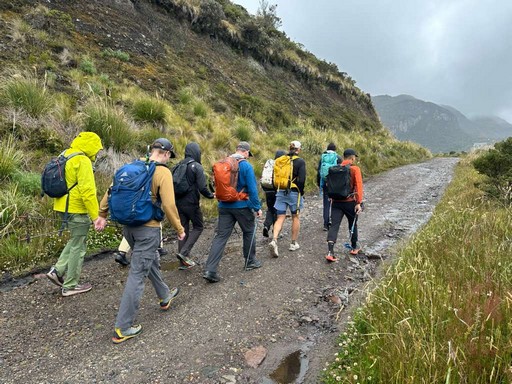
The next two days we began acclimatization hikes to get us used to the higher elevations and prepare for our summit attempt of Cayambe later in the week. Our first was a short drive east to the outskirts of Cayambe Coca Park. Our driver, Victor, drove our bus partway along a gravel road, letting us off at around 3850 meters elevation, and we began hiking in a light drizzle, making sure to focus on keeping heart rate low. After a brief stop at a small hut to layer up and grab a snack, we proceeded onwards and reached the Papallacta Antennas, a series of telecommunications antennas atop a small hill. We topped out at around 4400 meters, took a quick break, and descended part of the way, where Victor was waiting for us. For lunch we stopped at a mall in Quito and went to Crepes & Waffles (very good), then returned to the hotel to rest and put in another stretch session at the gym.


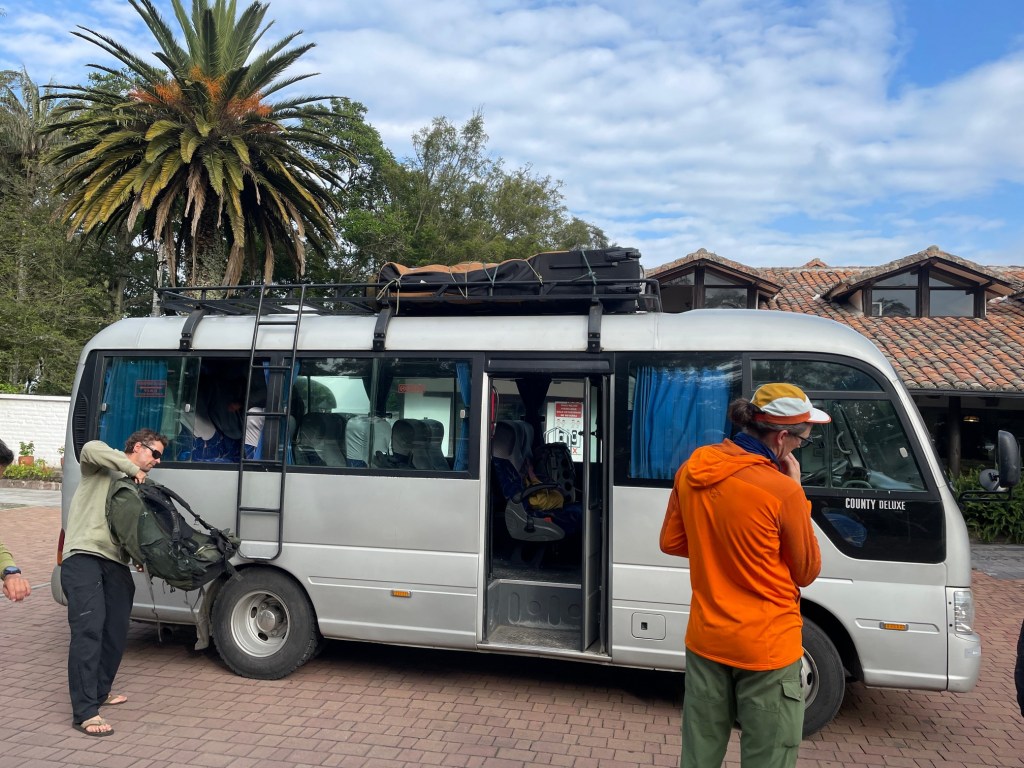
The following day was our last at San Jose de Puembo (at least until we returned at the end of the trip). Leaving was a bit chaotic as I tried to do some stretching after breakfast and before departure, and ended up getting locked out of my room when I went back to pick up my last bag. Victor and the guides somehow loaded the bus with all our gear (including a bunch on the roof). Gaspar mentioned that there was some issue with the Cayambe park staff concerning skiing on the volcano, so we handed off our skis to our support team at a convenience store about halfway to the park, and then we were off.
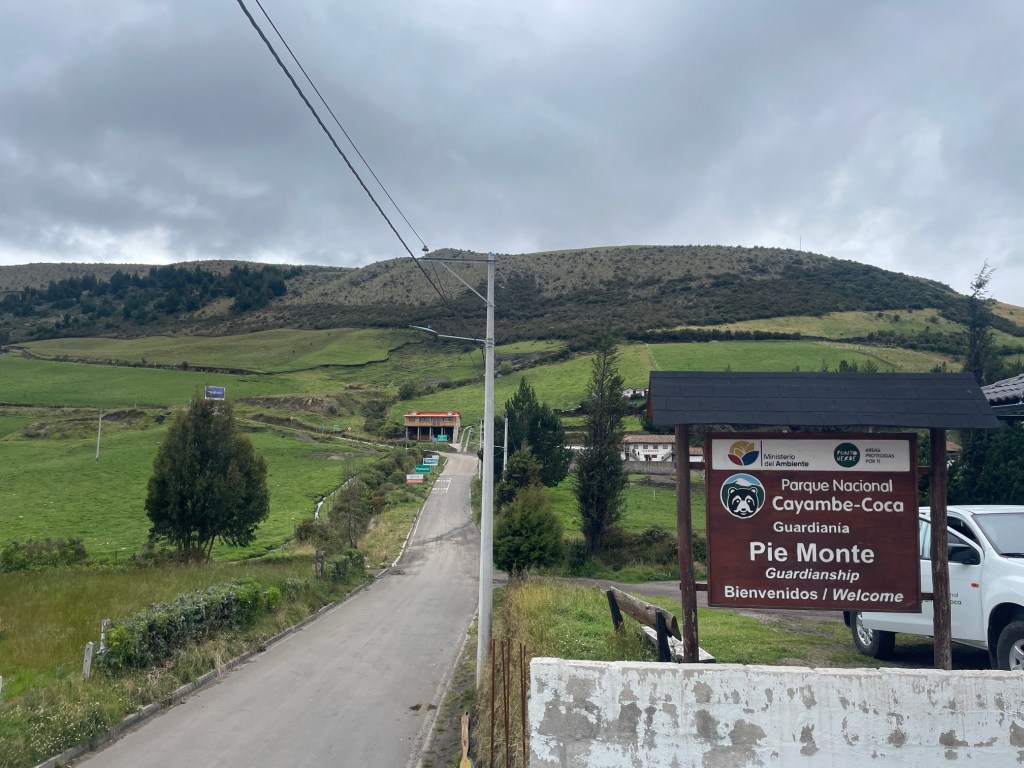
We drove past the town of Cayambe and up the road towards the Refugio Ruales Oleas Bergé, crossing north over the equator. Victor brought us about as high as possible that the bus could go (the road is extremely rough higher up and requires 4WD), at around 4300m, and we began hiking up the road. The plan was to stop by the refugio (4625 meters) then on to the edge of the glacier depending on how everyone felt. It was a pretty foggy day but overall the hike went pretty well. We briefly stopped in the refugio (which was far nicer than the one on Pico de Orizaba) for a breather and some tea, before heading back out.
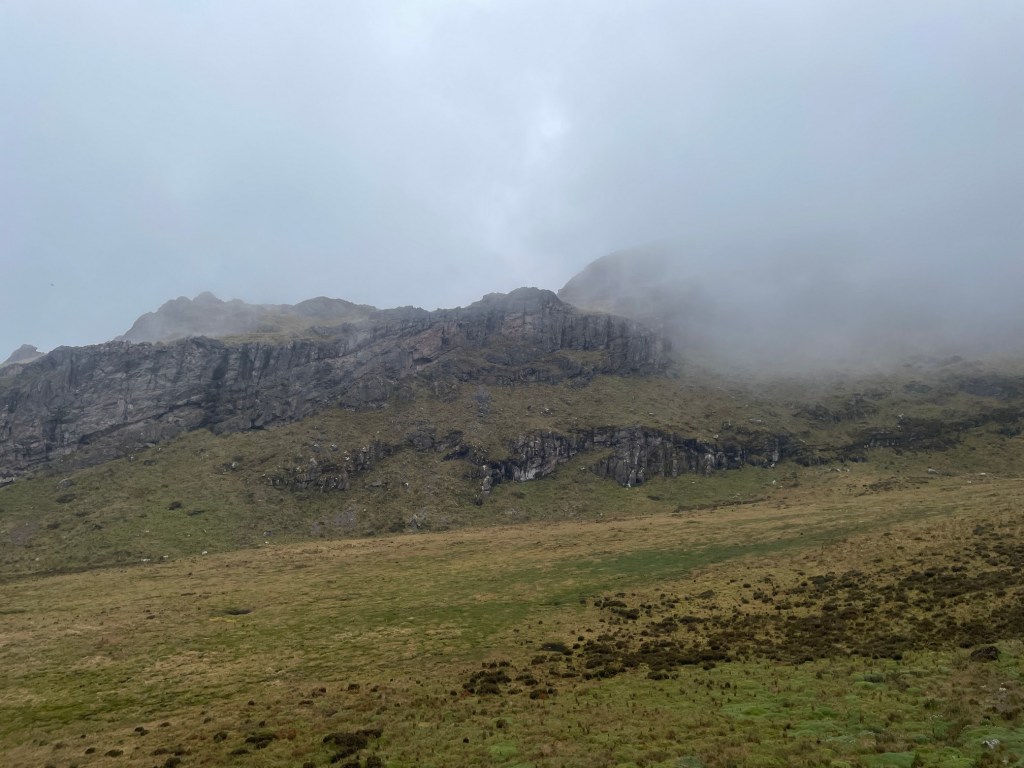
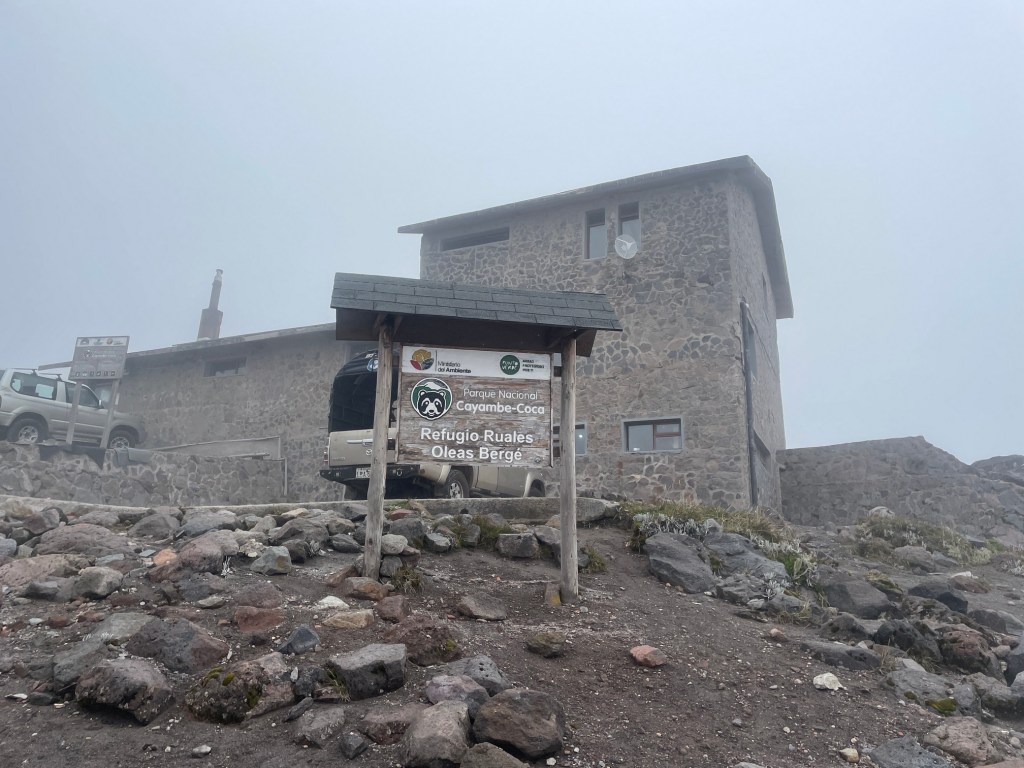
Unfortunately, you cannot start skinning from the Refugio Ruales Oleas Bergé (maybe 50-60 years ago you could), and the toe of the glacier is situated about 260 vertical meters away. There are two paths up, which converge at a large flat area which can be used for camping. We ended up taking the eastern path up to the flats (situated at about 4840 meters), which was a bit technical in places, making me wonder how on earth we would climb this with ski boots. After a short rest (I had a bit of a headache so I popped an ibuprofen), we descended via the western path, which was less technical and difficult. It was quite sandy in places which allowed for plunge stepping down. We stopped in the hut for some soup, then hiked back down to the bus. The ride down was pretty rough – my headache got worse and I started feeling a bit nauseous. It took a lot of focus to tamp things down until we reached our accommodations. Ryan was in much worse shape, but it wasn’t super serious and he ended up taking a nap once we arrived at the Refugio Yanacocha, situated at 3580 meters.


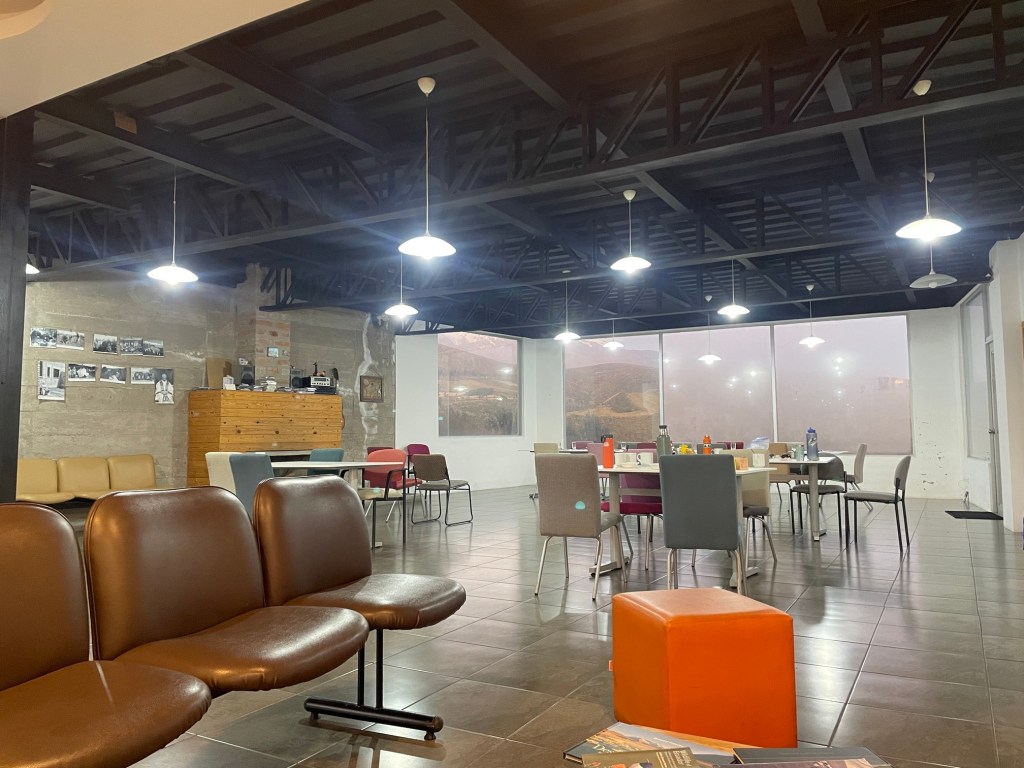
I ended up lying down for a bit, and felt a lot better after having some tea and cookies. Refugio Yanacocha is a massive building which caters to mountaineers and was built by the Colegio San Gabriel. Pretty sweet dorm-style accommodations, aside from the snoring at night (won’t name names!). As the only couple on the trip, Ryan and Jennifer got an entire room to themselves, which we joked was the “bridal suite”. We were finally able to see more of Cayambe in the distance, about 11 kilometres away.

In the evening we were joined by two more guides who would be joining us for Cayambe – Pablo (from Colombia) and Fátima (from Quito). Over the course of the evening, several others in the group experienced similar altitude effects that Ryan and I had – very interesting seeing the variance in when everyone’s bodies reacted to the elevation exposure.
Days 7 & 8 – Prepping for the Climb
The plan for the following day was to hike up to the toe of the glacier with all our ski and technical gear and go over the techniques we would use on our summit day, including skinning, use of ski crampons, rope systems, and rescue techniques. Unfortunately we awoke to some pretty gnarly winds outside, which could only have been much worse up high. So Gaspar and the rest of the guides decided to hang out at Refugio Yanacocha for the morning and ideally head up later in the day when the weather abated a bit.
Luckily the Refugio Yanacocha was nicely set up to practice technical skills indoors, with a high ceiling and steel beams to set up anchors. We ended up spending several hours going through various knots, hitches, rope systems, as well as practising ascending the rope using prussiks in the event of a crevasse fall. Very helpful review and much appreciated!

Finally after lunch and towards mid-afternoon, we departed the Refugio Yanacocha and headed up to the Refugio Ruales Oleas Bergé. The hike up to the toe of the glacier and our cache point (just under 4900 meters) was absolutely gorgeous and we got some phenomenal views of the glacier but clouds still shrouded the upper mountain.


After our cache we headed back down to the Refugio Ruales Oleas Bergé and made it just before sunset. As a result, the drive back down to Yanacocha was extremely gnarly – no clue how our drivers managed to do it in the dark. We all felt much better with the altitude after this visit up high – Michael gave some great advice about being more deliberate with breathing when hiking downhill, which seemed to help a lot.

The following day was also pretty easy and it was our last day in Refugio Yanacocha. The morning was spent doing lots of stretching and packing as we would be heading up to spend the rest of the day / evening at the Refugio Ruales Oleas Bergé – that night we would be making our summit attempt of Cayambe. After talking about it all week, we finally stopped at the equator along the road and took photos.

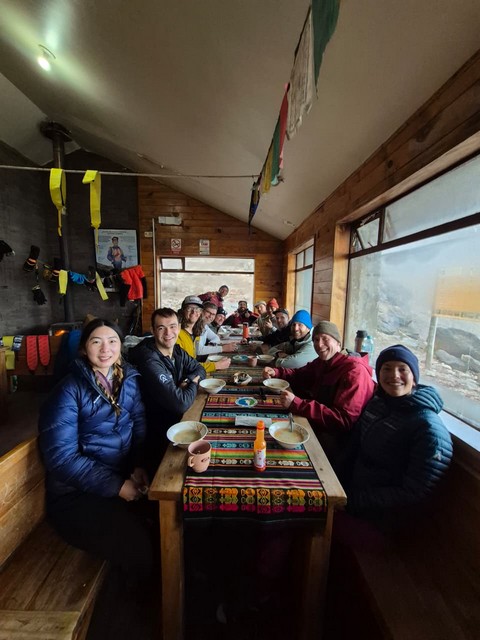
It was a bit difficult figuring out what to do during the afternoon – I ended up hiking up a bit to enjoy the solitude and the clouds ended up lifting, revealing the upper slopes of Cayambe. Truly a miraculous sight. We also got a great rainbow down low. After dinner, we got our packs and gear together and went to bed at around 6pm – alarm set for an 11pm wake up and midnight start.


Day 9 – Summit Day
11pm. The iPhone “Classic Radar” alarm on my phone sounded jarringly, jolting me awake after a messy few hours of “sleep”. “F*** this!” I exclaimed loudly, which drew a few tired laughs. “Seriously, why do we do this over and over again?” was my thought as I groggily got dressed. I guess the thrill of climbing high keeps us coming back despite the hell of trying to sleep high. Turns out not many of us got a lot of sleep, if I recall correctly at least one of us simply waited for the alarm to go off.
Breakfast was buns and jam as well as hot drinks – despite how tired I was, I opted for tea as I’m not a fan of coffee at altitude. It was drizzling outside when we got up, which delayed our departure slightly and gave me the time to do a “No 2” – I was very concerned about emergencies up high and needing to use a wag bag. Ryan and Jennifer ended up taking anti-diarrhea medication which wasn’t a bad idea. We started our hike, in our ski/snowboard boots, just after midnight. I brought my hiking boots in my pack – I wasn’t too keen on hiking down in ski boots, so I planned to cache my boots just below the glacier and change after we couldn’t ski any further. The hike was a bit weird and awkward (running on minimal sleep didn’t help things) in boots but not too bad overall.
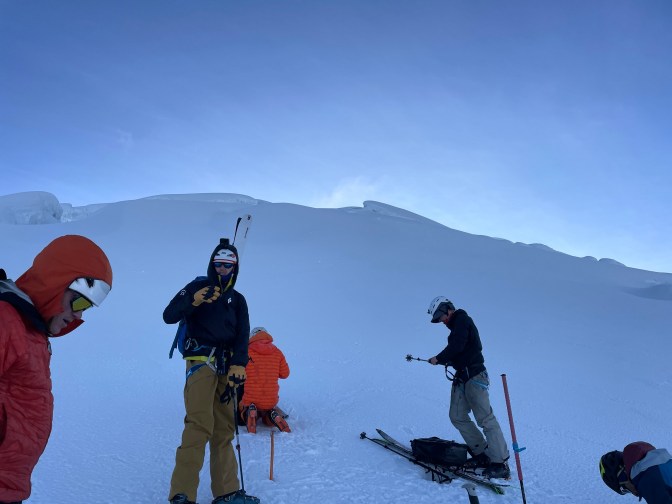
We got to our ski and climbing gear after about 75 minutes of hiking and reorganized our packs, attached our skins and ski crampons, and finally were able to clip into our skis/boards. Of the 13 of us in our group, two were climbing (Fátima and Pablo), two were on splitboards (Taylor and Kevin), and the rest of us were on skis. Kevin’s splitboard setup was very interesting in that he had hard boots, similar to ski boots, which I had never encountered before but this seems like a great option for climbing/skinning vs. soft boots.
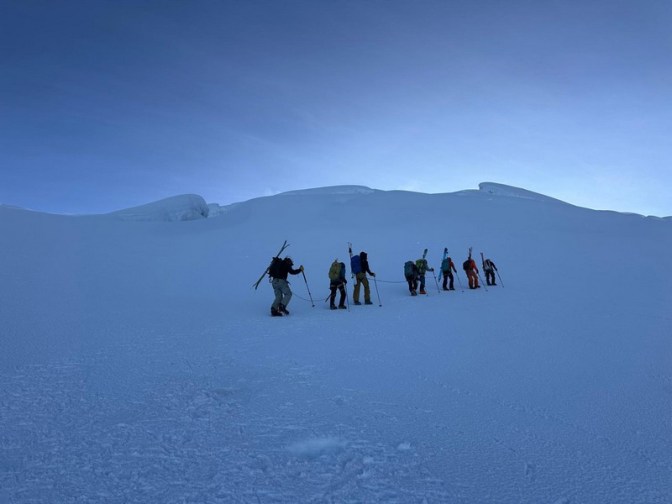
The initial climb up the glacier was long, but we quickly settled into a good rhythm in both pace and breathing – I personally really enjoy skinning so I was definitely (for the time being) in my happy place. Despite being close to 5000 meters above sea level, I felt pretty good. The ski crampons were also pretty amazing pieces of kit – got great purchase on the slope and overall much more confident with grip/traction than skins alone. They would have been pretty helpful on Mount Marcy! I ended up ordering my ski crampons from Evo and got the ones that were compatible with my bindings – Marker Pintechs.
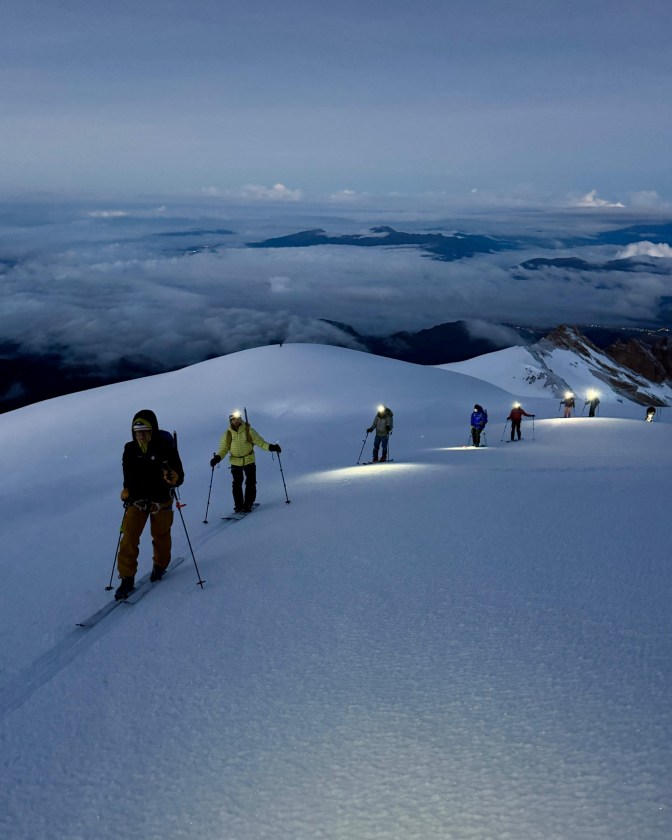
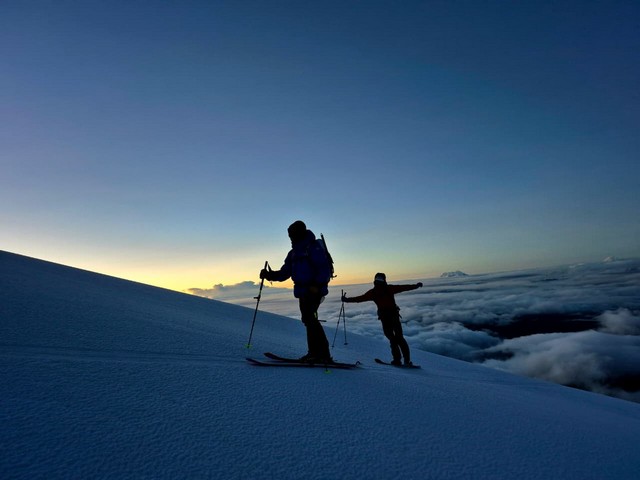
We made two stops before transitioning on flatter areas of the glacier. Annoyingly, I was unable to pee on these stops, despite being quite regular the entire trip. Probably partially related to undiagnosed paruresis (shy bladder syndrome – sorry for the TMI. Something I really need to work on addressing for expeditions…). In addition I didn’t fuel/hydrate as much as I’d have liked on these stops, which probably came into play later. As we got higher, the glacier got steeper (requiring slightly stressful switchbacks – I was NOT confident doing kick turns!), and the group began to spread out as some of us started to experience the effects of the altitude. At this point, sunrise arrived and we were greeted with an incredible view of the upper slopes of Cayambe above, as well as the shadow of the mountain and of Antisana (the 4th highest peak in Ecuador) and Cotopaxi (2nd highest) in the distance.
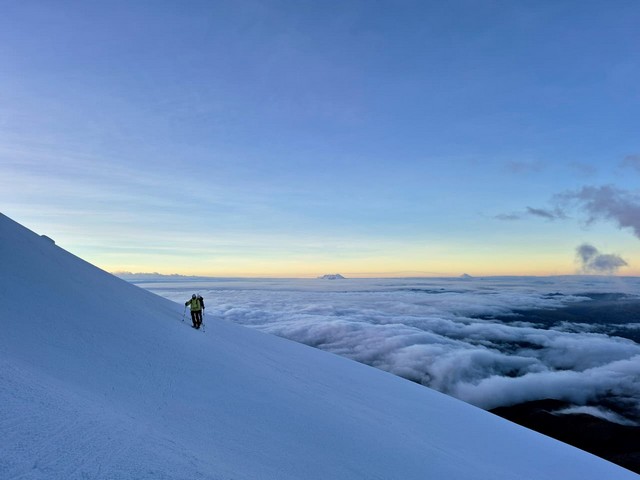


Eventually, at around 5600 meters, the slope became too steep for skis, so it was time to switch to boot crampons. I had felt pretty good until a couple minutes prior, but was pretty taxed at the transition point. I still felt like I had enough in the tank for the final push for the summit (not realizing exactly how far it was), but it was way harder than usual taking off my skis and putting on my boot crampons. At this point, Gaspar decided to turn half of the team around – the lead group consisting of myself, Kevin, Eric, and Chris would carry on to the summit, each paired with a guide (Michael, Fátima, Gaspar and Pablo respectively). The group of four bringing up the rear (Ryan, Jennifer, Taylor and Dave) would turn around and ski down with Diego.
The final climb took about an hour and was probably the hardest effort of my life, likely due to lack of fuelling earlier in the climb. The slope was very steep (around 40-45 degrees) which required good cramponing technique – side stepping as well as the French technique (flat/duck foot style). It took an exceptional amount of effort for each step, and Michael was super encouraging and positive which was huge. It was also a big mental effort as well, as the top of Cayambe features a number of rolling hills and false summits, and it was super foggy, causing rime to build up all over our bodies and equipment. At one point I accidentally stepped into a small crevasse to the shock of Fátima who was behind (she yelled “what are you doing?!” or something like that). I was so exhausted and not thinking straight so I thought stepping on a snow bridge was fine… yikes. Luckily my leg only sank to mid-shin, so it wasn’t a huge issue.

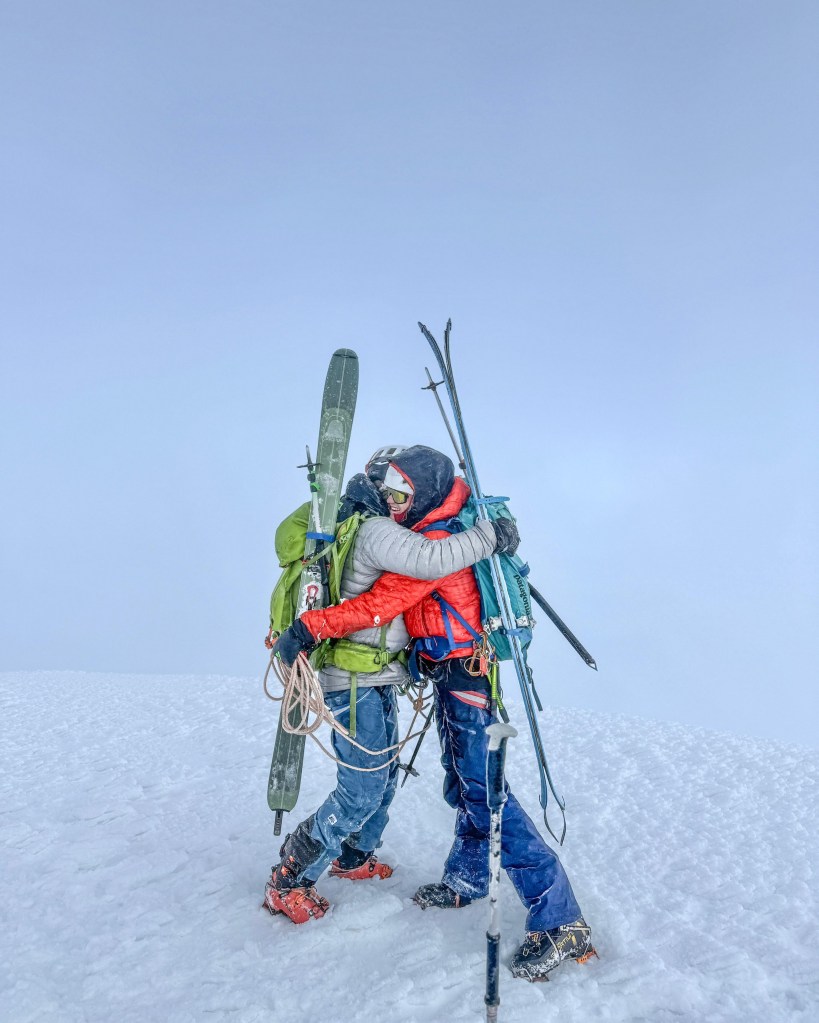
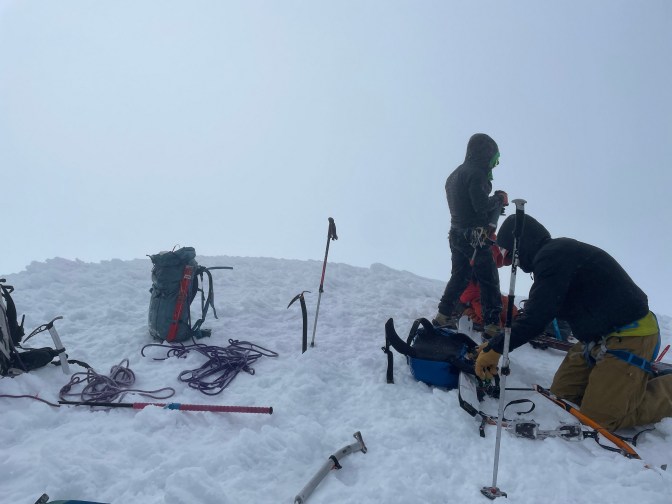
The last few steps were a grind but eventually reached the summit, which was a flattish area about the size of a small apartment, where we celebrated and took a few pictures before quickly preparing for our descent – the conditions were definitely not ideal to hang around, and no views unfortunately. Super awesome to reach a new personal high point, only about 150 meters taller than Pico de Orizaba! Huge thanks to the four guides for all their guidance, leadership, patience and encouragement for getting us to the summit!

“If you need to cry, cry. If you need to puke, puke. If you need to shit, shit.” – Fátima, encouragingly, to Kevin on the final summit push
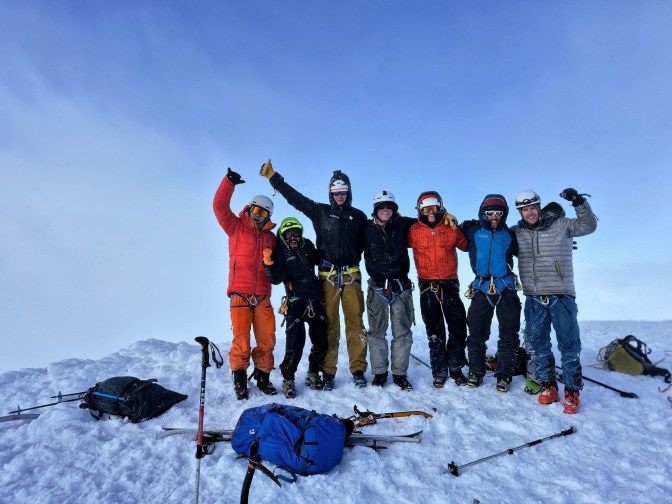
The descent was definitely by far the most high stakes ski descent of my life. Tired, affected by altitude, on wild glaciated terrain – it was super great to have both Gaspar and Michael leading us (Fátima and Pablo, not skiing had taken off right after our team photos). The first couple of pitches were tricky due to steeper, icier terrain as well as some crevasse hazards, but I was able to get down with no issues. There was a ton of side sweeping on my side and it was definitely humbling – my downhill definitely needs a TON of work! Once we got down to approximately where we transitioned, the skiing became much more mellow and FUN – it was super memorable and we were all whooping and hollering the whole way down. There were still a few crevasses to watch out for but overall not too scary. In no time (and far too soon!) we got to the bottom of the glacier, where we took off our skis (and I switched to hiking boots) and began the hike back down to the Refugio.
The descent was very slow due to immense fatigue, but we were able to keep one foot in front of the other and eventually made it down with no issues. Pablo and Fátima actually caught up to Eric, Michael and I despite walking down from the summit! The final part of the hike was a slight uphill to the refugio, which we were amused to find was incredibly hard. All in, just under 10 hours door to door and one hell of an experience!
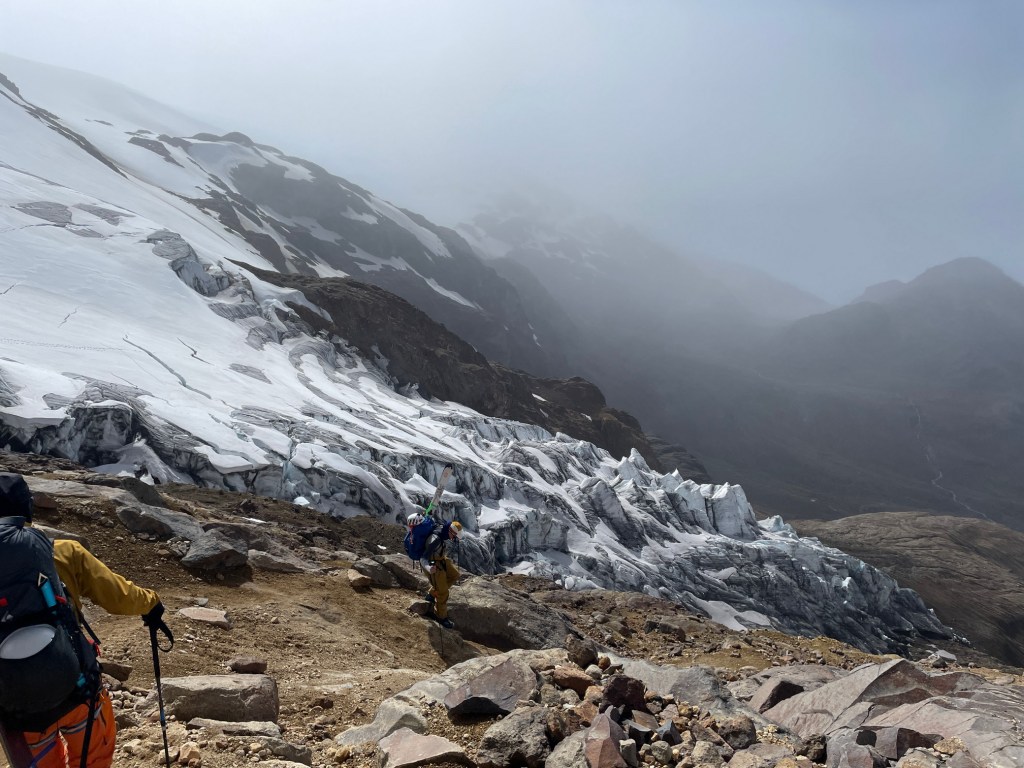
Back at the refugio, we were relieved to know that the rest of the team had a safe, fun ski down – I felt bad that they had to turn around, but was happy they could get some turns in at least! We ate some breakfast and reminisced about the insane day, including laughing about my crevasse snafu as well as Fátima and Kevin’s exchange close to the summit. After breakfast, we packed up as we would be heading over to Otavalo next. My body was so spent and deprived that my brain was functioning at half power and it took twice as long to pack my stuff – I was the last one out of the refugio. I absolutely need to put in lots more work for trips like these as I was pushed to the limit – it didn’t help that I was dealing with injuries and also had a cross-border move six weeks before the trip.
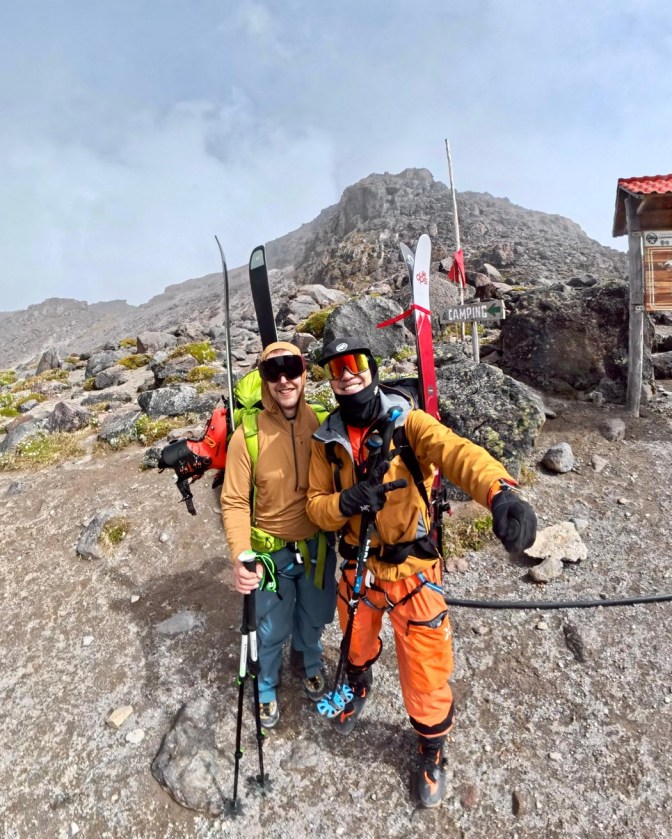
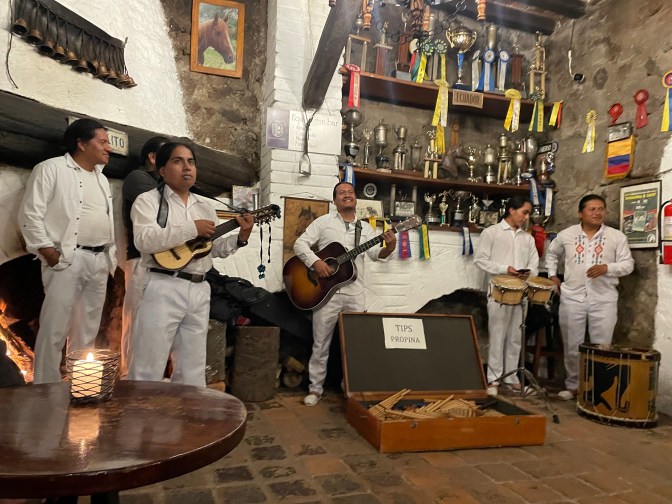
Victor drove us to our next hotel, Hacienda Pinsaqui, just north of Otavalo, where we checked in and had a late lunch. After lunch, I repacked and organized my stuff (including drying gear such as skins), and before long it was time for dinner. Prior to eating, we were invited by the hotel owner to enjoy some traditional Andean music by a band of brothers and cousins and learn about the history of the property – it dates back to 1790 and began as a wool-weaving workshop. It was also frequented by Simón Bolívar, who led several Andean countries in separating from the Spanish Empire in the 1800s and prepared at the Hacienda Pinsaqui prior to the Battle of Ibarra during the Ecuadorian war of independence in 1823.
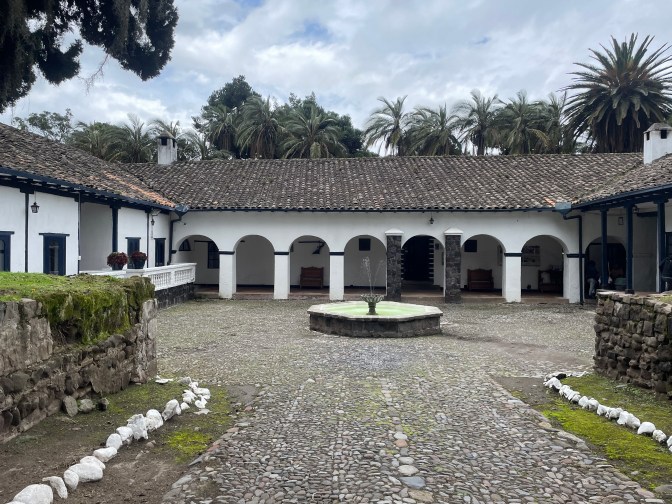
Day 10 – Relaxing in Otavalo
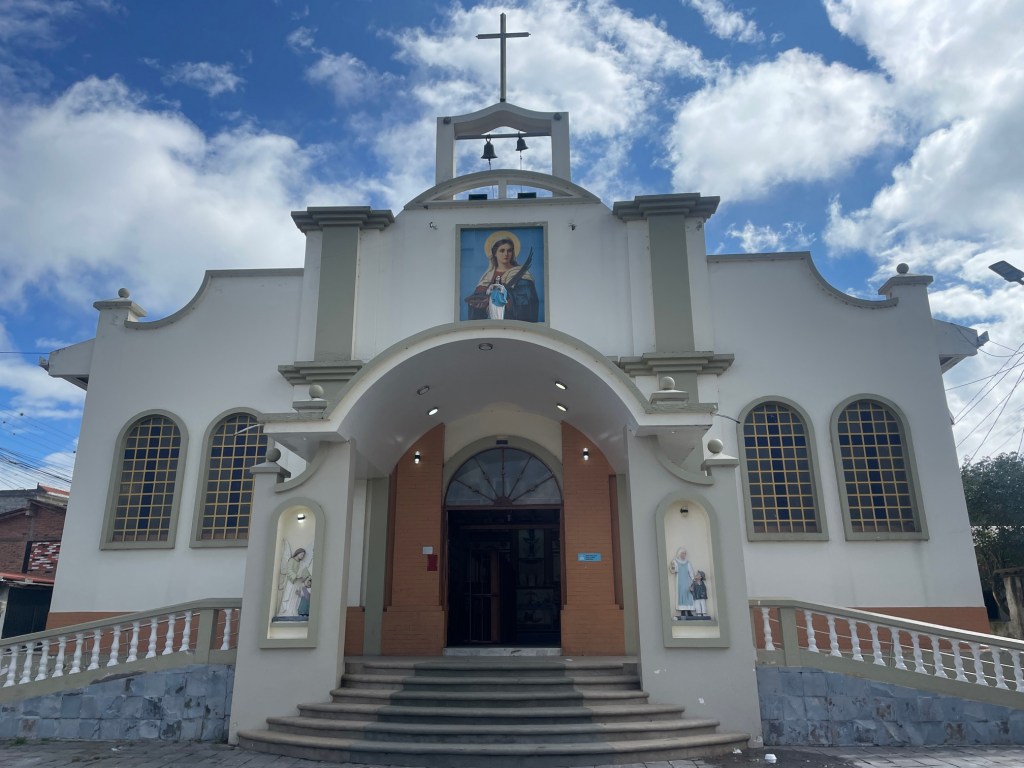
Sleep had been hard to come by on this trip, especially the last couple of days, so it was great to be able to sleep in a bit. After breakfast, we loaded up the bus and headed over to Otavalo to check out the outdoor market. First we stopped at a handicrafts shop in Peguche, a small town a couple miles from Otavalo. The shop is operated by José Cotocachi and his wife, and we spent some time perusing the amazing tapestries, carpets, garments, and other hand-woven works. We also got to see how they make some of the dyes and also watched José in action weaving a piece using a loom. I bought a really comfy toque made of alpaca wool.

I had been to plenty of markets before and was not keen on picking up souvenirs which I wouldn’t actually use, so I was more interested in seeing what types of traditional Ecuadorian spices and alcohol were available. Gaspar indicated that one needs a license to sell alcohol, so I would not be able to find anything of that sort here, but he pointed out a few spices and herbs. I ended up picking up some annato and ishpingo, as well as some coca leaves. The latter I ended up giving to Eric, as he, Taylor, Dave, and Kevin would be staying in Ecuador another week for the trip extension (where they would climb two more of Antisana, Cotopaxi and Chimborazo). The reason is that coca (useful to combat effects of altitude) contains small amounts of cocaine, which obviously could be problematic crossing multiple international borders on my trip home and could potentially jeopardize my work status in the States. I also bought a fridge magnet and considered buying a new wallet, but my current one was still in good shape, so I opted not to. The team met up at a local cafe (La Cosecha) where I had a latte and bagel.

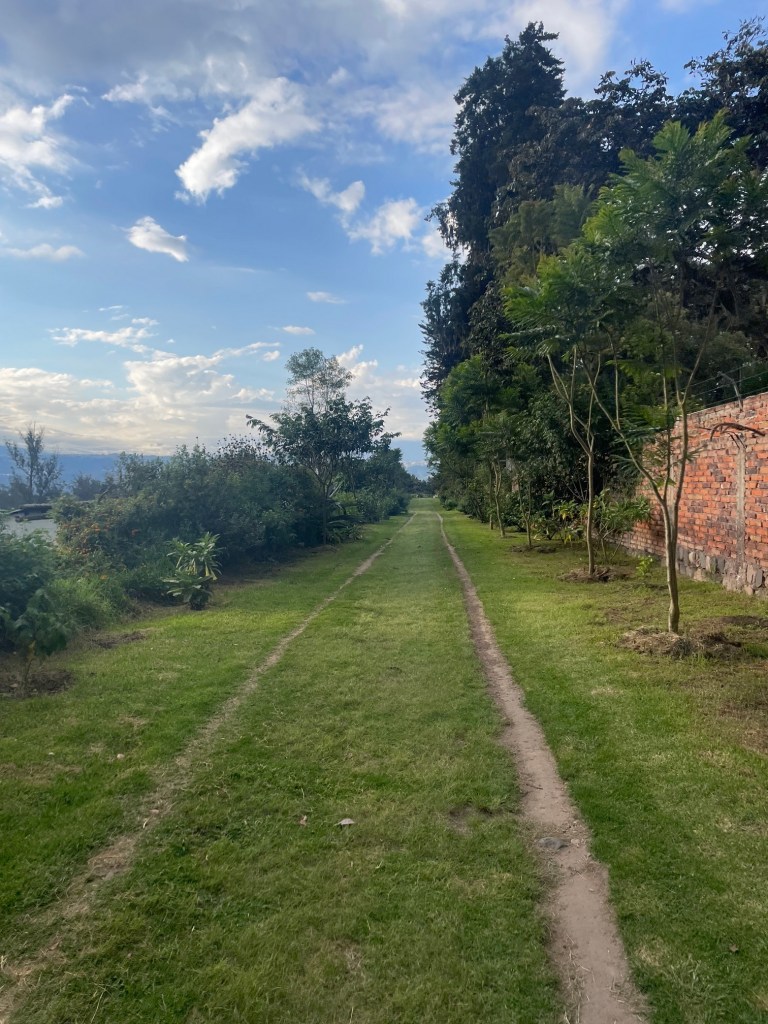
On the way back to the San Jose de Puembo, we stopped for a proper lunch at Restaurante el Riobambeñito, and the portion sizes were colossal, it felt like Texas! Upon returning to the hotel and checking in, I went for a run along a trail/road behind the hotel followed by a stretch at the gym. It’s crazy how my calf was totally fine climbing a nearly 19000 foot mountain but started acting up 15 minutes into an easy run!
Dave and Kevin had arranged appointments with a local massage therapist, and had a bit of an interesting/awkward interaction while I was waiting for Kevin to finish up as we planned to grab dinner. I knocked on his door, thinking the massage was elsewhere, to see if he was back and a mystery woman answered the door. I initially thought I had the wrong room (despite being absolutely certain it was the right room) before realizing it was the massage therapist, and she was still working on Kevin! What was even funnier was Kevin’s reaction to the massage and advice to Dave who was next up – “focus on your breathing, it’s just like climbing Cayambe!” and the fact that Chris, Kevin’s roommate, was in the room while the massage was happening (with his earbuds in thankfully!). While Dave had his massage, I went to dinner at the hotel with Kevin and Chris, where we sat with Michael and Diego. Kevin could not stop talking about that massage, much to our amusement!
Day 11 – Last Day in Ecuador & Final Thoughts
Starting off the day I sat down with Michael to get his feedback on things I can work on moving forward to make sure I’m ready for future ski mountaineering expeditions such as Mount Logan. I specifically asked Michael as he has a lot of experience in Alaska (Denali) which is a similar peak to Logan. He gave a lot of great advice and I very much appreciate his guidance! Before breakfast, most of the group joined a yoga session outside.
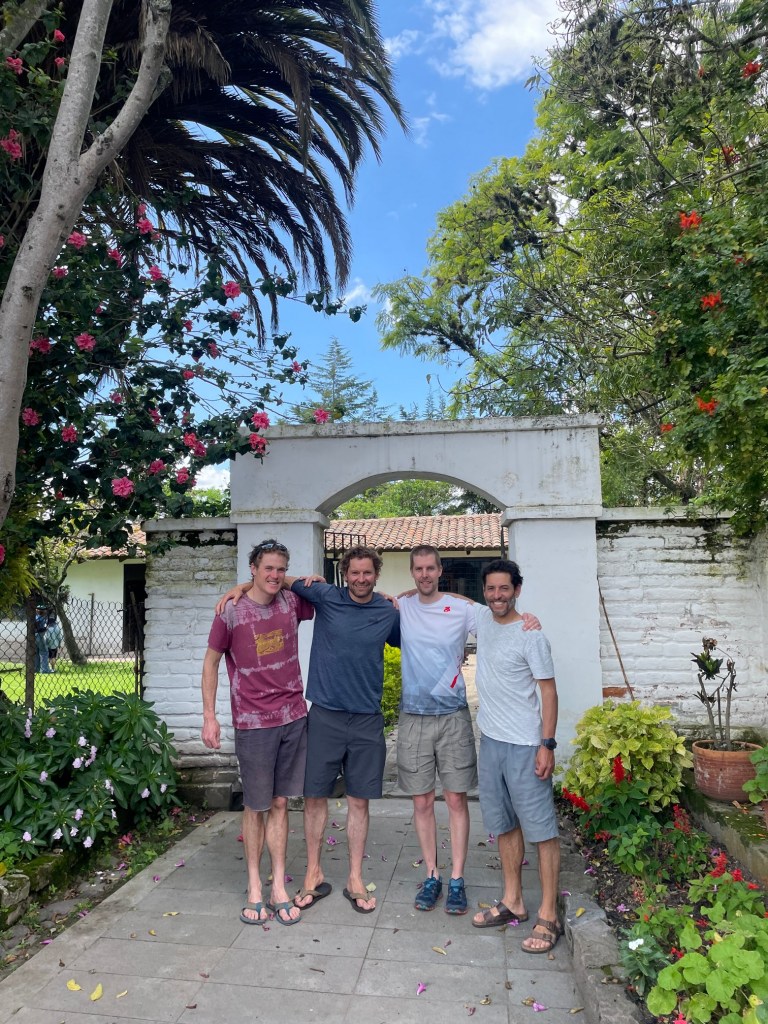
Four of us sadly were only booked for the first half of the trip, so we all departed over the course of the day. My flight left around 7pm so I had a ton of time to kill over the course of the day – the group that was staying on for the extension left around 11am and I made sure to get a photo with all three amazing guides. Thank you/gracias, Michael, Diego and Gaspar!
Overall, a pretty amazing trip and experience and one hell of a way to kick off my second ski touring/backcountry skiing season. I definitely felt a bit out of my element for the first bit of the descent from the summit of Cayambe, and struggled way more than I’d have liked on the last part of the ascent (huge emphasis on hydrating and fuelling properly), but overall I’m very happy with the fact I didn’t need to take Diamox and I was able to handle the altitude, even on a fairly rapid acclimatization schedule. This really gives me motivation to continue to aim higher. My big things to focus on are ski technique and general mountaineering skills, which are a bit rusty. I plan to work on both of these this coming season.
Big thanks to the team for making it such a memorable trip – a very diverse group with extremely interesting backgrounds and it was a pleasure to climb and ski with you all!


 Veg 'n' Alpine